Inicio > Matemáticas y ciencia > Biologia, ciencias de la vida > Botánica y ciencias de las plantas > Risposta di varietà di fagiolo indiano (Lablab purpureus L.)
Risposta di varietà di fagiolo indiano (Lablab purpureus L.)

Risposta di varietà di fagiolo indiano (Lablab purpureus L.)

B. M. Nandre / Radhika A. Bharai / Ravikumar P. Shingala

72,95 €
IVA incluido
Disponible
Editorial:
KS OmniScriptum Publishing
Año de edición:
2024
Materia
Botánica y ciencias de las plantas
ISBN:
9786208394608
72,95 €
IVA incluido
Disponible

Selecciona una librería:

  • Librería Desdémona
  • Librería Samer Atenea
  • Librería Aciertas (Toledo)
  • Kálamo Books
  • Librería Perelló (Valencia)
  • Librería Elías (Asturias)
  • Donde los libros
  • Librería Kolima (Madrid)
  • Librería Proteo (Málaga)

Il fagiolo indiano(Lablab purpureus L.) è un’erba dolce e cespugliosa semi-eretta appartenente alla famiglia delle Fabaceae con 2n = 22 cromosomi. È comunemente nota come fagiolo di campo, fagiolo giacinto, fagiolo dolico, fagiolo egiziano, fagiolo bonavista, Sem ecc. mentre localmente è conosciuta come 'Papadi'. È una coltura prevalentemente autoimpollinata. I biofertilizzanti svolgono un ruolo importante nell’aumentare la disponibilità di azoto e fosforo. Aumentano la fissazione biologica dell’azoto atmosferico e migliorano la disponibilità di fosforo per la coltura. Le sementi trattate con colture batteriche di Rhizobium aumentano la nodulazione e influenzano la resa, oltre ad economizzare in una certa misura il costo dei fertilizzanti. La valutazione del ruolo dei biofertilizzanti, tra cui il Rhizobium e il PSB, per sfruttarne l’effetto nel migliorare la resa delle colture, sarà un compito impegnativo.


Artículos relacionados

  • Omics in Plant Disease Resistance
    Vijai Bhadauria
    ...
  • Suitable Microbial Strain for Enhanced Production of Laccase
    Lalit Kumar Singh
    Enzymes are known to humanity since ancient times and getting increased impetus in the recent years due to its increasing importance in industries. Proteins enzymes are essentially created by living things to control their biochemical activities. Enzymes can also be thought of as catalysts that speed up biological reactions on their own. Based on their catalysed reaction types,...
  • Abiotic Stress Management
    J. B. GAJERA / S. J. DEVRA / S. P. KACHHADIYA
    'Abiotic Stress Management for Resilient Agriculture' offers a comprehensive guide to addressing environmental challenges in agriculture. This book explores innovative strategies and cutting-edge research to mitigate the impact of abiotic stresses such as drought, salinity, and extreme temperatures on crops. It provides practical insights into sustainable agricultural practices...
  • DEMOGRAFÍA DE LA PALMA DE SIERRA ESPIRITUANA EN BAMBURANAO, CUBA
    Abel Hernández-Muñoz
    Las poblaciones vegetales constituyen en muchos casos, fuentes importantes de recursos en los aspectos agropecuarios, forestales, recreativos y como refugio de fauna, por ello, su estudio es un aspecto necesario a abordar. Dentro de las características de las poblaciones de plantas en general, la densidad y distribución son importantes. La presente obra constituye el primer est...
  • The Green Architecture
    Ali Mirshafieyan / Ghazal Yeganeh / Maryam Zamani Motlagh
    Protecting green energy as well as non-renewable energy, as well as their sustainable use, many advances in the technology of extracting oil products and other reserves under the ground have caused many improvements. In this regard, proposing the design of buildings in which the consumption of fossil fuels reaches its lowest level is considered one of the important solutions in...
    Disponible

    82,54 €

  • Caractérisation des plantes envahissantes des marais
    Frédéric BANGIRINAMA / Jean Bosco Igirukwishaka
    Les invasions biologiques constituent la seconde source de destruction des écosystèmes. Mais les connaissances sur les taxons envahissants restent lacunaires au Burundi. Pour appuyer les gestionnaires des plantes envahissantes, une étude a été conduite dans les marais de la rivière Ruvubu, la plus importante rivière du Burundi. L’objectif étant de : Faire un inventaire floristi...

Otros libros del autor

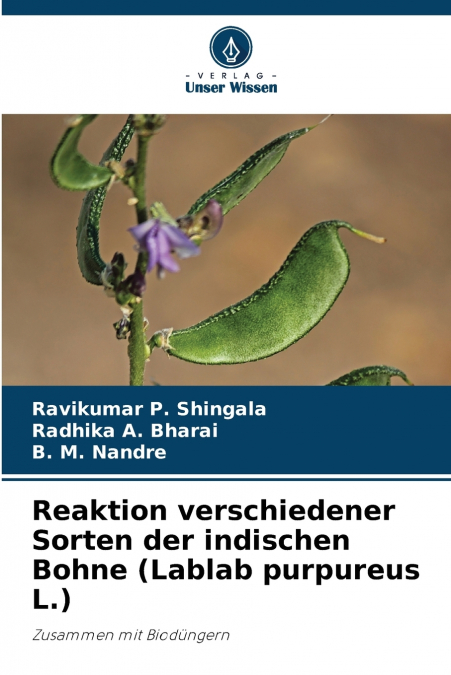
  • Reaktion verschiedener Sorten der indischen Bohne (Lablab purpureus L.)
    B. M. Nandre / Radhika A. Bharai / Ravikumar P. Shingala
    Die Indische Bohne(Lablab purpureus L.) ist ein süßes, buschiges, halb aufrechtes Kraut aus der Familie der Fabaceae mit 2n = 22 Chromosomen. Sie ist allgemein bekannt als Ackerbohne, Hyazinthenbohne, Dolichos-Bohne, Ägyptische Bohne, Bonavist-Bohne, Sem usw., während sie lokal als 'Papadi' bekannt ist. Es handelt sich überwiegend um eine selbstbestäubte Pflanze. Biodünger spie...
    Disponible

    73,02 €

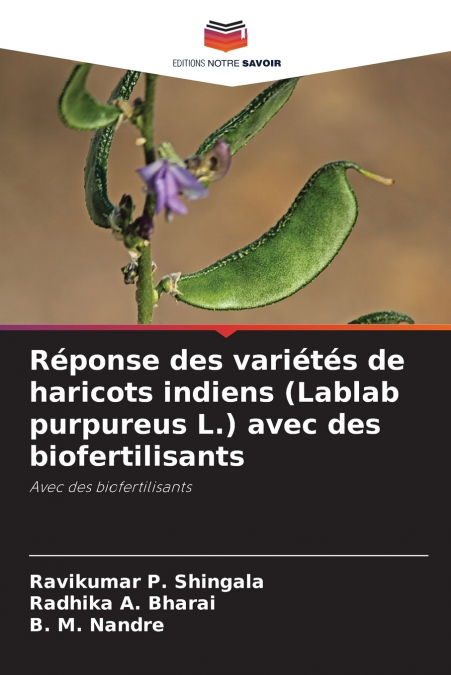
  • Réponse des variétés de haricots indiens (Lablab purpureus L.) avec des biofertilisants
    B. M. Nandre / Radhika A. Bharai / Ravikumar P. Shingala
    Le haricot indien(Lablab purpureus L.) est une herbe douce, buissonnante et semi-dressée qui appartient à la famille des Fabaceae avec 2n = 22 chromosomes. Il est communément appelé haricot des champs, haricot jacinthe, haricot Dolichos, haricot égyptien, haricot Bonavist, Sem, etc. et localement connu sous le nom de 'Papadi'. Il s’agit principalement d’une culture autogame. Le...
    Disponible

    73,02 €

  • Resposta de variedades de feijão-da-índia (Lablab purpureus L.)
    B. M. Nandre / Radhika A. Bharai / Ravikumar P. Shingala
    O feijão-da-índia(Lablab purpureus L.) é uma erva doce, arbustiva e semi-erecta, pertencente à família Fabaceae com 2n = 22 cromossomas. É vulgarmente conhecido como feijão de campo, feijão jacinto, feijão Dolichos, feijão egípcio, feijão Bonavist, Sem , etc., enquanto localmente é conhecido como 'Papadi'. É uma cultura predominantemente auto-polinizadora. Os biofertilizantes d...
    Disponible

    72,95 €

  • Odpowiedź odmian fasoli indyjskiej (Lablab purpureus L.)
    B. M. Nandre / Radhika A. Bharai / Ravikumar P. Shingala
    Fasola indyjska(Lablab purpureus L.) to słodkie, krzaczaste, półstrome zioło należące do rodziny bobowatych (Fabaceae) z 2n = 22 chromosomami. Jest powszechnie znana jako fasola polna, fasola hiacyntowa, fasola Dolichos, fasola egipska, fasola Bonavist, Sem itp., podczas gdy lokalnie znana jest jako 'Papadi'. Jest to głównie roślina samopylna. Bio-nawozy odgrywają ważną rolę w ...
    Disponible

    72,95 €

  • Response of Varieties of Indian Bean (Lablab purpureus L.)
    B. M. Nandre / Radhika A. Bharai / Ravikumar P. Shingala
    Indian bean (Lablab purpureus L.) is a sweet, bushy semi-erect herb belongs to family Fabaceae with 2n = 22 chromosomes. It is commonly known as Field bean, Hyacinth bean, Dolichos bean, Egyptian bean, Bonavist bean, Sem etc. while locally known as ’Papadi’. It is predominantly a self-pollinated crop. Biofertilizers play an important role in increasing availability of nitrogen ...