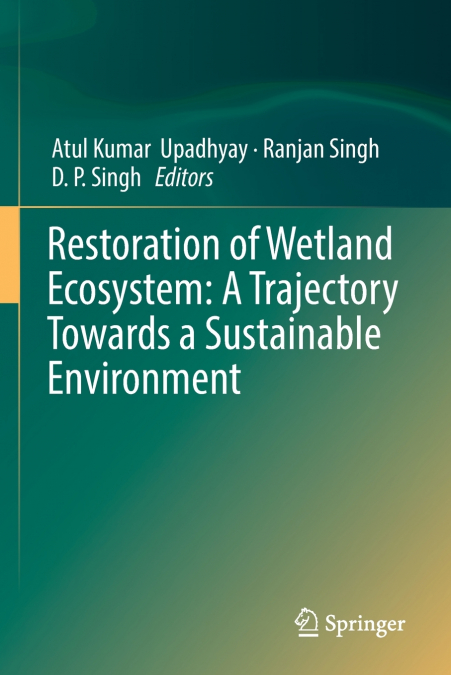

Restoration of Wetland Ecosystem

Restoration of Wetland Ecosystem


136,18 €
IVA incluido
Disponible
Editorial:
Springer Nature B.V.
Año de edición:
2020
Materia
Ciencia, ingeniería y tecnología medioambientales
ISBN:
9789811376672
136,18 €
IVA incluido
Disponible

Selecciona una librería:

  • Librería Samer Atenea
  • Librería Aciertas (Toledo)
  • Kálamo Books
  • Librería Perelló (Valencia)
  • Librería Elías (Asturias)
  • Donde los libros
  • Librería Kolima (Madrid)
  • Librería Proteo (Málaga)

​The risks and consequences of environmental change are increasing, leading to massive losses in terms of ecosystems and having a huge impact on human populations. As such, global thinkers, environmentalists, scientists and policy makers are focusing on finding solutions and ways to sustain life on Earth. Anthropogenic impacts on the climate system can only be mitigated by the restoration of existing natural resources and the sustainable development of the environment and society. This book discusses the potential of green technology in waste management, wetland restoration, presenting the latest developments in the field of bioenergy, green ecology, bioremediation and microbial management. Wetlands are one of Earth’s most important ecosystems, and they provide valuable services to human societies, such as minimizing the impacts of floods, acting as a carbon sink, and offering water purification as well as recreational opportunities. Wetlands may be natural or constructed, and the effectiveness of wetland services largely depends on the diversity of macrophytes affecting the algal production, plant biomass and nutrient status of the system. In addition, they are one of the richest microbial ecosystems on earth: the rhizosphere, soil and water interface enhances wetland services with implications ranging from phytoremediation to microbial bioprospection. However, in order to function properly, they need to be effectively redesigned, reengineered, protected and maintained.The book addresses the dynamic relation between three global concerns: environmental pollution, resource exploitation and sustainability. It describes the utilization of resources like wastes (municipal, industrial, agricultural, mine drainage, tannery, solid, and e waste), plants, algae and microbes for production of renewable biofuel, biofertilizers and other value added products to achieve the goal of sustainable development. The book also discusses the current and future trends in employing wetlands in improving water quality. In addition it presents the latest international research in the fields of wetland science, waste management, carbon sequestration and bioremediation. Highlighting a broad spectrum of topics and strategies for achieving a sustainable environment, the book offers researchers, students and academics insights into utilizing resources in a sustainable way.

Artículos relacionados

  • Ocean Remote Sensing with Synthetic Aperture Radar
    The ocean covers approximately 71% of the Earth’s surface, 90% of the biosphere and contains 97% of Earth’s water. The Synthetic Aperture Radar (SAR) can image the ocean surface in all weather conditions and day or night. SAR remote sensing on ocean and coastal monitoring has become a research hotspot in geoscience and remote sensing. This book—Progress in SAR Oceanography—prov...
    Disponible

    83,90 €

  • Handbook of Research on Advancements in Environmental Engineering
    Nediljka Gaurina-Medjimurec
    The protection of clean water, air, and land for the habitation of humans and other organisms has become a pressing concern amid the intensification of industrial activities and the rapidly growing world population. The integration of environmental science with engineering principles has been introduced as a means of long-term sustainable development. The Handbook of Research o...
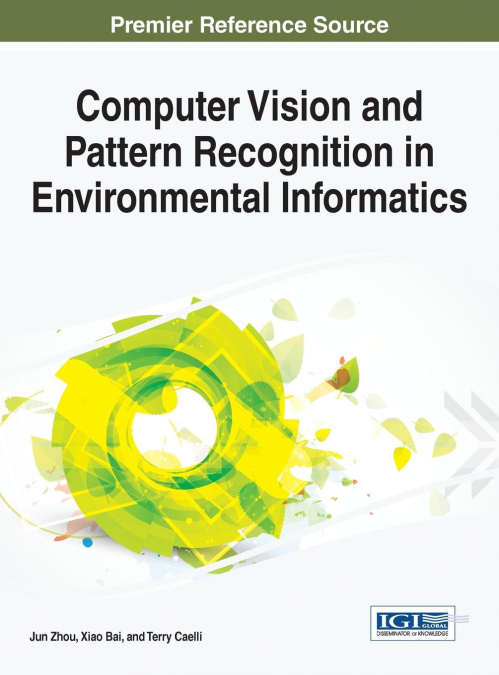
  • Computer Vision and Pattern Recognition in Environmental Informatics
    Computer Vision and Pattern Recognition (CVPR) together play an important role in the processes involved in environmental informatics due to their pervasive, non-destructive, effective, and efficient natures. As a result, CVPR has made significant contributions to the field of environmental informatics by enabling multi-modal data fusion and feature extraction, supporting fast ...
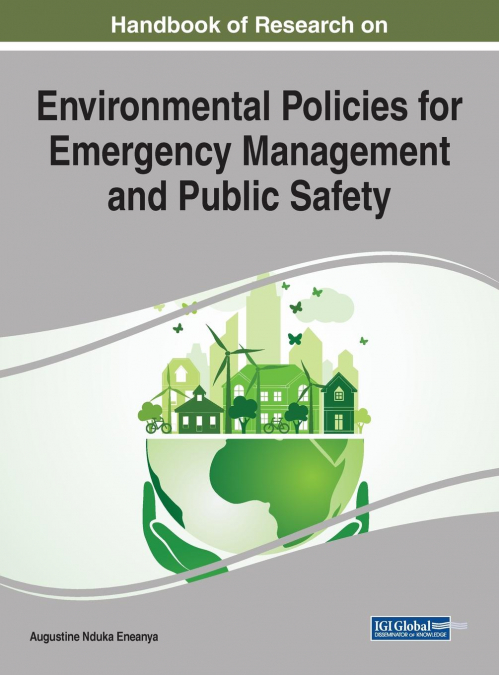
  • Handbook of Research on Environmental Policies for Emergency Management and Public Safety
    Augustine Nduka Eneanya
    In a world of earthquakes, tsunamis, and hurricanes, it is evident that emergency response plans are crucial to solve problems, overcome challenges, and restore and improve communities affected by such negative events. Although the necessity for quick and efficient aid is understood, researchers and professionals continue to strive for the best practices and methodologies to pr...
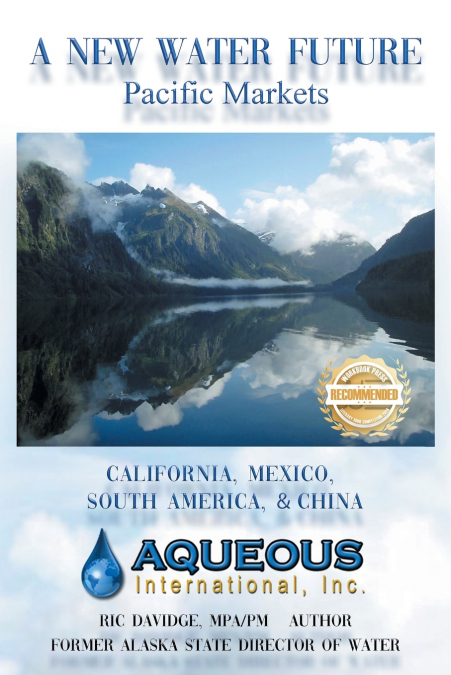
  • A New Water Future
    Ric Davidge
    Just as cities and nations face the challenge of providing clean water to their citizens and their economies, a new opportunity has finally been constructed that can fix these challenges.  This is a time-sensitive opportunity, and this book is provided to help you move forward. AQUEOUS International, Inc. has developed this over the past 30 years with global research and the co...
    Disponible

    12,86 €

  • Microbial Bioremediation
    P Gunasekaran / P Rajendran
    Discover the groundbreaking world of bioremediation with 'Microbial Bioremediation' authored by Dr. P. Rajendran and Dr. P. Gunasekaran. This comprehensive book unveils the power of living organisms, including plants in phytoremediation and microbes such as bacteria, algae, and fungi in microbial bioremediation, as efficient, eco-friendly, and cost-effective alternatives to con...
    Disponible

    30,82 €