Charles C. Miller Memorial Apicultural / Frederic William Lambert Sladen
 Librería Samer Atenea
 Kálamo Books
 Librería Elías (Asturias)
 Librería Kolima (Madrid)
 Librería Proteo (Málaga)
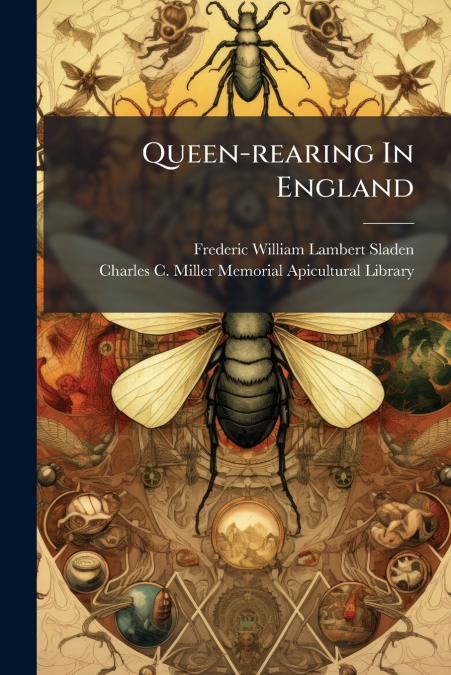
'Queen-rearing In England' delves into the intricacies of apiculture, offering a comprehensive guide to the specialized practice of queen bee breeding. Frederic William Lambert Sladen, a recognized authority, provides detailed instructions and observations gleaned from his extensive experience. This work explores not only the methods of queen rearing specific to England but also includes supplementary notes on a scent-producing organ in the abdomen of the worker bee, providing unique insight into bee communication. The book further expands its scope to discuss the honeybees of India, offering a comparative analysis of different species and their behaviors. It also addresses the challenges faced by beekeepers in South Africa, identifying the various enemies of bees and suggesting strategies for their management. This combination of focused instruction and broader entomological insights makes 'Queen-rearing In England' a valuable resource for both novice and experienced beekeepers, as well as anyone with an interest in the fascinating world of bees.This work has been selected by scholars as being culturally important, and is part of the knowledge base of civilization as we know it. This work was reproduced from the original artifact, and remains as true to the original work as possible. Therefore, you will see the original copyright references, library stamps (as most of these works have been housed in our most important libraries around the world), and other notations in the work.This work is in the public domain in the United States of America, and possibly other nations. Within the United States, you may freely copy and distribute this work, as no entity (individual or corporate) has a copyright on the body of the work.As a reproduction of a historical artifact, this work may contain missing or blurred pages, poor pictures, errant marks, etc. Scholars believe, and we concur, that this work is important enough to be preserved, reproduced, and made generally available to the public. We appreciate your support of the preservation process, and thank you for being an important part of keeping this knowledge alive and relevant.