Production technology of organically transplanted rice

Production technology of organically transplanted rice

Lahanu Gabhale / Shoukat Sayyad / Sonali Mohite

85,97 €
IVA incluido
Disponible
Editorial:
KS OmniScriptum Publishing
Año de edición:
2024
Materia
Botánica y ciencias de las plantas
ISBN:
9786207807468
85,97 €
IVA incluido
Disponible

Selecciona una librería:

  • Librería Samer Atenea
  • Librería Aciertas (Toledo)
  • Kálamo Books
  • Librería Perelló (Valencia)
  • Librería Elías (Asturias)
  • Donde los libros
  • Librería Kolima (Madrid)
  • Librería Proteo (Málaga)

In India, rice is the most important food crop covering about one -fourth of the total cropped area and providing food to about half of the Indian population. The organic movement in India has its origin in the work of Howard (Howard, 1940). The key factors affecting consumer demand for organic food is the health consciousness and the willingness of the public to pay for the high-priced produce. Organic farming is way of conserving the soil, maintaining its fertility, protecting soil flora and fauna diversity thus preventing pollution of ground water, lakes and rivers. Animal wastes such as dung, urine, green manure, bio-fertilizers, wastes from agro and food based industries are some of the potential sources of nutrients in organic farming. Green manuring, which is of organic origin, helps to keep soil quality and fertility enhancement as a whole meeting a part of nutrient need of crops. Humic substances are readily found in soils and influence plant growth both directly and indirectly.
Artículos relacionados

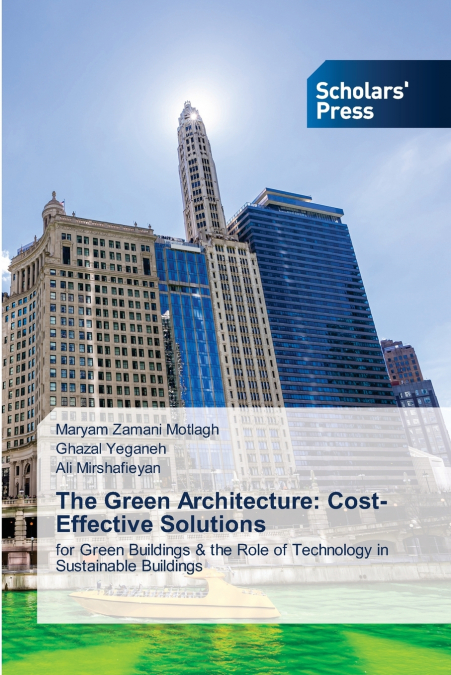
  • The Green Architecture
    Ali Mirshafieyan / Ghazal Yeganeh / Maryam Zamani Motlagh
    Protecting green energy as well as non-renewable energy, as well as their sustainable use, many advances in the technology of extracting oil products and other reserves under the ground have caused many improvements. In this regard, proposing the design of buildings in which the consumption of fossil fuels reaches its lowest level is considered one of the important solutions in...
    Disponible

    82,54 €

  • Responsible Use and Management of Agrochemicals
    Juan Carlos Nava
    Uso y manejo responsable de agroquímicos is a work product of the author’s experiences (undergraduate and graduate professor, with research and extension projects), aimed at producers, companies, professionals, students, advisors, researchers, among others.Due to its structure and content, it is expected to be a valuable aid to all people directly or indirectly involved in the ...
    Disponible

    49,45 €

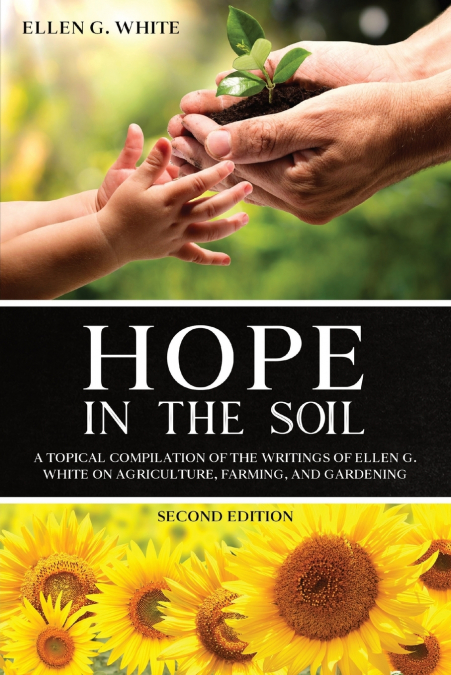
  • Hope in the Soil
    Ellen G White
    Before edible classrooms began 'sprouting' in elementary schools, before buzzwords like 'sustainable agriculture', 'organic,' or 'veganic' came into existence, an exceptional woman named Ellen G. White penned numerous letters and articles on the importance of farming, an outdoor life, and manual labor. Though often remembered for other things, Mrs. White was actively engaged in...
    Disponible

    18,38 €

  • The Green Revolution
    Binitha Sophine Emmanuel
    The Green Revolution, a transformative era in the annals of agriculture, emerged as a game-changing force during the mid-20th century, fundamentally reshaping the methodology of food production and steering the trajectory of global food security. Characterized by a sequence of technological breakthroughs, the Green Revolution aimed to substantially augment agricultural producti...
    Disponible

    53,23 €

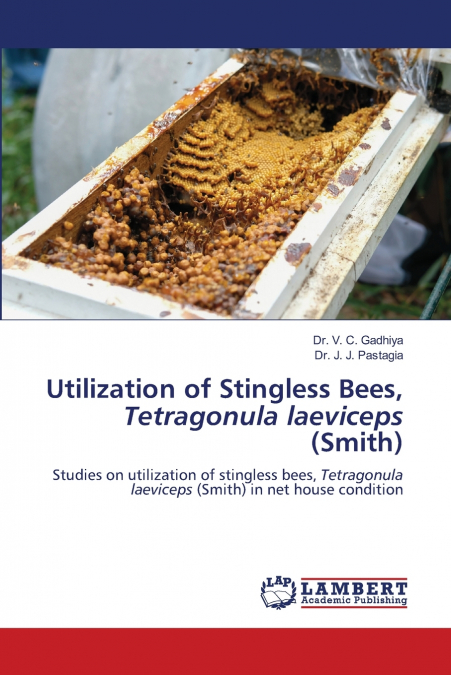
  • Utilization of Stingless Bees, Tetragonula laeviceps (Smith)
    Dr. J. J. Pastagia / Dr. V. C. Gadhiya
    The present investigations on utilization of stingless bees, T. laeviceps Smith in net house condition carried out with the broad aspects like flowers visited by stingless bees, T. laeviceps Smith, toxicity of insecticides to T. laeviceps Smith workers, floral biology of musk melon, foraging behavior of stingless bees, T. laeviceps Smith in net house condition, effect of pollin...
    Disponible

    84,80 €

  • La révolution verte
    Binitha Sophine Emmanuel
    La révolution verte, une ère transformatrice dans les annales de l’agriculture, est apparue comme une force qui a changé la donne au milieu du 20e siècle, remodelant fondamentalement la méthodologie de la production alimentaire et orientant la trajectoire de la sécurité alimentaire mondiale. Caractérisée par une série de percées technologiques, la révolution verte visait à augm...
    Disponible

    53,29 €

Otros libros del autor

  • Produktionstechnologie von ökologisch gepflanztem Reis
    Lahanu Gabhale / Shoukat Sayyad / Sonali Mohite
    In Indien ist Reis die wichtigste Nahrungspflanze, die etwa ein Viertel der gesamten Anbaufläche einnimmt und etwa die Hälfte der indischen Bevölkerung ernährt. Die ökologische Bewegung in Indien hat ihren Ursprung in der Arbeit von Howard (Howard, 1940). Die wichtigsten Faktoren, die die Nachfrage der Verbraucher nach ökologischen Lebensmitteln beeinflussen, sind das Gesundhei...
    Disponible

    85,83 €

  • Technologie de production du riz repiqué biologiquement
    Lahanu Gabhale / Shoukat Sayyad / Sonali Mohite
    En Inde, le riz est la culture vivrière la plus importante, couvrant environ un quart de la surface cultivée totale et fournissant de la nourriture à environ la moitié de la population indienne. Le mouvement biologique en Inde trouve son origine dans les travaux de Howard (Howard, 1940). Les principaux facteurs affectant la demande des consommateurs pour les aliments biologique...
    Disponible

    85,83 €

  • Tecnologia de produção de arroz transplantado segundo o modo de produção biológico
    Lahanu Gabhale / Shoukat Sayyad / Sonali Mohite
    Na Índia, o arroz é a cultura alimentar mais importante, cobrindo cerca de um quarto da área total cultivada e fornecendo alimentos a cerca de metade da população indiana. O movimento biológico na Índia tem a sua origem no trabalho de Howard (Howard, 1940). Os principais factores que afectam a procura de alimentos biológicos por parte dos consumidores são a consciência sanitári...
    Disponible

    85,83 €

  • Tecnologia di produzione del riso trapiantato con metodo biologico
    Lahanu Gabhale / Shoukat Sayyad / Sonali Mohite
    In India, il riso è la coltura alimentare più importante, che copre circa un quarto della superficie totale coltivata e fornisce cibo a circa la metà della popolazione indiana. Il movimento biologico in India ha origine dal lavoro di Howard (Howard, 1940). I fattori chiave che influenzano la domanda di alimenti biologici da parte dei consumatori sono la consapevolezza della sal...
    Disponible

    85,83 €