Production de plants de piment par greffage

Production de plants de piment par greffage

Lahanu Gabhale / Sayyad Pinjari / Vishal Uttekar

75,39 €
IVA incluido
Disponible
Editorial:
KS OmniScriptum Publishing
Año de edición:
2024
Materia
Botánica y ciencias de las plantas
ISBN:
9786208249977
75,39 €
IVA incluido
Disponible

Selecciona una librería:

  • Librería Samer Atenea
  • Librería Aciertas (Toledo)
  • Kálamo Books
  • Librería Perelló (Valencia)
  • Librería Elías (Asturias)
  • Donde los libros
  • Librería Kolima (Madrid)
  • Librería Proteo (Málaga)

Le piment (Capsicum annuum L.) appartient à la famille des solanacées et possède des espèces diploïdes avec 2n=2x=24 chromosomes. Le piment est originaire d’Amérique du Sud et a été introduit en Inde par les Portugais au XVIIe siècle. Le piment est une plante annuelle herbacée ou semi-boisée dont les fruits varient en forme, en taille, en couleur et en degré d’âcreté. La culture du piment est soumise à divers facteurs limitatifs, tels que les facteurs abiotiques (stress hydrique, fortes pluies, verse due à une faible croissance des racines, concentration en sel, refroidissement, températures élevées) et les facteurs biotiques (maladies du sol, virus, parasites suceurs et nématodes, etc. Les coûts de production et les tendances de la commercialisation en Inde posent également des problèmes. Ces facteurs abiotiques et biotiques nuisent à la croissance et à la production du piment. Pour faire face à ces stress biotiques et abiotiques, le greffage du piment peut être une solution potentielle. La production de plants est une étape importante dans le système de production de greffons car elle influence le résultat final de la greffe. Le milieu de culture est un facteur majeur qui influence la germination des graines, l’émergence des semis, la croissance des semis et la qualité des semis dans une pépinière.

Artículos relacionados

  • The Green Architecture
    Ali Mirshafieyan / Ghazal Yeganeh / Maryam Zamani Motlagh
    Protecting green energy as well as non-renewable energy, as well as their sustainable use, many advances in the technology of extracting oil products and other reserves under the ground have caused many improvements. In this regard, proposing the design of buildings in which the consumption of fossil fuels reaches its lowest level is considered one of the important solutions in...
    Disponible

    82,54 €

  • Responsible Use and Management of Agrochemicals
    Juan Carlos Nava
    Uso y manejo responsable de agroquímicos is a work product of the author’s experiences (undergraduate and graduate professor, with research and extension projects), aimed at producers, companies, professionals, students, advisors, researchers, among others.Due to its structure and content, it is expected to be a valuable aid to all people directly or indirectly involved in the ...
    Disponible

    49,45 €

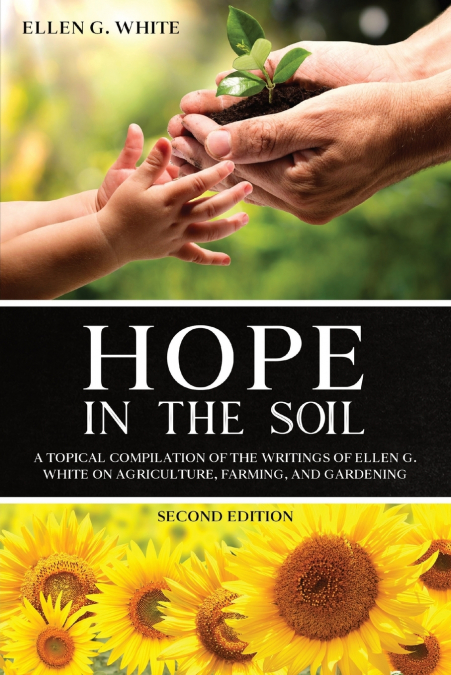
  • Hope in the Soil
    Ellen G White
    Before edible classrooms began 'sprouting' in elementary schools, before buzzwords like 'sustainable agriculture', 'organic,' or 'veganic' came into existence, an exceptional woman named Ellen G. White penned numerous letters and articles on the importance of farming, an outdoor life, and manual labor. Though often remembered for other things, Mrs. White was actively engaged in...
    Disponible

    18,38 €

  • The Green Revolution
    Binitha Sophine Emmanuel
    The Green Revolution, a transformative era in the annals of agriculture, emerged as a game-changing force during the mid-20th century, fundamentally reshaping the methodology of food production and steering the trajectory of global food security. Characterized by a sequence of technological breakthroughs, the Green Revolution aimed to substantially augment agricultural producti...
    Disponible

    53,23 €

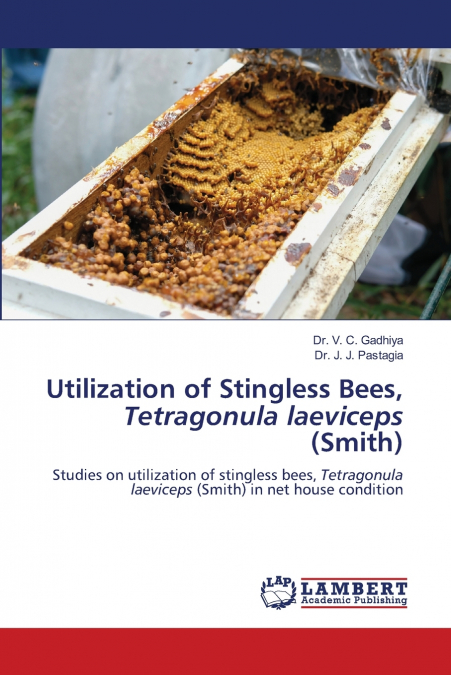
  • Utilization of Stingless Bees, Tetragonula laeviceps (Smith)
    Dr. J. J. Pastagia / Dr. V. C. Gadhiya
    The present investigations on utilization of stingless bees, T. laeviceps Smith in net house condition carried out with the broad aspects like flowers visited by stingless bees, T. laeviceps Smith, toxicity of insecticides to T. laeviceps Smith workers, floral biology of musk melon, foraging behavior of stingless bees, T. laeviceps Smith in net house condition, effect of pollin...
    Disponible

    84,80 €

  • La révolution verte
    Binitha Sophine Emmanuel
    La révolution verte, une ère transformatrice dans les annales de l’agriculture, est apparue comme une force qui a changé la donne au milieu du 20e siècle, remodelant fondamentalement la méthodologie de la production alimentaire et orientant la trajectoire de la sécurité alimentaire mondiale. Caractérisée par une série de percées technologiques, la révolution verte visait à augm...
    Disponible

    53,29 €

Otros libros del autor

  • Erzeugung von Chili-Setzlingen durch Pfropfen
    Lahanu Gabhale / Sayyad Pinjari / Vishal Uttekar
    Chili (Capsicum annuum L.) gehört zur Familie der Nachtschattengewächse (Solanaceae) mit diploiden Arten mit 2n=2x=24 Chromosomen. Chili stammt ursprünglich aus Südamerika und wurde im siebzehnten Jahrhundert von den Portugiesen in Indien eingeführt. Chili ist eine krautige oder halb verholzte einjährige Pflanze mit Früchten, die sich in Form, Größe, Farbe und Schärfegrad unter...
    Disponible

    75,39 €

  • Producción de plántulas de chile mediante injerto
    Lahanu Gabhale / Sayyad Pinjari / Vishal Uttekar
    El chile (Capsicum annuum L.) pertenece a la familia de las solanáceas y es una especie diploide con 2n=2x=24 cromosomas. El chile es originario de Sudamérica y en el siglo XVII fue introducido en la India por los portugueses. El chile es una planta herbácea o semileñosa anual cuyos frutos varían en forma, tamaño, color y grado de pungencia. El cultivo de chile tiene varios fac...
    Disponible

    75,39 €

  • Produzione di piantine di peperoncino tramite innesto
    Lahanu Gabhale / Sayyad Pinjari / Vishal Uttekar
    Il peperoncino (Capsicum annuum L.) appartiene alla famiglia delle solanacee e presenta specie diploidi con 2n=2x=24 cromosomi. Il peperoncino è originario del Sud America e nel XVII secolo è stato introdotto in India dai portoghesi. Il peperoncino è una pianta annuale erbacea o semilegnosa con frutti che variano per forma, dimensione, colore e grado di piccantezza. La coltivaz...
    Disponible

    75,39 €

  • Produção de mudas de pimentão por enxertia
    Lahanu Gabhale / Sayyad Pinjari / Vishal Uttekar
    A malagueta (Capsicum annuum L.) pertence à família das solanáceas, tendo espécies diplóides com 2n=2x=24 cromossomas. A malagueta é originária da América do Sul e, no século XVII, foi introduzida na Índia pelos portugueses. A malagueta é uma planta anual herbácea ou semi-lenhosa cujos frutos variam em forma, tamanho, cor e grau de pungência. A cultura da malagueta tem vários f...
    Disponible

    75,39 €

  • Production Of Chilli Seedlings Through Grafting
    Lahanu Gabhale / Sayyad Pinjari / Vishal Uttekar
    Chilli (Capsicum annuum L.) belongs to the family solanaceae having diploid species with 2n=2x=24 chromosomes. Chilli is originated in South America and in the seventeenth century it was introduced in India by Portuguese. Chilli is a herbaceous or semi woody annual plant with fruits vary in shape, size, colour and degree of pungency. Chilli cultivation has various limiting fact...
    Disponible

    75,65 €