Inicio > Matemáticas y ciencia > Biologia, ciencias de la vida > Botánica y ciencias de las plantas > Produção de biodiesel a partir de algas marinhas cultivadas
Produção de biodiesel a partir de algas marinhas cultivadas

Produção de biodiesel a partir de algas marinhas cultivadas

Kishora NAIK K / Pameshwara Naik K

95,24 €
IVA incluido
Disponible
Editorial:
KS OmniScriptum Publishing
Año de edición:
2025
Materia
Botánica y ciencias de las plantas
ISBN:
9786208604592
95,24 €
IVA incluido
Disponible

Selecciona una librería:

  • Librería Samer Atenea
  • Librería Aciertas (Toledo)
  • Kálamo Books
  • Librería Perelló (Valencia)
  • Librería Elías (Asturias)
  • Donde los libros
  • Librería Kolima (Madrid)
  • Librería Proteo (Málaga)

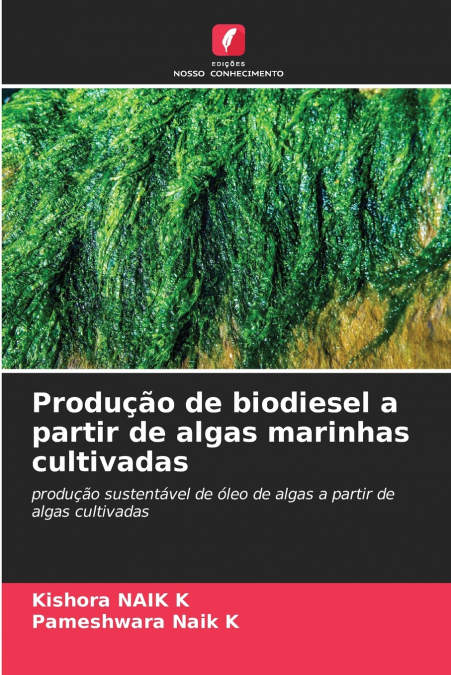
As macroalgas podem ser definidas como um grupo diversificado e distantemente relacionado, não filogenético, de eucariotas aquáticos macroscópicos pertencentes a Chlorophyta e Streptophyta (algas verdes), Rhodophyta (algas vermelhas), Phaeophyceae (algas castanhas) e Xanthophyceae (algas verde-amarelas). Na produção sustentável de biocombustíveis, as macroalgas têm várias vantagens potenciais em comparação com as plantas terrestres As macroalgas não necessitam de terrenos agrícolas ou de água doce para crescer e a produtividade de algumas espécies ou comunidades de macroalgas pode ser elevada, sendo tão elevada como a das plantas terrestres mais produtivas e das florestas tropicais Os compostos químicos das macroalgas podem ser utilizados em várias aplicações na indústria alimentar, forrageira ou química, antes de se utilizar A utilização de macroalgas na indústria dos biocombustíveis está ainda em desenvolvimento e mesmo os resultados recentes sobre este tema baseiam-se largamente em operações laboratoriais ou de mesoescala. Este livro fornece informações sobre a viabilidade da utilização das diferentes macroalgas e da sua cultura e compostos para a produção de biocombustíveis.
Artículos relacionados

  • The Green Architecture
    Ali Mirshafieyan / Ghazal Yeganeh / Maryam Zamani Motlagh
    Protecting green energy as well as non-renewable energy, as well as their sustainable use, many advances in the technology of extracting oil products and other reserves under the ground have caused many improvements. In this regard, proposing the design of buildings in which the consumption of fossil fuels reaches its lowest level is considered one of the important solutions in...
    Disponible

    82,54 €

  • Responsible Use and Management of Agrochemicals
    Juan Carlos Nava
    Uso y manejo responsable de agroquímicos is a work product of the author’s experiences (undergraduate and graduate professor, with research and extension projects), aimed at producers, companies, professionals, students, advisors, researchers, among others.Due to its structure and content, it is expected to be a valuable aid to all people directly or indirectly involved in the ...
    Disponible

    49,45 €

  • Hope in the Soil
    Ellen G White
    Before edible classrooms began 'sprouting' in elementary schools, before buzzwords like 'sustainable agriculture', 'organic,' or 'veganic' came into existence, an exceptional woman named Ellen G. White penned numerous letters and articles on the importance of farming, an outdoor life, and manual labor. Though often remembered for other things, Mrs. White was actively engaged in...
    Disponible

    18,38 €

  • The Green Revolution
    Binitha Sophine Emmanuel
    The Green Revolution, a transformative era in the annals of agriculture, emerged as a game-changing force during the mid-20th century, fundamentally reshaping the methodology of food production and steering the trajectory of global food security. Characterized by a sequence of technological breakthroughs, the Green Revolution aimed to substantially augment agricultural producti...
    Disponible

    53,23 €

  • Utilization of Stingless Bees, Tetragonula laeviceps (Smith)
    Dr. J. J. Pastagia / Dr. V. C. Gadhiya
    The present investigations on utilization of stingless bees, T. laeviceps Smith in net house condition carried out with the broad aspects like flowers visited by stingless bees, T. laeviceps Smith, toxicity of insecticides to T. laeviceps Smith workers, floral biology of musk melon, foraging behavior of stingless bees, T. laeviceps Smith in net house condition, effect of pollin...
    Disponible

    84,80 €

  • La révolution verte
    Binitha Sophine Emmanuel
    La révolution verte, une ère transformatrice dans les annales de l’agriculture, est apparue comme une force qui a changé la donne au milieu du 20e siècle, remodelant fondamentalement la méthodologie de la production alimentaire et orientant la trajectoire de la sécurité alimentaire mondiale. Caractérisée par une série de percées technologiques, la révolution verte visait à augm...
    Disponible

    53,29 €

Otros libros del autor

  • Production de biodiesel à partir d’algues cultivées
    Kishora NAIK K / Pameshwara Naik K
    Les macroalgues peuvent être définies comme un groupe non phylogénétique diversifié et éloigné d’eucaryotes aquatiques macroscopiques appartenant à Chlorophyta et Streptophyta (algues vertes), Rhodophyta (algues rouges), Phaeophyceae (algues brunes) et Xanthophyceae (algues jaune-vert). Dans la production durable de biocarburants, les macroalgues présentent plusieurs avantages ...
    Disponible

    95,23 €

  • Biodieselproduktion aus kultivierten Algen
    Kishora NAIK K / Pameshwara Naik K
    Makroalgen können als eine vielfältige und entfernt verwandte nicht-phylogenetische Gruppe makroskopischer aquatischer Eukaryoten definiert werden, die zu den Chlorophyta und Streptophyta (Grünalgen), Rhodophyta (Rotalgen), Phaeophyceae (Braunalgen) und Xanthophyceae (Gelbgrünalgen) gehören. Bei der nachhaltigen Produktion von Biokraftstoffen haben Makroalgen im Vergleich zu La...
    Disponible

    95,23 €

  • Produzione di biodiesel da alghe coltivate
    Kishora NAIK K / Pameshwara Naik K
    Le macroalghe possono essere definite come un gruppo eterogeneo e lontanamente correlato di eucarioti acquatici macroscopici appartenenti a Chlorophyta e Streptophyta (alghe verdi), Rhodophyta (alghe rosse), Phaeophyceae (alghe brune) e Xanthophyceae (alghe giallo-verdi). Nella produzione sostenibile di biocarburanti, le macroalghe presentano diversi vantaggi potenziali rispett...
    Disponible

    95,24 €

  • Produkcja biodiesla z hodowanych wodorostów morskich
    Kishora NAIK K / Pameshwara Naik K
    Makroglony można zdefiniować jako zróżnicowaną i daleko spokrewnioną niefilogenetycznie grupę makroskopowych eukariontów wodnych należących do Chlorophyta i Streptophyta (glony zielone), Rhodophyta (glony czerwone), Phaeophyceae (glony brunatne) i Xanthophyceae (glony żółto-zielone). W zrównoważonej produkcji biopaliw makroalgi mają kilka potencjalnych zalet w porównaniu z rośl...
    Disponible

    95,24 €

  • Biodiesel production from cultured seaweeds
    Kishora NAIK K / Pameshwara Naik K
    Macroalgae can be defined as a diverse and distantly related non-phylogenetic group of macroscopic aquatic eukaryotes belonging to Chlorophyta and Streptophyta (green algae), Rhodophyta (red algae), Phaeophyceae (brown algae) and Xanthophyceae (yellow-green algae). In the sustainable production of biofuels, macroalgae have several potential advantages compared to terrestrial pl...
    Disponible

    101,82 €