
Inicio > Artes > Post-Famine Ireland
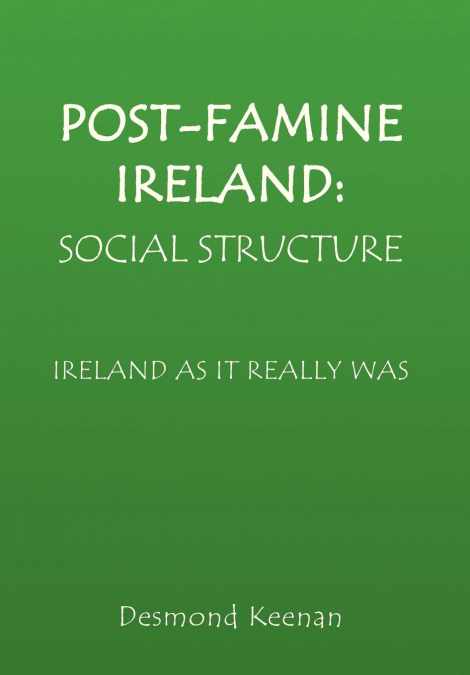
Post-Famine Ireland

Post-Famine Ireland

Desmond Keenan

26,69 €
IVA incluido
Disponible
Editorial:
Xlibris
Año de edición:
2006
Materia
Artes
ISBN:
9781425716028
26,69 €
IVA incluido
Disponible

Selecciona una librería:

  • Librería Samer Atenea
  • Librería Aciertas (Toledo)
  • Kálamo Books
  • Librería Perelló (Valencia)
  • Librería Elías (Asturias)
  • Donde los libros
  • Librería Kolima (Madrid)
  • Librería Proteo (Málaga)

Irish society and economy is studied objectively in this book as if it were a society in a distant region or in the distant past. The distortions of nationalist anti-British propaganda are removed. In particular the failure of the various separatist movements to devise an ideology which could unite and rally all the people of Ireland behind them is described. Ireland is analysed as a sociologist analyses societies and using the materials that a sociologist uses. Irish society is placed in the context of its time and place. It was one of the societies on either side of the North Atlantic Ocean. These countries were all to a greater or lesser degree developing their industries, improving their roads, building their railways, extending their trade, enlarging their towns and cities, deepening and expanding their ports, and modernising their institutions. Though religion was strong in all of them, new currents of thought, often derived from the American and French Revolutions, were being spread everywhere. It was largely an English-speaking society and its institutions were those of common law countries. As this study shows Ireland was a typical member of this group of nations. It was not the most advanced, but it was far from being the most backward. Some of the Nordic countries for example, were only beginning to follow Ireland's path of development. There is no evidence that membership of the United Kingdom hindered or retarded this development. The Irish however being closely linked to England always compared their progress with that of England which was a mistake. The 19th century was England's century, as the 15th century was Italy's. What caused the 'Industrial Revolution' where handcrafts gave way to the production by machinery to occur earlier in England than elsewhere is a subject that fascinates historians. How England came to possess the largest empire in modern times is another fascinating question. Why English institutions, a free press, a parliamentary democracy, religious tolerance, methods of education, and most modern sports came to be imitated is another one. The fact was that in the 19th century great parts of the world looked to Britain to see how they could modernise their societies and improve their economies. Ireland did likewise, and from an earlier date but never so successfully. Why Ireland was not as successful as Britain is not easily explained. Lack of coal and iron is not the explanation for some of Ireland's leading industries like linen, shipbuilding, rope-making and tobacco manufacture were developed from imported materials. Likewise in England, industries which depended largely on craftsmanship like the pottery industry flourished. Nor was Ireland's backwardness relative to England caused by oppressive law or restrictions for within the United Kingdom all operated under the same rules. Nor can the Catholic religion of Ireland be adduced as a cause, for most Irish businessmen were Protestants. It is not the purpose of this book to ask or settle these questions, but the simpler one of describing the facts of Irish society as it was, and to remove the distortions of propaganda. When one studies the actual facts it becomes clear that not only was Ireland neither oppressed nor backward but was actually one of the most advanced countries in the world at the time as progress was understood in the 19th century. Ireland by 1850 was already a well-developed modern society, more advanced than most countries in Europe. The period up to 1920 was one of increasing prosperity, and increasing social improvement. Every new development in the various aspects of society, industry, agriculture, communications, science and education, social improvements were all adopted. In this book I concentrate on the achievements that Irishmen can be proud of. One can look at Irish industrial achievements. Belfast showed how ships on the North Atlantic run should be built and fitted out. The greatest linen industry in the world

Artículos relacionados

  • The Eagle Returns
    C. Paul Burnham / CPaul Burnham
    The Gospel of John was long assumed to be the work of an eyewitness, usually identified as John, son of Zebedee. More recently, many have judged it the unhistorical product of a ''Johannine community.'' Reconsideration by Richard Bauckham has suggested that the author was a Jerusalem disciple who housed the ''Last Supper.'' This book explores the possibility that he was present...
    Disponible

    11,04 €

  • The Old Testament in Theology and Teaching
    APTS Press is privileged to offer this festschrift honoring Dr. Kay Fountain, who for more than twenty years has served the Lord at the Asia Pacific Theological Seminary (APTS), in Baguio City, Philippines, first as a student, then as a faculty member and finally as the Academic Dean. Our hope is that this book will reflect her passion for teaching and understanding the Old Tes...
    Disponible

    22,13 €

  • MEL4414 - Roberto Grela, La guitarra del tango
    Julián Graciano
    del mayor guitarrista de la historia del tango. Con solo percibir el empleo del plectro (la llamada púa de guitarra en nuestro canyengue) descubrimos un sonido y estilo tan particular que terminó por deslumbrar a todos. Pero si decimos “bastaría”, en potencial, es que nos debemos mucho más: suele decirse del gran Aníbal Troilo que su música y sus orquestas son la gran marca de ...
    Disponible

    29,64 €

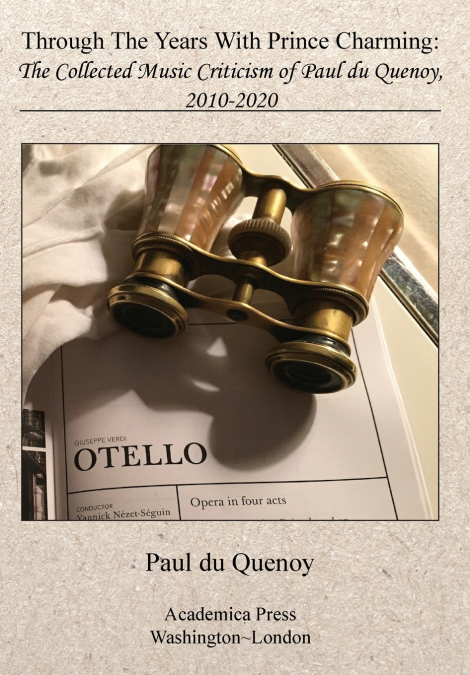
  • Through the years with prince charming
    Paul du Quenoy
    The past decade has overflowed in a raging stream of contradictions. Old certainties have yielded to relentless insecurity over a time when much of the human experience got immeasurably better even as many things only ever seemed to get worse. As Paul du Quenoy’s globetrotting criticism reveals, the arts were in a ferment that matched profound and yet totally unpredicted social...
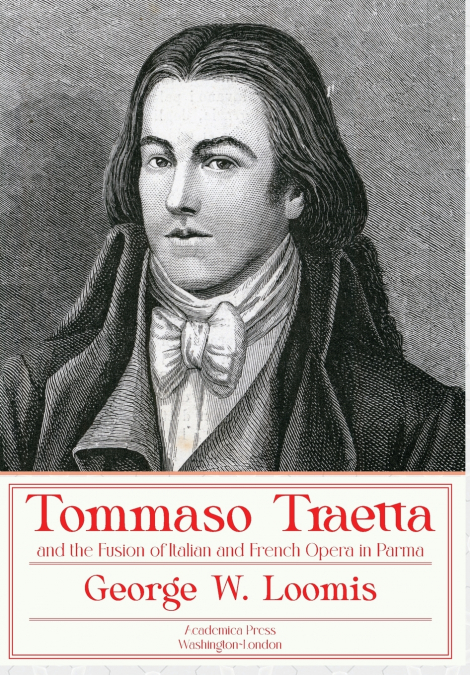
  • Tommaso Traetta and the Fusion of Italian and French Opera in Parma
    George W. Loomis
    In 1759, the court of the Italian Duchy of Parma adopted the inspiration of cultural creators who recommended a reform of Italian opera along French lines. These writers favored combining Italian-style music with the wider range of musical genres and scenic variety of French opera. As the music critic and commentator George W. Loomis shows in this groundbreaking volume, the you...
  • Somerset Maugham and the Cinema
    Robert Calder
    William Somerset Maugham (1874-1965) was one of the most prominent and productive authors of the twentieth century-and his works have been among the most cinematically transformed in history. For more than five decades, adaptations of his plays, stories, and novels dominated movie theaters and, later, television screens. More than ninety individual works were filmed, and for ma...

Otros libros del autor

  • Post-Famine Ireland
    Desmond Keenan
    This book describes the social and economic conditions in Ireland in the second half of the 19th century, that is after the Great Famine. Though the famine severely affected the under-developed parts of Ireland, it did not greatly affect the Irish economy as a whole . On the contrary, an ever-increasing output was now spread over a falling population. GDP per capita went on r...
    Disponible

    33,46 €

  • Pre-Famine Ireland
    Desmond Keenan
    This book describes the social and economic conditions in Ireland during the first half of the nineteenth century-that is up to and including the Great Famine. It is concerned about particular issues like the Catholic emancipation or the famine but looks at Irish society as a whole. Central and local government are described: the economy (agricultural and industrial), the churc...
    Disponible

    29,73 €

  • The Shorter History of Ireland
    Desmond Keenan
    This book is a shorter companion book to The Real History of Ireland: Warts and All. It deals systematically with the social and economic aspects of Ireland from the earliest days until 1921. Many books with regard to the history of Ireland suffer to a greater or lesser degree of political or ideological distortion. It was always the author’s aim to get at the actual facts of I...
  • The Shorter History of Ireland
    Desmond Keenan
    This book is a shorter companion book to The Real History of Ireland: Warts and All. It deals systematically with the social and economic aspects of Ireland from the earliest days until 1921. Many books with regard to the history of Ireland suffer to a greater or lesser degree of political or ideological distortion. It was always the author’s aim to get at the actual facts of I...
    Disponible

    22,84 €

  • The Social History of Ireland
    Desmond Keenan
    ...
  • The Social History of Ireland
    Desmond Keenan
    ...
    Disponible

    20,05 €