Librería Samer Atenea
 Kálamo Books
 Librería Elías (Asturias)
 Librería Kolima (Madrid)
 Librería Proteo (Málaga)
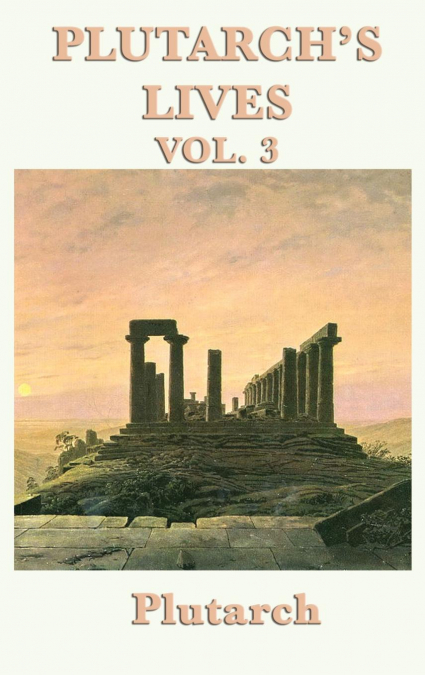
Plutarch’s Lives is a collection of biographies of famous Greeks and Romans, arranged in parallel to illuminate their common virtues and vices. This volume includes the lives of Aristides, Marcus Cato, Philopoemen, T.Q. Flamininus, Pyrrhus, and Caius Marius. Plutarch’s work offers insight into the character and morality of these figures and the cultures they inhabited.Plutarch explores the influence of character on the lives and destinies of famous men. His biographies, while historical, are also deeply concerned with moral lessons, offering readers examples of virtue and vice. His profiles of Aristides, known for his justice; Cato, for his austerity and integrity; Philopoemen, for his military skill; Flamininus, for his diplomatic prowess; Pyrrhus, for his ambition; and Marius, for his military reforms and political machinations, provide a window into the values of the ancient world.Plutarch’s Lives remains a foundational text for understanding classical history and moral philosophy, offering enduring insights into human nature and leadership.This work has been selected by scholars as being culturally important, and is part of the knowledge base of civilization as we know it. This work was reproduced from the original artifact, and remains as true to the original work as possible. Therefore, you will see the original copyright references, library stamps (as most of these works have been housed in our most important libraries around the world), and other notations in the work.This work is in the public domain in the United States of America, and possibly other nations. Within the United States, you may freely copy and distribute this work, as no entity (individual or corporate) has a copyright on the body of the work.As a reproduction of a historical artifact, this work may contain missing or blurred pages, poor pictures, errant marks, etc. Scholars believe, and we concur, that this work is important enough to be preserved, reproduced, and made generally available to the public. We appreciate your support of the preservation process, and thank you for being an important part of keeping this knowledge alive and relevant.