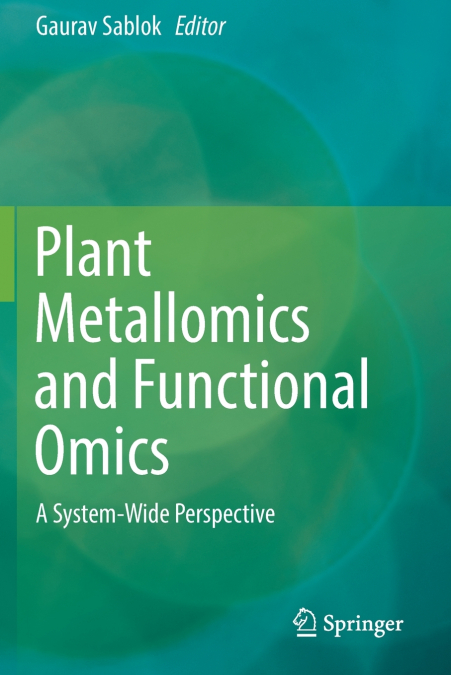
Plant Metallomics and Functional Omics

Plant Metallomics and Functional Omics

Gaurav Sablok

208,85 €
IVA incluido
Consulta disponibilidad
Editorial:
Springer Nature B.V.
Año de edición:
2019
Materia
Botánica y ciencias de las plantas
ISBN:
9783030191023

Selecciona una librería:

  • Librería Samer Atenea
  • Librería Aciertas (Toledo)
  • Kálamo Books
  • Librería Perelló (Valencia)
  • Librería Elías (Asturias)
  • Donde los libros
  • Librería Kolima (Madrid)
  • Librería Proteo (Málaga)

Major portion of the planet earth is covered by seas and oceans representing 96.5% of the planet’s water, playing a detrimental role in sustaining the plant including crop diversity and productivity for human consumption. Water resources contain both soluble and transition metals, which are easily absorbed by plants through roots as a first point of contact and subsequently play important physiological and biological functions in plants. Transition metals such as copper (Cu), iron (Fe), manganese (Mn) and zinc (Zn) contribute to the plant productivity by playing key functional roles in the photosynthesis. In addition, to their major role in regulating the plant productivity, they also play an important role by acting as homeostatic regulators in uni-parentally inherited chloroplasts and maintains the flow of the electron transfer. It is worthwhile to mention that they play a critical role as transporters, which acts as electron balancing units for managing the electrostatic potential across the membranes. In contrast, some metals such as Cd, As play a significant role in inducing the stress mechanism and influencing either directly or in-directly Haber-Weiss reactions either through the production of the reactive oxygen species (ROS) or through the membrane damage thus leading to leakage of membrane transporters. However, besides playing a detrimental role as transporters in plant system, excessive accumulation of these metals due to the increasing contamination in the marginal soil and water are posing important threats to the plant system. Realizing the toxic effects of the metals, several physiological evidences have been laid for the credence of the metal toxicity and their concurrent effect on plant productivity. Increasing effects of the metals as toxicants can have three adverse effects on the populations: population can move, persist via local adaptation or phenotypic plasticity, or die. Next generation sequencing studies have revolutionized our abilities to detect the changes in expression profiles across an array of genes, which can in-turn help to develop early markers of metal induced stress. Plant Metallomics and Functional Omics: A System-Wide Perspective focuses on the applications of the system wide understanding of the biological and functional interplay occurring at the juncture of the metalloid induced stress and toxicity. The main goal of this book is to familiarize the readers with the most up-to-date information on metal-induced physiological changes in plant species. 
Artículos relacionados

  • The Green Architecture
    Ali Mirshafieyan / Ghazal Yeganeh / Maryam Zamani Motlagh
    Protecting green energy as well as non-renewable energy, as well as their sustainable use, many advances in the technology of extracting oil products and other reserves under the ground have caused many improvements. In this regard, proposing the design of buildings in which the consumption of fossil fuels reaches its lowest level is considered one of the important solutions in...
    Disponible

    82,54 €

  • Responsible Use and Management of Agrochemicals
    Juan Carlos Nava
    Uso y manejo responsable de agroquímicos is a work product of the author’s experiences (undergraduate and graduate professor, with research and extension projects), aimed at producers, companies, professionals, students, advisors, researchers, among others.Due to its structure and content, it is expected to be a valuable aid to all people directly or indirectly involved in the ...
    Disponible

    49,45 €

  • Hope in the Soil
    Ellen G White
    Before edible classrooms began 'sprouting' in elementary schools, before buzzwords like 'sustainable agriculture', 'organic,' or 'veganic' came into existence, an exceptional woman named Ellen G. White penned numerous letters and articles on the importance of farming, an outdoor life, and manual labor. Though often remembered for other things, Mrs. White was actively engaged in...
    Disponible

    18,38 €

  • The Green Revolution
    Binitha Sophine Emmanuel
    The Green Revolution, a transformative era in the annals of agriculture, emerged as a game-changing force during the mid-20th century, fundamentally reshaping the methodology of food production and steering the trajectory of global food security. Characterized by a sequence of technological breakthroughs, the Green Revolution aimed to substantially augment agricultural producti...
    Disponible

    53,23 €

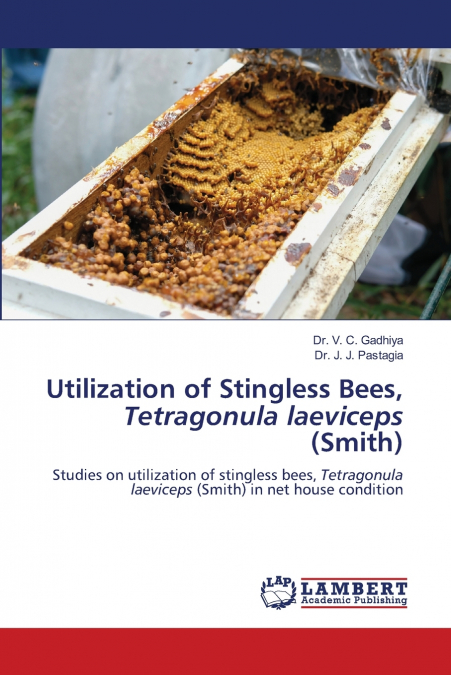
  • Utilization of Stingless Bees, Tetragonula laeviceps (Smith)
    Dr. J. J. Pastagia / Dr. V. C. Gadhiya
    The present investigations on utilization of stingless bees, T. laeviceps Smith in net house condition carried out with the broad aspects like flowers visited by stingless bees, T. laeviceps Smith, toxicity of insecticides to T. laeviceps Smith workers, floral biology of musk melon, foraging behavior of stingless bees, T. laeviceps Smith in net house condition, effect of pollin...
    Disponible

    84,80 €

  • La révolution verte
    Binitha Sophine Emmanuel
    La révolution verte, une ère transformatrice dans les annales de l’agriculture, est apparue comme une force qui a changé la donne au milieu du 20e siècle, remodelant fondamentalement la méthodologie de la production alimentaire et orientant la trajectoire de la sécurité alimentaire mondiale. Caractérisée par une série de percées technologiques, la révolution verte visait à augm...
    Disponible

    53,29 €

Otros libros del autor

  • Plant Metallomics and Functional Omics
    Gaurav Sablok
    Major portion of the planet earth is covered by seas and oceans representing 96.5% of the planet’s water, playing a detrimental role in sustaining the plant including crop diversity and productivity for human consumption. Water resources contain both soluble and transition metals, which are easily absorbed by plants through roots as a first point of contact and subsequently pla...
    Disponible

    148,73 €