Physiological Disorders of Fruit Crops

Physiological Disorders of Fruit Crops

Physiological Disorders of Fruit Crops

Savreet Sandhu

94,43 €
IVA incluido
Consulta disponibilidad
Editorial:
NIPA GENX Electronic Resources and Solns Pvt Ltd.
Año de edición:
2013
Materia
Botánica y ciencias de las plantas
ISBN:
9789381450581

Selecciona una librería:

  • Librería Desdémona
  • Librería Samer Atenea
  • Librería Aciertas (Toledo)
  • Kálamo Books
  • Librería Perelló (Valencia)
  • Librería Elías (Asturias)
  • Donde los libros
  • Librería Kolima (Madrid)
  • Librería Proteo (Málaga)

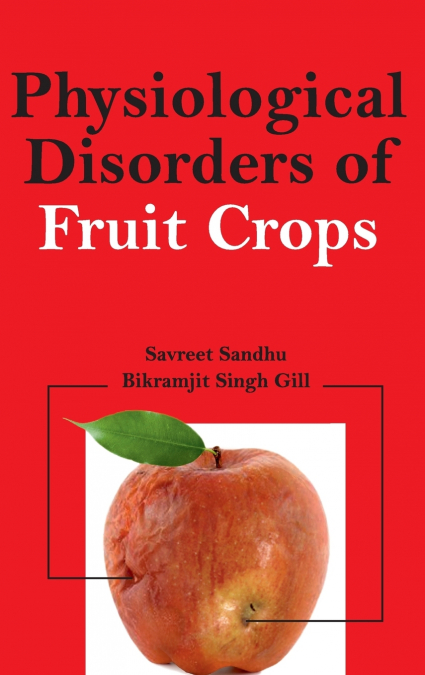
Physiological or abiotic disorders are mainly caused by changing environmental conditions such as temperature, moisture, unbalanced soil nutrients, inadequate or excess of certain soil minerals, extremes of soil pH and poor drainage. The distinction between physiological or abiotic disorders from other disorders is that they are not caused by living organisms (viruses, bacteria, fungi, insects, etc.), but they are the result of abiotic situations (inanimate) i.e. their agents are non-living in nature which causes deviation from normal growth. They results in physical or chemical changes in a plant which is far away from what is normal and is generally caused by an external factor. Non-infectious disorders in some cases are easy to identify, but others are difficult or even impossible to recognize. Most of them are non reversible once they have occurred. For the identification of physiological disorders it is important that one must know that: a) Physiological disorders are often caused by the deficiency or excess of something that supports life or by the presence of something that interferes with life. b) Physiological disorders can affect plants in all stages of their development. c) They are non-transmissible because they occur without or in absence of infectious agents. d) Plant reacts differently to the same agent and sometimes response is seen as a little reaction to death. e) Dealing with physiological disorders often means dealing with the consequences from a past event. f) Generally damaged and undamaged tissue is clearly demarcated. g) Physiological disorders not only causes damage themselves but also serve as the ’open door’ (entry) for pathogens.

Artículos relacionados

  • Omics in Plant Disease Resistance
    Vijai Bhadauria
    ...
  • Suitable Microbial Strain for Enhanced Production of Laccase
    Lalit Kumar Singh
    Enzymes are known to humanity since ancient times and getting increased impetus in the recent years due to its increasing importance in industries. Proteins enzymes are essentially created by living things to control their biochemical activities. Enzymes can also be thought of as catalysts that speed up biological reactions on their own. Based on their catalysed reaction types,...
  • Abiotic Stress Management
    J. B. GAJERA / S. J. DEVRA / S. P. KACHHADIYA
    'Abiotic Stress Management for Resilient Agriculture' offers a comprehensive guide to addressing environmental challenges in agriculture. This book explores innovative strategies and cutting-edge research to mitigate the impact of abiotic stresses such as drought, salinity, and extreme temperatures on crops. It provides practical insights into sustainable agricultural practices...
  • DEMOGRAFÍA DE LA PALMA DE SIERRA ESPIRITUANA EN BAMBURANAO, CUBA
    Abel Hernández-Muñoz
    Las poblaciones vegetales constituyen en muchos casos, fuentes importantes de recursos en los aspectos agropecuarios, forestales, recreativos y como refugio de fauna, por ello, su estudio es un aspecto necesario a abordar. Dentro de las características de las poblaciones de plantas en general, la densidad y distribución son importantes. La presente obra constituye el primer est...
  • The Green Architecture
    Ali Mirshafieyan / Ghazal Yeganeh / Maryam Zamani Motlagh
    Protecting green energy as well as non-renewable energy, as well as their sustainable use, many advances in the technology of extracting oil products and other reserves under the ground have caused many improvements. In this regard, proposing the design of buildings in which the consumption of fossil fuels reaches its lowest level is considered one of the important solutions in...
    Disponible

    82,54 €

  • Caractérisation des plantes envahissantes des marais
    Frédéric BANGIRINAMA / Jean Bosco Igirukwishaka
    Les invasions biologiques constituent la seconde source de destruction des écosystèmes. Mais les connaissances sur les taxons envahissants restent lacunaires au Burundi. Pour appuyer les gestionnaires des plantes envahissantes, une étude a été conduite dans les marais de la rivière Ruvubu, la plus importante rivière du Burundi. L’objectif étant de : Faire un inventaire floristi...