Inicio > Matemáticas y ciencia > Biologia, ciencias de la vida > Botánica y ciencias de las plantas > Perturbation du sol et puissance requise pour les pelles et les balais des cultivateurs
Perturbation du sol et puissance requise pour les pelles et les balais des cultivateurs

Perturbation du sol et puissance requise pour les pelles et les balais des cultivateurs

Ajay Kumar Sharma / Avinash Wakode / Punamchand Sapkale

101,39 €
IVA incluido
Disponible
Editorial:
KS OmniScriptum Publishing
Año de edición:
2026
Materia
Botánica y ciencias de las plantas
ISBN:
9786209647956
101,39 €
IVA incluido
Disponible

Selecciona una librería:

  • Librería Samer Atenea
  • Kálamo Books
  • Librería Elías (Asturias)
  • Librería Kolima (Madrid)
  • Librería Proteo (Málaga)

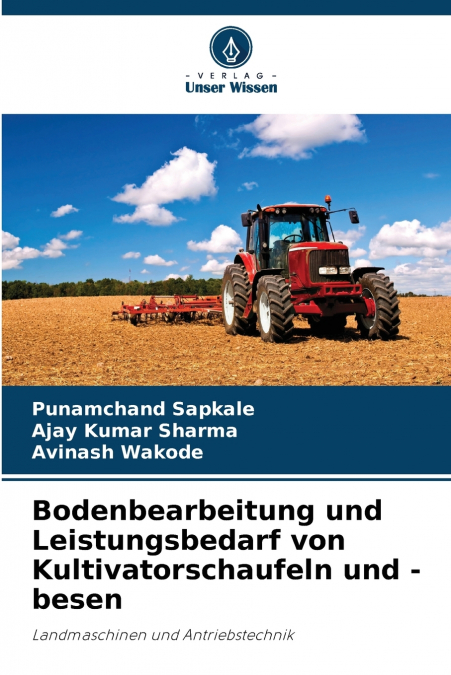
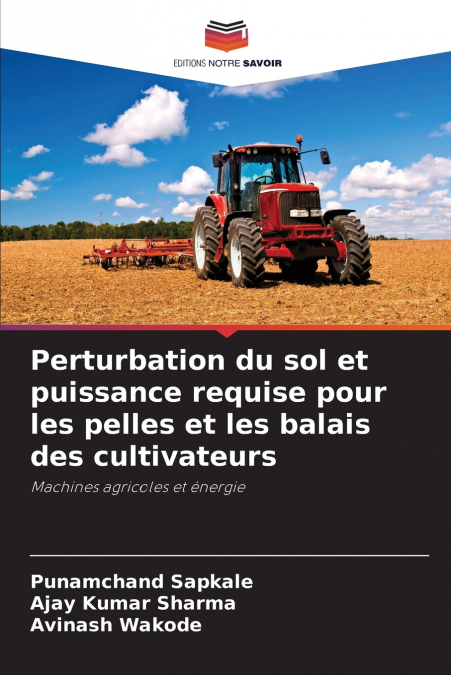
Le labour est une opération agricole très énergivore qui consomme environ 40 % de l’énergie totale nécessaire à la production agricole. Le cultivateur tracté est l’un des outils de labour les plus importants utilisés par les agriculteurs indiens. Il s’agit principalement d’un outil de labour utilisé pour ouvrir la terre, préparer le lit de semence pour l’ensemencement et après que les cultures ont poussé de quelques centimètres au-dessus du sol. Les pelles et les balais réversibles sont principalement utilisés pour ameublir et aérer le sol. Ils sont utilisés sur les cultivateurs et sont recommandés pour le travail secondaire du sol, mais la plupart des agriculteurs utilisent également cette pelle pour le travail primaire. Les expériences ont été menées dans un sol limono-sableux à l’aide de deux pelles et balais réversibles couramment utilisés, chacun à quatre vitesses d’avancement (0,97, 1,25, 1,53 et 1,81 m/s) et profondeurs (0,04, 0,08, 0,12 et 0,16 m) de fonctionnement, avec une teneur en humidité du sol d’environ 10,5 % (d.b.) dans des conditions contrôlées en silo. La largeur et la profondeur des sillons ont augmenté avec l’augmentation de la profondeur et de la vitesse de fonctionnement, tandis qu’une tendance inverse a été observée pour la hauteur des croissants, qui a diminué avec l’augmentation de la vitesse de fonctionnement pour les pelles et les balais.
Artículos relacionados

  • The Green Architecture
    Ali Mirshafieyan / Ghazal Yeganeh / Maryam Zamani Motlagh
    Protecting green energy as well as non-renewable energy, as well as their sustainable use, many advances in the technology of extracting oil products and other reserves under the ground have caused many improvements. In this regard, proposing the design of buildings in which the consumption of fossil fuels reaches its lowest level is considered one of the important solutions in...
    Disponible

    82,54 €

  • Responsible Use and Management of Agrochemicals
    Juan Carlos Nava
    Uso y manejo responsable de agroquímicos is a work product of the author’s experiences (undergraduate and graduate professor, with research and extension projects), aimed at producers, companies, professionals, students, advisors, researchers, among others.Due to its structure and content, it is expected to be a valuable aid to all people directly or indirectly involved in the ...
    Disponible

    49,45 €

  • Hope in the Soil
    Ellen G White
    Before edible classrooms began 'sprouting' in elementary schools, before buzzwords like 'sustainable agriculture', 'organic,' or 'veganic' came into existence, an exceptional woman named Ellen G. White penned numerous letters and articles on the importance of farming, an outdoor life, and manual labor. Though often remembered for other things, Mrs. White was actively engaged in...
    Disponible

    18,38 €

  • The Green Revolution
    Binitha Sophine Emmanuel
    The Green Revolution, a transformative era in the annals of agriculture, emerged as a game-changing force during the mid-20th century, fundamentally reshaping the methodology of food production and steering the trajectory of global food security. Characterized by a sequence of technological breakthroughs, the Green Revolution aimed to substantially augment agricultural producti...
    Disponible

    53,23 €

  • Utilization of Stingless Bees, Tetragonula laeviceps (Smith)
    Dr. J. J. Pastagia / Dr. V. C. Gadhiya
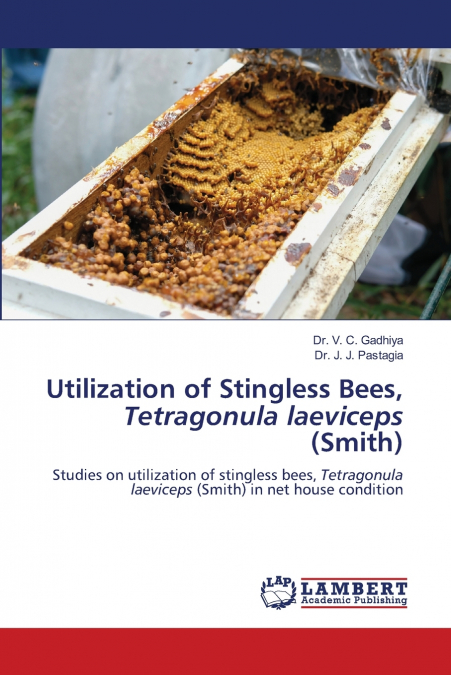
    The present investigations on utilization of stingless bees, T. laeviceps Smith in net house condition carried out with the broad aspects like flowers visited by stingless bees, T. laeviceps Smith, toxicity of insecticides to T. laeviceps Smith workers, floral biology of musk melon, foraging behavior of stingless bees, T. laeviceps Smith in net house condition, effect of pollin...
    Disponible

    84,80 €

  • La révolution verte
    Binitha Sophine Emmanuel
    La révolution verte, une ère transformatrice dans les annales de l’agriculture, est apparue comme une force qui a changé la donne au milieu du 20e siècle, remodelant fondamentalement la méthodologie de la production alimentaire et orientant la trajectoire de la sécurité alimentaire mondiale. Caractérisée par une série de percées technologiques, la révolution verte visait à augm...
    Disponible

    53,29 €

Otros libros del autor

  • Disturbo del suolo e fabbisogno energetico delle pale e delle spazzole dei coltivatori
    Ajay Kumar Sharma / Avinash Wakode / Punamchand Sapkale
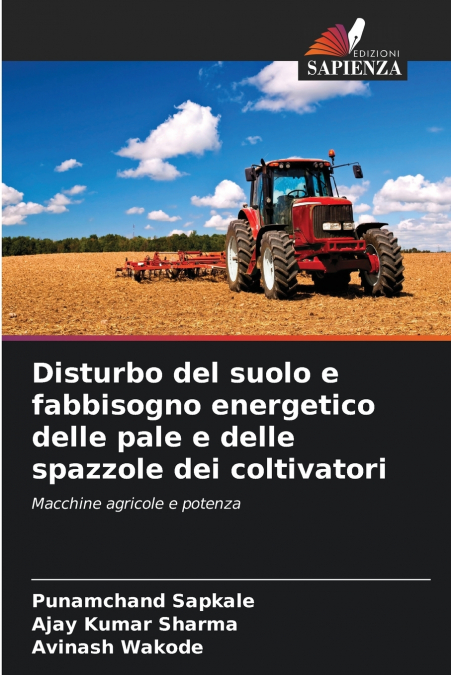
    La lavorazione del terreno è un’operazione agricola ad alta intensità energetica che consuma circa il 40% dell’energia totale necessaria per la produzione agricola. Il coltivatore trainato da trattore è uno degli attrezzi più importanti utilizzati dagli agricoltori indiani. Si tratta principalmente del tipo di attrezzo utilizzato per dissodare il terreno, preparare il letto di ...
    Disponible

    100,09 €

  • Zakłócenie gleby i zapotrzebowanie na moc łopat i zgarniaczy kultywatora
    Ajay Kumar Sharma / Avinash Wakode / Punamchand Sapkale
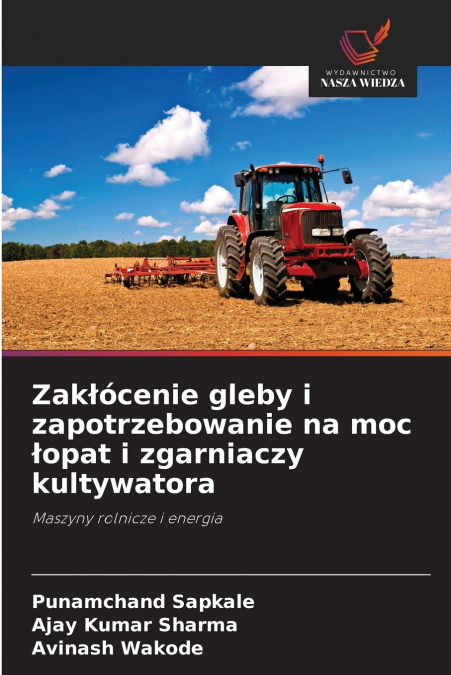
    Uprawa roli jest energochłonnym procesem rolniczym, który pochłania około 40 procent całkowitej energii potrzebnej do produkcji roślinnej. Kultywator ciągnięty przez traktor jest jednym z najważniejszych narzędzi uprawowych używanych przez indyjskich rolników. Jest to przede wszystkim rodzaj narzędzia uprawowego, które służy do rozrywania gleby, przygotowywania podłoża do wysie...
    Disponible

    100,09 €

  • Perturbação do solo e requisitos de potência das pás e varredoras cultivadoras
    Ajay Kumar Sharma / Avinash Wakode / Punamchand Sapkale
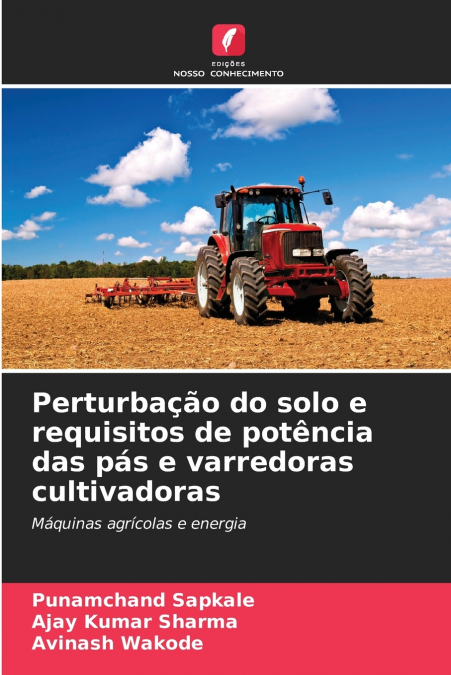
    A lavoura é uma operação agrícola que consome muita energia, representando cerca de 40% do total de energia necessária para a produção agrícola. O cultivador rebocado por trator é uma das ferramentas de lavoura mais importantes utilizadas pelos agricultores indianos. É principalmente o tipo de implemento de lavoura utilizado para abrir a terra, preparar o canteiro para a sement...
    Disponible

    100,09 €

  • Bodenbearbeitung und Leistungsbedarf von Kultivatorschaufeln und -besen
    Ajay Kumar Sharma / Avinash Wakode / Punamchand Sapkale
    Die Bodenbearbeitung ist ein energieintensiver landwirtschaftlicher Vorgang, der etwa 40 Prozent des gesamten Energieeinsatzes für die Pflanzenproduktion verbraucht. Der traktorbetriebene Grubber ist eines der wichtigsten Bodenbearbeitungsgeräte, die von indischen Landwirten verwendet werden. Es handelt sich in erster Linie um ein Bodenbearbeitungsgerät, das zum Aufbrechen des ...
    Disponible

    100,15 €