 Librería Samer Atenea
 Kálamo Books
 Librería Elías (Asturias)
 Librería Kolima (Madrid)
 Librería Proteo (Málaga)
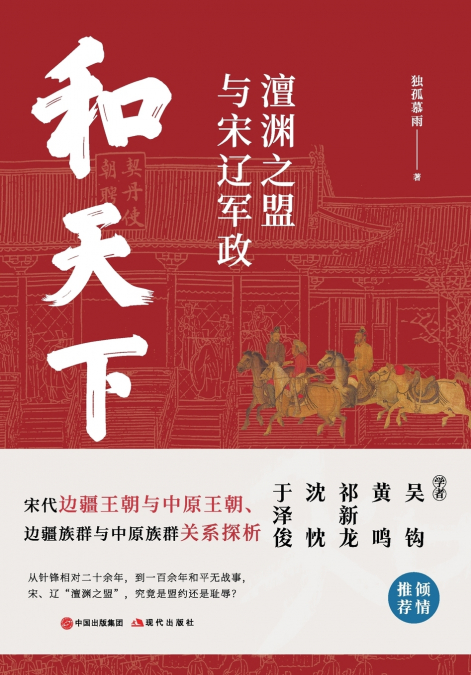
An Analysis of the Relationships between the Frontier Dynasties and the Central Plains Dynasties, as well as between Frontier Ethnic Groups and Central Plains Ethnic Groups during the Song Dynasty宋代边疆王朝与中原王朝、边疆族群与中原族群关系探析A Popular History Book on the Chanyuan Treaty between Song and LiaoIn 916, Yelü Abaoji, Emperor Taizu of Liao, rose to power in the northern deserts, unified the Khitan tribes, and began to rival the Central Plains regimes. In the autumn of 1004 (the first year of the Jingde era in the Song Dynasty and the 22nd year of the Tonghe era in the Khitan-led Liao Dynasty), Emperor Shengzong of Liao and his mother, Empress Dowager Xiao, led a massive army of 200,000 soldiers southward to invade Song territory. In response, Emperor Zhenzong of Song personally led his troops to the front lines, resulting in a tense standoff between the two sides at Chanzhou (Chanyuan). In the twelfth month of that winter, Song and Liao negotiated a peace treaty, formally establishing diplomatic relations and normalizing ties, an event known as the 'Chanyuan Treaty.'With the signing of this treaty, decades of hostility between the two powers came to a dramatic end, replaced by peace and cooperation. Both Song and Liao entered a rare period of development. For over a century afterward, the two nations coexisted peacefully, maintained friendly exchanges, and avoided the ravages of war. This allowed their societies to thrive and production to proceed uninterrupted.The positive significance of the Chanyuan Treaty is undeniable. However, since its inception, the treaty has been a subject of intense debate. Some view it as a humiliating pact forced upon the weaker side, others as a mutually beneficial peace agreement, and still others as a profound disgrace to the Song Dynasty. Some even attribute the eventual weakness and downfall of the Northern Song Dynasty to this treaty. In reality, the conflict between the Khitan and the Northern Song was a struggle for national survival, one in which neither side could afford to lose. Ending the war with dignity became the most viable option for both.Yet, the Chanyuan Treaty remains shrouded in mysteries. Who initially proposed the peace negotiations? Was Kou Zhun truly able to influence Emperor Zhenzong of Song? Who was responsible for the death of the Khitan general Xiao Talin? Why did Song officials believe Emperor Shengzong of Liao was 'lacking in wisdom'? And were the 300,000 units of payment made by the Song court a ransom or compensation for war losses?一部讲述宋辽澶渊之盟的通俗历史读物。916年,辽太祖耶律阿保机崛起于漠北,统一契丹各部族,开始与中原政权相抗衡。1004年(宋景德元年,契丹统和二十二年)秋,契丹天辅皇帝与其母萧太后率二十万大军南犯。宋真宗针锋相对,御驾亲征,双方对峙于澶州(澶渊)。冬十二月,宋辽议和,缔结盟约,实现邦交正常化,是为'澶渊之盟'。一纸盟约,戏剧性地结束了双方数十年的恩怨,化干戈为玉帛,宋、辽各自迎来了难得的发展时期。宋、辽百余年无战事,和平共处,友好往来,百姓无罹兵火,社会生产得以正常进行。'澶渊之盟'的积极性毋庸置疑,但盟约自缔结之初便聚讼不已,有说是城下之盟,有说是共赢的和平条约,有说是宋王朝的奇耻大辱,更有甚者将北宋羸弱直至覆亡归咎之。其实,契丹与北宋倾其所有的这次争锋,是关乎双方国运之战,谁也输不起,体面地结束战争,成了双方共同的选择。然而,'澶渊之盟'有许多令人费解之处。和议究竟是谁提出的?寇准真的能左右宋真宗吗?是谁杀死了契丹大将萧挞凛?为什么君臣认为辽圣宗'不慧'?宋廷支付的三十万究竟是赎款,还是赔款......