Inicio > Matemáticas y ciencia > Biologia, ciencias de la vida > Botánica y ciencias de las plantas > Organismi geneticamente modificati (OGM) e Organizzazione Mondiale del Commercio (OMC)
Organismi geneticamente modificati (OGM) e Organizzazione Mondiale del Commercio (OMC)

Organismi geneticamente modificati (OGM) e Organizzazione Mondiale del Commercio (OMC)

Furqan Khan / Yshab Rafiq

43,88 €
IVA incluido
Disponible
Editorial:
KS OmniScriptum Publishing
Año de edición:
2024
Materia
Botánica y ciencias de las plantas
ISBN:
9786207926398
43,88 €
IVA incluido
Disponible

Selecciona una librería:

  • Librería Samer Atenea
  • Librería Aciertas (Toledo)
  • Kálamo Books
  • Librería Perelló (Valencia)
  • Librería Elías (Asturias)
  • Donde los libros
  • Librería Kolima (Madrid)
  • Librería Proteo (Málaga)

Gli organismi geneticamente modificati si sono rivelati fruttuosi per Paesi come Stati Uniti, Argentina e Brasile. Gli OGM si sono evoluti attraverso l’ingegneria genetica, in cui il materiale genetico (DNA) viene combinato in un modo unico che non sarebbe stato possibile attraverso un processo di accoppiamento naturale. Gli OGM si stanno rivelando un argomento di conflitto e di prosperità a causa dei benefici e dei rischi ad essi associati. Una pianta o un animale costituito da uno o più transgenici è definito organismo geneticamente modificato. L’ingegneria genetica ha creato nuove varietà di colture alimentari, come il mais resistente ai parassiti, il cotone BT e gli animali con un migliore valore nutrizionale. Le colture agricole su larga scala sono finora gli organismi OGM più utilizzati, come il mais, la soia, la colza, il cotone e il grano. Nel nostro Paese, il cotone BT è stato introdotto nel 2002, ma gli Stati in cui è stato introdotto ne hanno negato le prestazioni e hanno chiesto alla Commissione per l’approvazione dell’ingegneria genetica di ritirare le sementi. L’OMC è stata coinvolta per la prima volta nelle questioni relative agli OGM quando c’è stato un conflitto tra l’UE e gli Stati Uniti ed è stato presentato un caso noto come caso CE-Biotecnologia.
Artículos relacionados

  • The Green Architecture
    Ali Mirshafieyan / Ghazal Yeganeh / Maryam Zamani Motlagh
    Protecting green energy as well as non-renewable energy, as well as their sustainable use, many advances in the technology of extracting oil products and other reserves under the ground have caused many improvements. In this regard, proposing the design of buildings in which the consumption of fossil fuels reaches its lowest level is considered one of the important solutions in...
    Disponible

    82,54 €

  • Responsible Use and Management of Agrochemicals
    Juan Carlos Nava
    Uso y manejo responsable de agroquímicos is a work product of the author’s experiences (undergraduate and graduate professor, with research and extension projects), aimed at producers, companies, professionals, students, advisors, researchers, among others.Due to its structure and content, it is expected to be a valuable aid to all people directly or indirectly involved in the ...
    Disponible

    49,45 €

  • Hope in the Soil
    Ellen G White
    Before edible classrooms began 'sprouting' in elementary schools, before buzzwords like 'sustainable agriculture', 'organic,' or 'veganic' came into existence, an exceptional woman named Ellen G. White penned numerous letters and articles on the importance of farming, an outdoor life, and manual labor. Though often remembered for other things, Mrs. White was actively engaged in...
    Disponible

    18,38 €

  • The Green Revolution
    Binitha Sophine Emmanuel
    The Green Revolution, a transformative era in the annals of agriculture, emerged as a game-changing force during the mid-20th century, fundamentally reshaping the methodology of food production and steering the trajectory of global food security. Characterized by a sequence of technological breakthroughs, the Green Revolution aimed to substantially augment agricultural producti...
    Disponible

    53,23 €

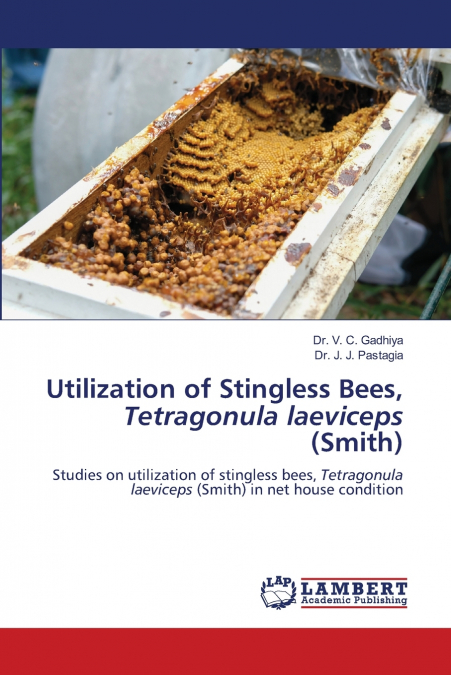
  • Utilization of Stingless Bees, Tetragonula laeviceps (Smith)
    Dr. J. J. Pastagia / Dr. V. C. Gadhiya
    The present investigations on utilization of stingless bees, T. laeviceps Smith in net house condition carried out with the broad aspects like flowers visited by stingless bees, T. laeviceps Smith, toxicity of insecticides to T. laeviceps Smith workers, floral biology of musk melon, foraging behavior of stingless bees, T. laeviceps Smith in net house condition, effect of pollin...
    Disponible

    84,80 €

  • La révolution verte
    Binitha Sophine Emmanuel
    La révolution verte, une ère transformatrice dans les annales de l’agriculture, est apparue comme une force qui a changé la donne au milieu du 20e siècle, remodelant fondamentalement la méthodologie de la production alimentaire et orientant la trajectoire de la sécurité alimentaire mondiale. Caractérisée par une série de percées technologiques, la révolution verte visait à augm...
    Disponible

    53,29 €

Otros libros del autor

  • Organismes génétiquement modifiés (OGM) et Organisation mondiale du commerce (OMC)
    Furqan Khan / Yshab Rafiq
    Les organismes génétiquement modifiés se sont révélés fructueux pour des pays comme les États-Unis, l’Argentine et le Brésil. Les OGM ont évolué grâce au génie génétique, qui permet de combiner le matériel génétique (ADN) d’une manière unique, ce qui n’aurait pas été possible dans le cadre d’un processus de reproduction naturel. Les OGM s’avèrent être un sujet de conflit et de ...
    Disponible

    43,88 €

  • Gentechnisch veränderte Organismen (GVO) und Welthandelsorganisation (WTO)
    Furqan Khan / Yshab Rafiq
    Gentechnisch veränderte Organismen haben sich für Länder wie die USA, Argentinien und Brasilien als fruchtbar erwiesen. GVOs sind durch Gentechnik entstanden, bei der das genetische Material (DNA) auf eine einzigartige Weise kombiniert wird, die durch natürliche Paarung nicht möglich gewesen wäre. GVOs sind aufgrund der damit verbundenen Vorteile und Risiken sowohl ein Thema fü...
    Disponible

    43,88 €

  • Organismos Geneticamente Modificados (OGM) e Organização Mundial do Comércio (OMC)
    Furqan Khan / Yshab Rafiq
    Os organismos geneticamente modificados revelaram-se frutuosos para países como os EUA, a Argentina e o Brasil. Os OGM evoluíram através da engenharia genética, na qual o material genético (ADN) é combinado de uma forma tão única que não seria possível através do processo natural de acasalamento. Os OGM estão a revelar-se um tema de conflito e também de prosperidade devido aos ...
    Disponible

    43,88 €