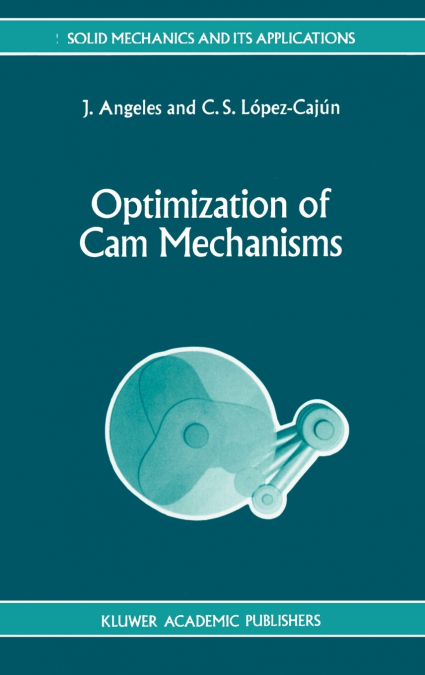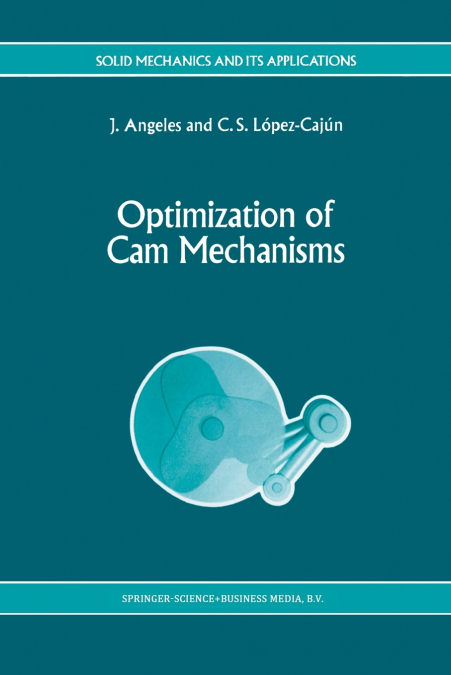
Optimization of Cam Mechanisms

Optimization of Cam Mechanisms

Carlos S. López-Cajún / Jorge Angeles

269,22 €
IVA incluido
Disponible
Editorial:
Springer Nature B.V.
Año de edición:
2012
Materia
Ingeniería mecánica
ISBN:
9789401055833
269,22 €
IVA incluido
Disponible

Selecciona una librería:

  • Librería Samer Atenea
  • Librería Aciertas (Toledo)
  • Kálamo Books
  • Librería Perelló (Valencia)
  • Librería Elías (Asturias)
  • Donde los libros
  • Librería Kolima (Madrid)
  • Librería Proteo (Málaga)

1. 1 Preliminary Concepts A cam mechanism is a mechanical system consisting of three basic components: a driving element, called the cam; a driven element, termed the follower; and a fixed frame. Sometimes, an intermediate element is introduced between the cam and the follower with the purpose of improving the mechanism performance. This element is called the roller because function is to produce a pure-rolling relative motion be­ tween the cam and the follower. The purpose ofa cam mechanism is the transmission of power or information. In applications concerning power transmission, the main good to be transmitted is force or torque; in applications ofinformation transmission, the main good transmitted takes the form of motion signals. Most modern appli­ cations of cam mechanisms, to be described shortly, are of the former type. Cam mechanisms used for information transmission were traditionally found in measuring instruments. With the advent ofmodern microprocessor-based hardware, this typeof application is becoming less common. Nevertheless, cam mechanisms are still used in a wide spectrum of applications, especially in automatic machines and instruments, textile machinery, computers, printing presses, food-processing equipment, internal combustion engines, control systems, and photographic equipment (Prenzel, 1989). In the design of cam mechanisms, the engineer performs several activities, namely, task definition, synthesis, analysis, optimization, and dynamic simulation. These tasks do not always follow this order. In fact, some loops may appear in the foregoing tasks, such as those illustrated in Fig. 1. 1. 1.
Artículos relacionados

  • Lab Manual-MSOE02-UFPT
    Dr. Medhat Khalil / DrMedhat Khalil / Medhat khalil
    Universal Trainer Lab Manual associated with the text book HSV2 and course MSOE02 (Electro-Hydraulic Components and Systems). The manual contains lab numbers 20 to 29. It also contains instructions about the lab objectives, the devices used in the lab, the step-by-step procedure of the lab and the expected observations. ...
    Disponible

    27,55 €

  • Reliability in Power Electronics and Electrical Machines
    Hashem Oraee / Shahriyar Kaboli
    In modern industries, electrical energy conversion systems consist of two main parts: electrical machines and power electronic converters. With global electricity use at an all-time high, uninterrupted operation of electrical power converters is essential. Reliability in Power Electronics and Electrical Machines: Industrial Applications and Performance Models provides an in-dep...
  • Introduction to Engineering Design, Book 11, 4th Edition
    Jim Dally
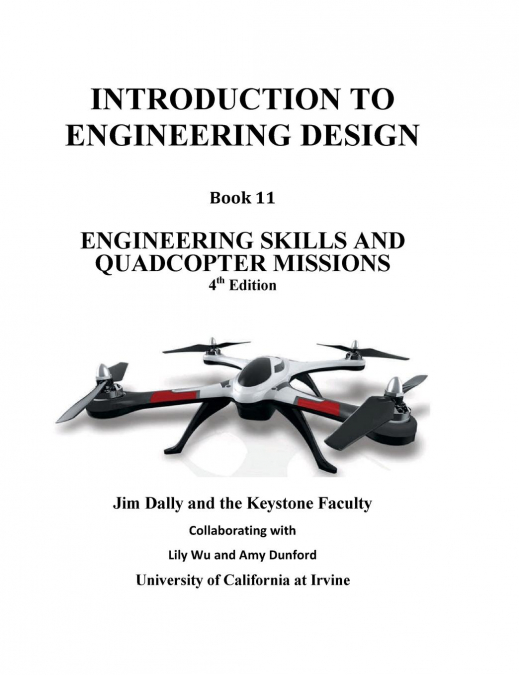
    This book is the fourth edition of the eBook edition of the eleventh textbook in this series: Introduction to Engineering Design.  Jim Dally, working with College House Enterprises, LLC and faculty members in the Keystone Program within the Clark School of Engineering, has prepared ten previous textbooks in this series—a new one almost every 18 months.  These books are written ...
    Disponible

    79,79 €

  • EMBEDDED COOLING OF ELECTRONIC DEVICES
    IYENGAR MADHUSUDAN / JUSTIN A WEIBEL MEH MADHUSUDAN IYENGAR
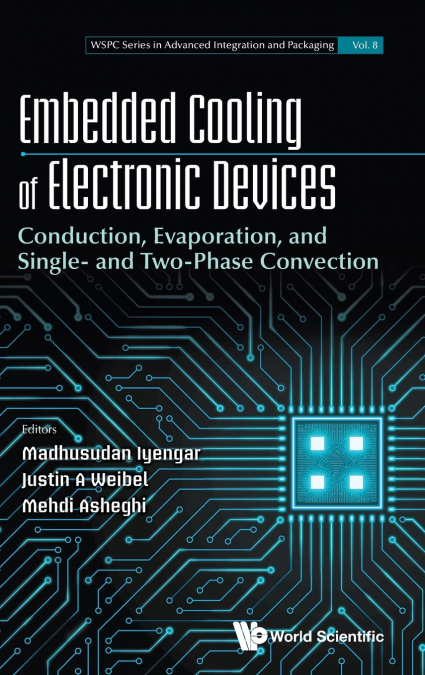
    This book is a comprehensive guide on emerging cooling technologies for processors in microelectronics. It covers various topics such as chip-embedded two-phase cooling, monolithic microfluidic cooling, numerical modeling, and advances in materials engineering for conduction-limited direct contact cooling, with a goal to remedy high heat flux issues.The book also discusses the ...
  • Motorcycle Design
    James Sadauckas / Roberto Lot
    This book aims to provide the core concepts of motorcycle dynamics and illustrates their application in vehicle design to readers who have a serious interest in the subject and in particular engineers with a career path in the powered two wheelers sector. ...
    Disponible

    83,23 €

  • Advances in MEMS and Microfluidic Systems
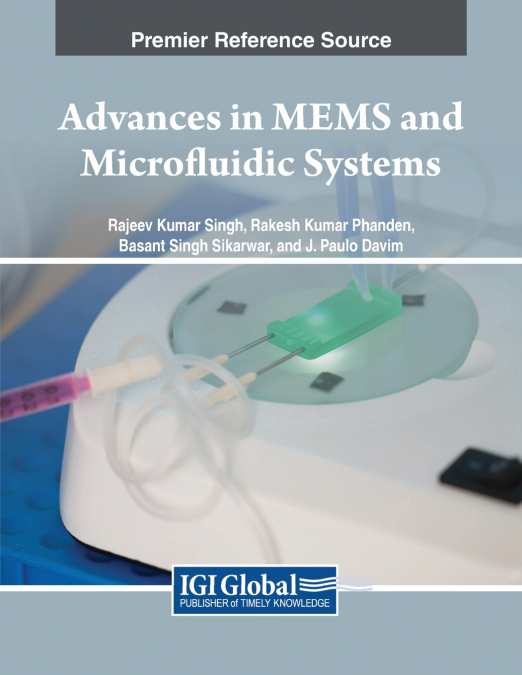
    Microelectromechanical systems (MEMS) device applications are common in many areas. Micromirror arrays are used as video projectors; microsensors find their application for measuring acceleration, temperature, and pressure; and they can also be used in the medical field for measuring blood pressure. Microfluidics have also been widely employed in life sciences applications, suc...
    Disponible

    235,81 €

Otros libros del autor

  • Optimization of Cam Mechanisms
    Carlos S. López-Cajún / Jorge Angeles
    1. 1 Preliminary Concepts A cam mechanism is a mechanical system consisting of three basic components: a driving element, called the cam; a driven element, termed the follower; and a fixed frame. Sometimes, an intermediate element is introduced between the cam and the follower with the purpose of improving the mechanism performance. This element is ca...