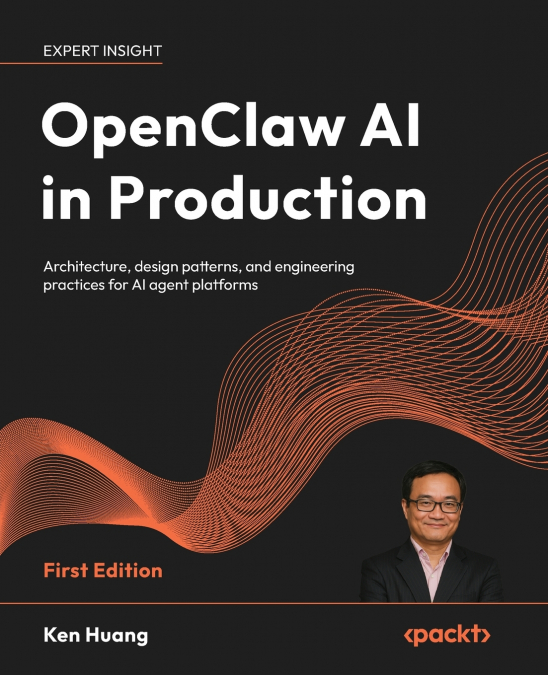

OpenClaw AI in Production

OpenClaw AI in Production

Ken Huang

62,20 €
IVA incluido
Disponible
Editorial:
Packt Publishing
Año de edición:
2026
Materia
Inteligencia artificial
ISBN:
9781807785017
62,20 €
IVA incluido
Disponible

Selecciona una librería:

  • Librería Samer Atenea
  • Kálamo Books
  • Librería Elías (Asturias)
  • Librería Kolima (Madrid)
  • Librería Proteo (Málaga)

Build production grade AI agent platforms on OpenClaw with security, state management, and resilience patterns that are held under real loadDRM-free PDF version + access to Packt’s next-gen Reader*Key Features:- Apply a reusable pattern language, from Hub and Spoke to Heartbeat Loop across any agent stack- Embed zero trust identity, PBAC, and fault injection into your architecture from the first chapter- Deploy OpenClaw with observable, self correcting infrastructure ready for federated and edge runtimesBook Description:Shipping a working agent prototype is easier than keeping it reliable under concurrent sessions, real-world tool failures, and adversarial inputs. Most AI tutorials leave this engineering discipline unaddressed.This book works through that discipline using OpenClaw, an open-source AI agent operating system, as a practical reference platform. Each chapter opens with a realistic production challenge, such as a cascade failure or a prompt injection attempt, then dissects the relevant OpenClaw internals, identifies the pattern that addresses it, and closes with an implementation checklist and a hands-on exercise.You will move through the six-phase request pipeline, distributed session state and compaction, zero-trust identity and policy-based access control, hook-based observability and self-correcting stacks, chaos engineering for agent runtimes, and high-throughput concurrency patterns. Security is not treated as a final chapter. Token exchange, mTLS, and sandboxing appear throughout the book and within every architectural section, just as they should in the systems you build.By the end, you will be able to design, operate, and scale production AI agent platforms with the engineering rigor of distributed databases and service meshes, and extend them to federated, edge-deployed, and decentralized architectures.*Email sign-up and proof of purchase requiredWhat You Will Learn:- Design a Gateway control plane that scales horizontally without coupling- Route requests through a six-phase pipeline without creating latency bottlenecks- Implement zero-trust identity and Token Exchange as structural, not add-on, concerns- Manage distributed session state with safe compaction and CRDT-friendly design- Instrument agent reasoning with semantic observability beyond uptime monitoring- Inject faults deliberately to verify that resilience patterns hold under load- Extend OpenClaw toward federated gateways and decentralized identity meshesWho this book is for:AI engineers, platform architects, and senior software engineers building autonomous agent systems in production. Readers should be comfortable with Python, distributed systems concepts, and REST or WebSocket APIs. Familiarity with OpenClaw’s core architecture and components is recommended, as the book focuses on production implementation patterns rather than introductory concepts.Table of Contents- The OpenClaw Architecture: Decoupling and Scaling- Request Traversal Without Bottlenecks- Containing Cascading Failures Across the Stack- Identity and Encryption as Architectural Fabric- Policy-Based Access Control in OpenClaw- State Management in Distributed OpenClaw Environments- Offloading Cross-Cutting Concerns- Observability Beyond Simple Monitoring- Designing a Self-Correcting Stack- API Gateway Patterns for OpenClaw- Resilience Testing Through Fault Injection- High-Throughput and Low-Latency Design Patterns- Ecosystem Roadmap and Decentralized Deployments
Artículos relacionados

  • Modeling and Simulation Techniques in Structural Engineering
    The development of new and effective analytical and numerical models is essential to understanding the performance of a variety of structures. As computational methods continue to advance, so too do their applications in structural performance modeling and analysis. Modeling and Simulation Techniques in Structural Engineering presents emerging research on computational techniqu...
  • Arduino Programming
    Ryan roffe
    New to programming and seeking an open-source electronic interface? Look no further than Arduino!With various Arduino models available and a plethora of online and offline projects utilizing Arduino technology, its versatility and user-friendliness have drawn both beginners and experts alike.Introducing 'Arduino Programming: A Comprehensive Beginner’s Tutorial to Master Arduin...
    Disponible

    23,50 €

  • Modeling and Simulation of Functional Nanomaterials for Forensic Investigation
    Nanotechnology continues to contribute to the progress of innovations in the area of forensic science ranging from sensing, DNA monitoring, and counterfeiting to fingerprinting. In recent years, functional nanomaterials are widely applied in nanoscience and forensic investigation. They can be used in future interdisciplinary research by scientists, engineers, and biotechnologis...
    Disponible

    249,04 €

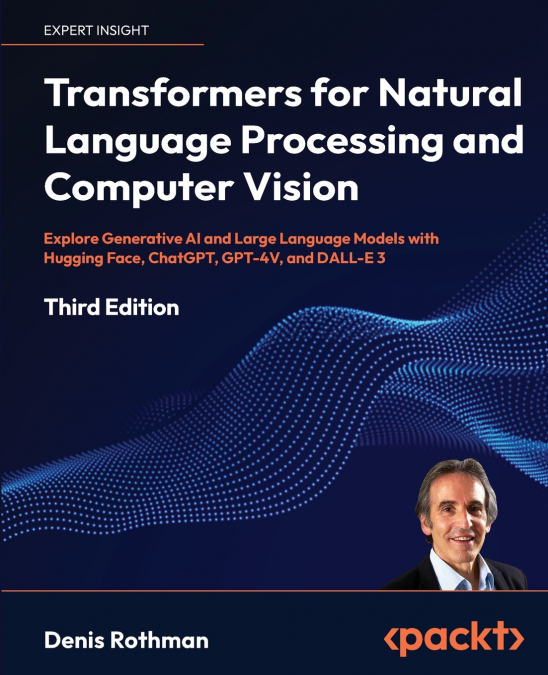
  • Transformers for Natural Language Processing and Computer Vision - Third Edition
    Denis Rothman
    The definitive guide to LLMs, from architectures, pretraining, and fine-tuning to Retrieval Augmented Generation (RAG), multimodal AI, risk mitigation, and practical implementations with ChatGPT, Hugging Face, and Vertex AIGet With Your Book: PDF Copy, AI Assistant, and Next-Gen Reader FreeKey Features:- Compare and contrast 20+ models (including GPT, BERT, and Llama) and multi...
    Disponible

    79,99 €

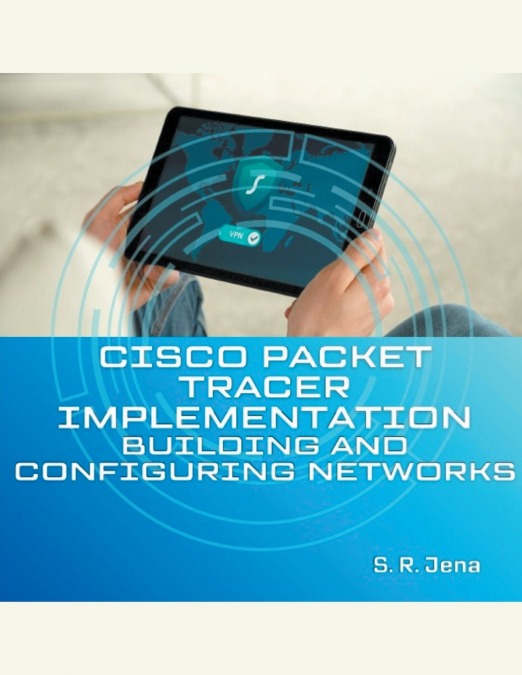
  • Cisco Packet Tracer Implementation
    S. R. Jena
    Welcome to the World of Cisco Packet Tracer! This book 'Cisco Packet Tracer Implementation: Building and Configuring Networks' serves as a comprehensive guide for network engineers, students, and enthusiasts who want to master the art of building and configuring networks using Cisco Packet Tracer. In today’s digital age, networks play a critical role in connecting people, devic...
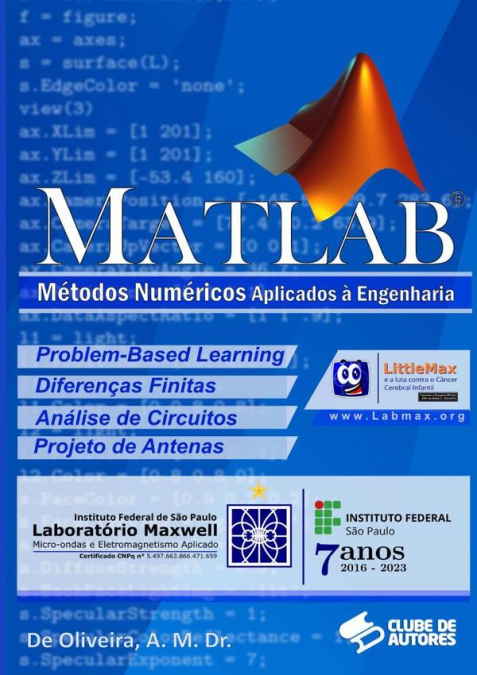
  • Matlab
    De Dr. A. M. Oliveira
    O objetivo deste trabalho é apresentar a aplicação da metodologia de aprendizagem baseada em problemas (PBL) paraaulas da disciplinas de Algoritmos e Cálculo Numérico em Matlab para cursos de Engenharia, com intuito de comprometer os alunos com a resolução de problemas reais de engenharia através do uso da PBL de tal forma que os mesmos sintam-se inspirados a participar das aul...
    Disponible

    15,08 €

Otros libros del autor

  • Agentic AI
    Ken Huang
    This book analyzes the rise and transformative impact of generative AI agents or Agentic AI across industries, offering a comprehensive exploration of their development, applications, and implications. It highlights how these systems are revolutionizing business processes, enhancing decision-making, and reshaping entire sectors from finance to healthcare. It traces the evolutio...
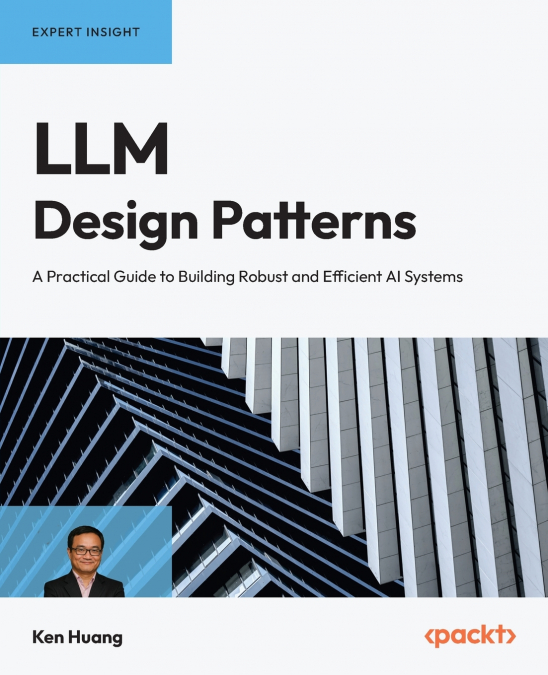
  • LLM Design Patterns
    Ken Huang
    Explore reusable design patterns, including data-centric approaches, model development, model fine-tuning, and RAG for LLM application development and advanced prompting techniquesKey Features:- Learn comprehensive LLM development, including data prep, training pipelines, and optimization- Explore advanced prompting techniques, such as chain-of-thought, tree-of-thought, RAG, an...
    Disponible

    77,88 €