
Inicio > Humanidades > Historia > Historia: acontecimientos y temas específicos > Historia social y cultural > O Samba como Signo da Identidade Cultural na Música Popular Brasileira
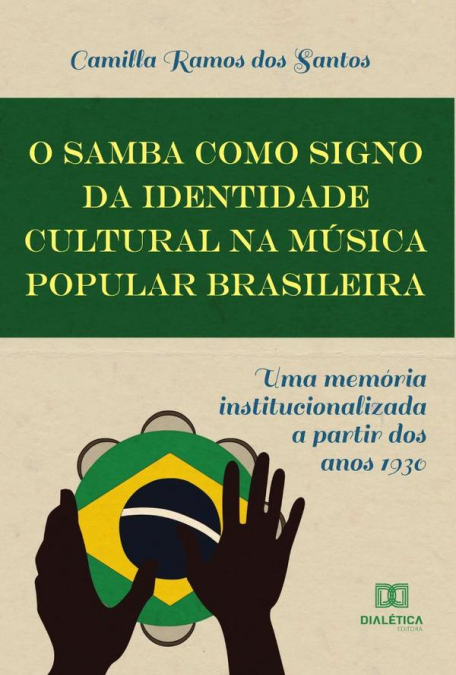
O Samba como Signo da Identidade Cultural na Música Popular Brasileira

O Samba como Signo da Identidade Cultural na Música Popular Brasileira

Camilla Ramos dos Santos

24,44 €
IVA incluido
Disponible
Editorial:
Editora Dialetica
Año de edición:
2021
Materia
Historia social y cultural
ISBN:
9786525206219
24,44 €
IVA incluido
Disponible

Selecciona una librería:

  • Librería Samer Atenea
  • Librería Aciertas (Toledo)
  • Kálamo Books
  • Librería Perelló (Valencia)
  • Librería Elías (Asturias)
  • Donde los libros
  • Librería Kolima (Madrid)
  • Librería Proteo (Málaga)

O Samba, linguagem musical que representa a Cultura Afro-brasileira, foi inscrito na história como um signo identitário do Brasil, nos anos 1930, mediante um imaginário mítico e uma política economicista. Neste estudo, é analisado o surgimento do Samba na cidade do Rio de Janeiro e a sua incorporação à história da produção cultural do Brasil, assim como a sua inscrição como mercadoria cultural e o imaginário político dos anos 1930. Apesar de representar o Brasil internacionalmente, a Cultura Afro-brasileira só foi incorporada efetivamente como parte da memória e identidade desta nação mediante as políticas afirmativas dos anos 1970. São enfatizados os antagonismos presentes nesse quadro discursivo e as soluções encontradas para combater o racismo. Postula-se uma teoria materialista do discurso, que constitui a sistematização de um nível de existência sócio-histórica e geopolítica, que coteja conceitos que enfatizam a materialidade discursiva inscrita na Música Popular Brasileira nos anos 1930. É realizado um exercício topográfico como um dispositivo de análise descritiva, enfatizando o corpo cognoscente e o fenômeno do assujeitamento ideológico a partir de tecnologias do imaginário na Era do Rádio. Referente a tópos discursivos, a memória foi articulada como um paradigma da cognição, ao tornar-se perceptível e inteligível para a representação da linguagem territorial, a ser compartilhada no complexo da luta entre classes na dinâmica intersubjetiva da metáfora do indivíduo político. A obra Casa-Grande e Senzala, de Gilberto Freyre, é referenciada como um texto literário que disseminou o mito da democracia racial. 10
Artículos relacionados

  • Arizal
    Raphael Afilalo
    The Ari overflowed with Torah. He was expert in Scripture, Mishnah, Talmud, Midrash, Maaseh Bereishit and Maaseh Merkavah. About all the different levels of prophecy, their details and from which level the prophets had their revelations.  He understood the whistling of the trees, the grass and stones, the language of the birds and other animals, the conversations of angels, the...
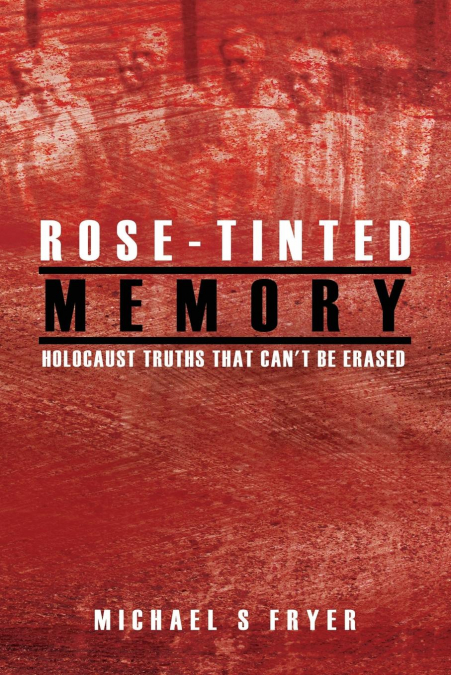
  • Rose-tinted Memory
    Michael S Fryer
    “Those who deny Auschwitz would be ready to remake it”.  ~ Primo Levi, Holocaust survivor and author Seventy years after the mass murder of the Jews of Europe, Holocaust denial and Holocaust revisionism are creeping into our overall perception of what actually happened.Christendom has not ‘denied’ Holocaust, but it has attempted to create a memory of Holocaust which suggests th...
    Disponible

    8,84 €

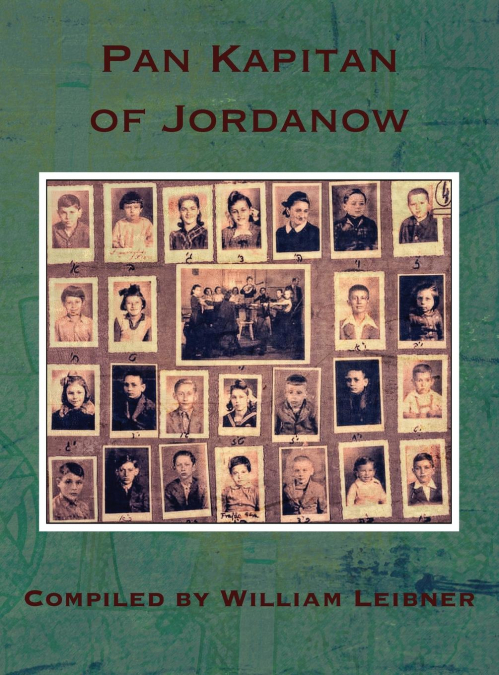
  • Pan Kapitan of Jordanow
    William Leibner
    Yeshayahu Drucker devoted a good part of his life to rescuing Jewish children from non-Jewish homes. Many parents had given their children to Polish neighbors for safekeeping during the war. Unfortunately most of the parents did not survive the Shoah. At the end of the war, there was no one to claim the children and they remained with the “adopted” Polish families. Following hi...
  • Holy Dissent
    Glenn Dynner
    BThe religious communities of early modern Eastern Europe—particularly those with a mystical bent—are typically studied in isolation. Yet the heavy Slavic imprint on Jewish popular mysticism and pervasive Judaizing tendencies among Christian dissenters call into question the presumed binary quality of Jewish-Christian interactions. In Holy Dissent: Jewish and Christian Mystics ...
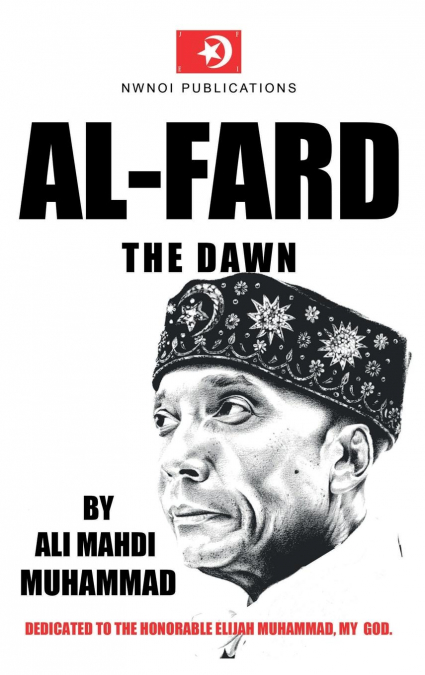
  • AL-FARD
    Ali Mahdi Muhammad
    The Al-Fard, or the The Dawn, has captured the early rays of Our history. This history is essential if we are to be brought face to face with the One true and living God of the universe. The purpose of this writing is to bring the reader step by step, one degree at a time to the reality of God in person. The teachings of Our Father elevates the believer to the level of Godhood ...
  • Wild Things. Nature and the Social Imagination
    HISTORIES OF HUMAN CONSTRUCTIONS OF NATUREWild Things: Nature and the Social Imagination assembles eleven substantive and original essays on the cultural and social dimensions of environmental history. They address a global cornucopia of social and ecological systems, from Africa to Europe, North America and the Caribbean, and their temporal range extends from the 1830s into th...

Otros libros del autor

  • Samba as a sign of cultural identity in Brazilian Popular Music
    Camilla Ramos dos Santos
    Samba, the musical language that represents Afro-Brazilian culture, was inscribed in history as a sign of Brazilian identity in the 1930s through a mythical imaginary and an economic policy. This study analyses the emergence of Samba in the city of Rio de Janeiro and its incorporation into the history of cultural production in Brazil, as well as its inscription as a cultural co...
    Disponible

    95,97 €

  • Il samba come segno di identità culturale nella musica popolare brasiliana
    Camilla Ramos dos Santos
    Il samba, il linguaggio musicale che rappresenta la cultura afro-brasiliana, è stato iscritto nella storia come segno dell’identità brasiliana negli anni Trenta attraverso un immaginario mitico e una politica economica.Questo studio analizza l’emergere del samba nella città di Rio de Janeiro e la sua incorporazione nella storia della produzione culturale in Brasile, nonché la s...
    Disponible

    95,96 €

  • Samba als Zeichen kultureller Identität in der brasilianischen Popmusik
    Camilla Ramos dos Santos
    Samba, die musikalische Sprache, die die afro-brasilianische Kultur repräsentiert, wurde in den 1930er Jahren durch ein mythisches Imaginäres und eine Wirtschaftspolitik als Zeichen der brasilianischen Identität in die Geschichte eingeschrieben. Diese Studie analysiert die Entstehung des Samba in der Stadt Rio de Janeiro und seine Eingliederung in die Geschichte der kulturellen...
    Disponible

    95,85 €

  • La samba comme signe d’identité culturelle dans la musique populaire brésilienne
    Camilla Ramos dos Santos
    La samba, langage musical représentatif de la culture afro-brésilienne, s’est inscrite dans l’histoire comme signe de l’identité brésilienne dans les années 1930 à travers un imaginaire mythique et une politique économique. Cette étude analyse l’émergence de la samba dans la ville de Rio de Janeiro et son intégration dans l’histoire de la production culturelle au Brésil, ainsi ...
    Disponible

    95,92 €