 Librería Samer Atenea
 Kálamo Books
 Librería Elías (Asturias)
 Librería Kolima (Madrid)
 Librería Proteo (Málaga)
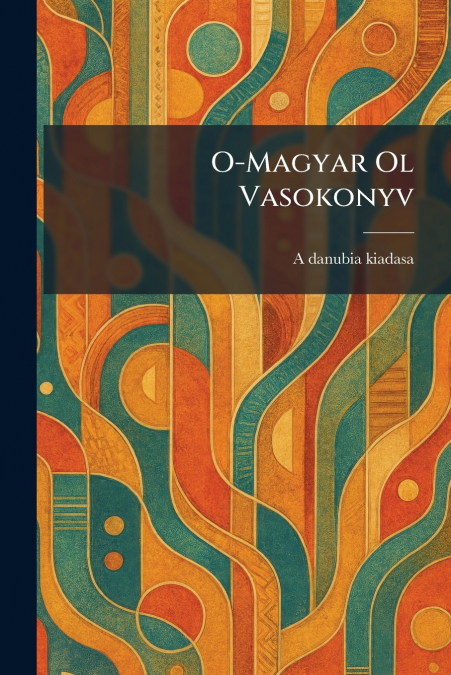
Az 'O-Magyar Ol Vasokonyv' a magyar Ãrásbeliség legkorábbi korszakait bemutató alapvet? tudományos szöveggy?jtemény. A kötet a magyar nyelvfejl?dés és irodalmi kultúra kezdeteit tárja fel a legfontosabb nyelvemlékeken, kódexrészleteken és korai irodalmi alkotásokon keresztül. A gy?jtemény célja, hogy átfogó képet nyújtson a középkori és kora újkori magyar nyelvhasználatról, valamint a korabeli szellemi életr?l.A m?ben szerepl? dokumentumok nem csupán nyelvészeti szempontból értékesek, hanem fontos történeti és m?vel?déstörténeti forrásként is szolgálnak. A válogatott szövegek segÃtségével az olvasó nyomon követheti a magyar nyelv alakulását és a keresztény európai kultúrába való betagozódás folyamatát. Ez a gy?jtemény elengedhetetlen forrásmunka a filológusok, történészek és a magyar nyelv régi korszakai iránt érdekl?d?k számára. A kötet méltó reprezentációja a magyar nemzeti örökség Ãrott emlékeinek, amely a tudományos alaposság igényével rendezi össze a múlt kincseit.This work has been selected by scholars as being culturally important, and is part of the knowledge base of civilization as we know it. This work was reproduced from the original artifact, and remains as true to the original work as possible. Therefore, you may see the original copyright references, library stamps (as most of these works have been housed in our most important libraries around the world), and other notations in the work.This work is in the public domain in the United States of America, and possibly other nations. Within the United States, you may freely copy and distribute this work, as no entity (individual or corporate) has a copyright on the body of the work.As a reproduction of a historical artifact, this work may contain missing or blurred pages, poor pictures, errant marks, etc. Scholars believe, and we concur, that this work is important enough to be preserved, reproduced, and made generally available to the public. We appreciate your support of the preservation process, and thank you for being an important part of keeping this knowledge alive and relevant.