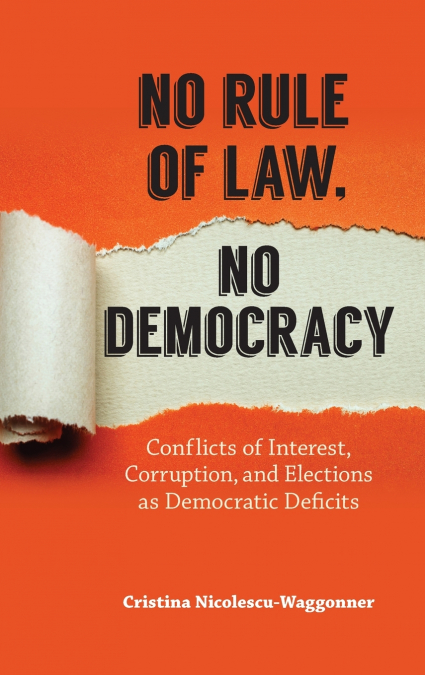

No Rule of Law, No Democracy

No Rule of Law, No Democracy

Cristina Nicolescu-Waggonner

126,76 €
IVA incluido
Disponible
Editorial:
State University of New York Press
Año de edición:
2016
Materia
Estructuras políticas: democracia
ISBN:
9781438462639
126,76 €
IVA incluido
Disponible

Selecciona una librería:

  • Librería Samer Atenea
  • Librería Aciertas (Toledo)
  • Kálamo Books
  • Librería Perelló (Valencia)
  • Librería Elías (Asturias)
  • Donde los libros
  • Librería Kolima (Madrid)
  • Librería Proteo (Málaga)

Argues that new democracies face consolidation challenges due to campaign finance corruption and the unwillingness of politicians to reform rule of law enforcement.Mainstream theories assert that democracy cures corruption. In market economies, however, elections are expensive and parties, with ever-thinning memberships, cannot legally acquire the necessary campaign funds. In order to secure electoral funds, a large number of politicians misappropriate public funds. Due to the illicit character of these transactions, high officials with conflicts of interest prefer to leave anticorruption enforcement mechanisms unreformed and reserve the right to intervene in the judicial process, with dire consequences for the rule of law. In No Rule of Law, No Democracy, Cristina Nicolescu-Waggonner demonstrates that when corrupt politicians are in power-true of nearly all new democracies-they will protect their office and fail to implement rule of law reforms. Consequently, these polities never reach a point where democracy could and would cure corruption. This dysfunction is tested in one hundred cases over sixteen years with significant results. In the case of the Czech Republic, for example, which is regarded as a consolidated democracy, there is systematic corruption, misappropriation of state funds, an unreformed judiciary, and arbitrary application of law. The only solution is a powerful, independent, well-funded anticorruption agency. Romania, one of the most corrupt countries in Europe, established, at the European Union’s request, powerful anticorruption bodies and punished corrupt leaders, which created the predictability of enforcement. It is the certainty of punishment that curtails corruption and establishes true rule of law.


Artículos relacionados

  • Argumentos de filosofía política de la tercera y cuarta transformaciones de México. Una aproximación interdisciplinar
    Ana Paola Tiro Chagoyán / Virginia Aspe Armella
    Presentamos al lector el tercero de los tres libros que fueron resultado del proyecto de investigación semilla Fondo Fomento a la Investigación de la Universidad Panamericana que en nuestro caso fue titulado Argumentos de filosofía política de las cuatro transformaciones de México, etapa primera, la Ilustración mexicana de los siglos XVIII y primeros años del XIX, la Independen...
    Disponible

    30,68 €

  • Making Democracy Fun
    Josh A. Lerner
    ...
    Disponible

    33,87 €

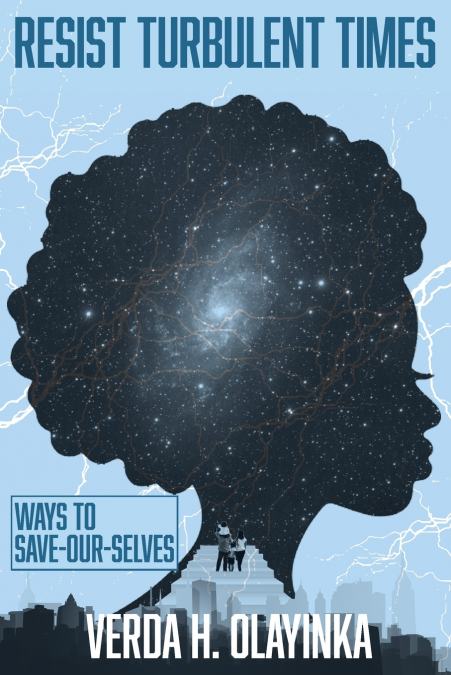
  • Resist Turbulent Times
    Verda Harris-Olayinka
    Resist Turbulent Times is for Everyday People and College students (who are also Everyday Ppl) - and their professors who assign textbooks for their students.Verda H. Olayinka followed the advice of noted Kemetic (African) American visionary, Harold Cruse who advised theCultural Intellectual to 'Synthesize a Black Social Science methodology in the process of developing a functi...
    Disponible

    16,64 €

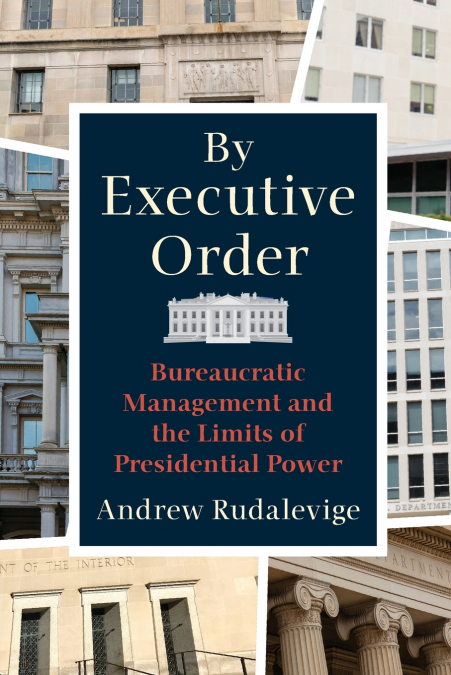
  • By Executive Order
    Andrew Rudalevige
    How the executive branch-not the president alone-formulates executive orders, and how this process constrains the chief executive’s ability to act unilaterallyThe president of the United States is commonly thought to wield extraordinary personal power through the issuance of executive orders. In fact, the vast majority of such orders are proposed by federal agencies and shaped ...
    Disponible

    43,00 €

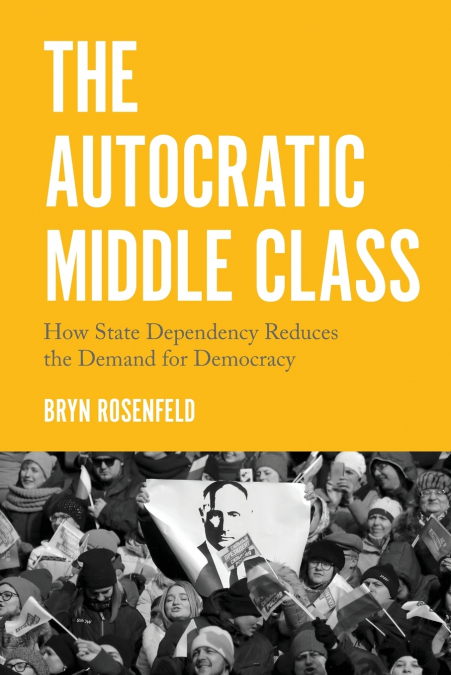
  • The Autocratic Middle Class
    Bryn Rosenfeld
    How middle-class economic dependence on the state impedes democratization and contributes to authoritarian resilienceConventional wisdom holds that the rising middle classes are a force for democracy. Yet in post-Soviet countries like Russia, where the middle class has grown rapidly, authoritarianism is deepening. Challenging a basic tenet of democratization theory, Bryn Rosenf...
    Disponible

    163,52 €

  • The Autocratic Middle Class
    Bryn Rosenfeld
    How middle-class economic dependence on the state impedes democratization and contributes to authoritarian resilienceConventional wisdom holds that the rising middle classes are a force for democracy. Yet in post-Soviet countries like Russia, where the middle class has grown rapidly, authoritarianism is deepening. Challenging a basic tenet of democratization theory, Bryn Rosenf...
    Disponible

    54,14 €