Nature

Nature

Geerat J. Vermeij / Geerat JVermeij / Geerat Vermeij

55,97 €
IVA incluido
Disponible
Editorial:
Princeton University Press
Año de edición:
2006
Materia
Evolución
ISBN:
9780691127934
55,97 €
IVA incluido
Disponible

Selecciona una librería:

  • Librería Samer Atenea
  • Librería Aciertas (Toledo)
  • Kálamo Books
  • Librería Perelló (Valencia)
  • Librería Elías (Asturias)
  • Donde los libros
  • Librería Kolima (Madrid)
  • Librería Proteo (Málaga)

From humans to hermit crabs to deep water plankton, all living things compete for locally limiting resources. This universal truth unites three bodies of thought--economics, evolution, and history--that have developed largely in mutual isolation. Here, Geerat Vermeij undertakes a groundbreaking and provocative exploration of the facts and theories of biology, economics, and geology to show how processes common to all economic systems--competition, cooperation, adaptation, and feedback--govern evolution as surely as they do the human economy, and how historical patterns in both human and nonhuman evolution follow from this principle. Using a wealth of examples of evolutionary innovations, Vermeij argues that evolution and economics are one. Powerful consumers and producers exercise disproportionate controls on the characteristics, activities, and distribution of all life forms. Competition-driven demand by consumers, when coupled with supply-side conditions permitting economic growth, leads to adaptation and escalation among organisms. Although disruptions in production halt or reverse these processes temporarily, they amplify escalation in the long run to produce trends in all economic systems toward greater power, higher production rates, and a wider reach for economic systems and their strongest members. Despite our unprecedented power to shape our surroundings, we humans are subject to all the economic principles and historical trends that emerged at life’s origin more than 3 billion years ago. Engagingly written, brilliantly argued, and sweeping in scope, Nature: An Economic History shows that the human institutions most likely to preserve opportunity and adaptability are, after all, built like successful living things.
Artículos relacionados

  • From Logos to Bios
    Wynand de Beer
    ...
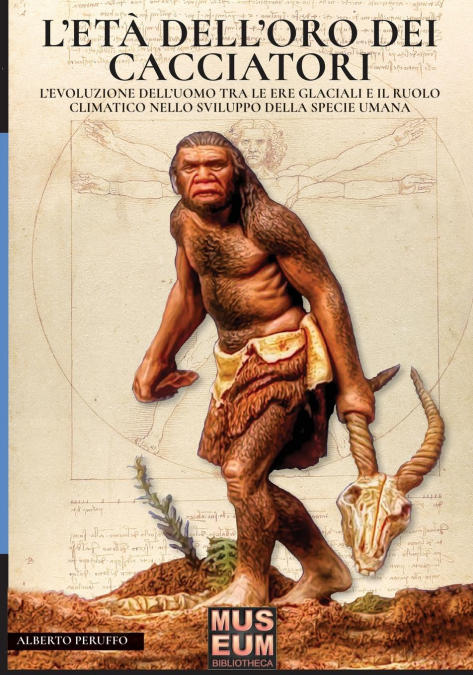
  • L’età dell’oro dei cacciatori
    Alberto Peruffo
    L'universo, il pianeta Terra, l'uomo. L'avventura della specie umana si dipana lentamente dall'essere unicellulare fino all'uomo dei giorni nostri che, tra mille travagli, ha raggiunto la condizione di assoluta supremazia.La presenza nell'uomo moderno dei geni del DNA dell'uomo di Neanderthal ha chiarito che, questi antichi uomini, facevano parte, a ...
    Disponible

    40,53 €

  • Exploring Genome’s Junkyard
    Subir Ranjan Kundu
    Exploring Genome’s Junkyard: In the Labyrinth of Evolution narrates the progress of biological evolution, beginning with the conceptual introspection of gene and continuing with the contemporary understanding of the structural and function aspects of the human genome. Recent advances in human genome research have led scientists to the term 'biological dark matter,' which refers...
  • European Hair, Eye, and Skin Color
    Peter Frost
    Europeans, especially those from northern and eastern Europe, are unique in having diverse hair and eye colors and a skin almost as pale as an albino’s. Those colors are not only brighter than the original black and brown but also 'purer'-they lie within thin slices of the visible spectrum. Overall, that color scheme is more developed in women, who naturally have a higher incid...
  • Mitochondrial Eve and Y-Chromosomal Adam
    Subir Ranjan Kundu
    Mitochondrial Eve and Y-Chromosomal Adam discusses theoretical ideas, interpretations, and paleontological evidence to narrate the origin and evolutionary story of Sapiens through the transitional stages of archaic human species involved in the evolutionary pilgrimage, from the great apes and to modern humans. Author Subir Ranjan Kundu investigates the DNA footprints of primate...
  • When Evolution Stops
    Armando Simon
    Evolution is a fact. The evidence for it is simply overwhelming. However, the original mechanism that generates the evolutionary process, as first put forth simultaneously by Charles Darwin and Alfred R. Wallace and which became known as Natural Selection, has now been seen to be too simplistic by some scientists aside from the hard-core neo-Darwinists who insist that nothing w...
    Disponible

    28,77 €

Otros libros del autor

  • A Natural History of Shells
    Geerat J. Vermeij / Geerat JVermeij / Geerat Vermeij
    From 'one of the master naturalists of our time' (American Scientist), a fascinating exploration of what seashells reveal about biology, evolution, and the history of lifeGeerat Vermeij wrote this 'celebration of shells' to share his enthusiasm for these supremely elegant creations and what they can teach us about nature. Most popular books on shells emphasize the identificatio...
  • Evolution and Escalation
    Geerat J. Vermeij / Geerat JVermeij / Geerat Vermeij
    Here is one biologist’s interpretation of the chronology of life during the last six hundred million years of earth history: an extended essay that draws on the author’s own data and a wide-ranging literature survey to discuss the nature and dynamics of evolutionary change in organisms and their biological surroundings. Geerat Vermeij demonstrates that escalation--the process b...
    Disponible

    107,10 €