
Nanobiotechnology Applications in Plant Protection

Nanobiotechnology Applications in Plant Protection


47,30 €
IVA incluido
Disponible
Editorial:
Springer Nature B.V.
Año de edición:
2018
Materia
Botánica y ciencias de las plantas
ISBN:
9783319911625
47,30 €
IVA incluido
Disponible

Selecciona una librería:

  • Librería Samer Atenea
  • Librería Aciertas (Toledo)
  • Kálamo Books
  • Librería Perelló (Valencia)
  • Librería Elías (Asturias)
  • Donde los libros
  • Librería Kolima (Madrid)
  • Librería Proteo (Málaga)

Nanotechnology can target specific agricultural problems related to plant pathology and provide new techniques for crop disease control. Plant breeders and phytopathologists are needed who can apply nanogenomics and develop nanodiagnostic technologies to accurately advance the improvement process and take advantage of the potential of genomics. This book serves as a thorough guide for researchers working with nanotechnology to address plant protection problems.Novel nanobiotechnology methods describe new plant gene transfer tools that improve crop resistance against plant diseases and increase food security. Also, quantum dots (QDs) have emerged as essential tools for fast and accurate detection of particular biological markers. Biosensors, QDs, nanostructured platforms, nanoimaging, and nanopore DNA sequencing tools have the potential to raise sensitivity, specificity, and speed in pathogen detection, thereby facilitating high-throughput analysis and providing high-quality monitoring and crop protection. Also, this book deals with the application of nanotechnology for quicker, more cost-effective, and precise diagnostic procedures of plant diseases and mycotoxins. Applications of nanotechnology in plant pests and disease control, antimicrobial mechanisms, pesticides remediation and nanotoxicity on plant ecosystem and soil microbial communities are discussed in detail. Moreover, the application of specific nanomaterials including silver, copper, carbon- or polymer-based nanomaterials and nanoemulsions are also discussed. Crops treated with safe nanofertilizers and nanopesticides will gain added value because they are free of chemical residues, decay and putative pathogens for human health, sustaining the global demand for high product quality. 
Artículos relacionados

  • The Green Architecture
    Ali Mirshafieyan / Ghazal Yeganeh / Maryam Zamani Motlagh
    Protecting green energy as well as non-renewable energy, as well as their sustainable use, many advances in the technology of extracting oil products and other reserves under the ground have caused many improvements. In this regard, proposing the design of buildings in which the consumption of fossil fuels reaches its lowest level is considered one of the important solutions in...
    Disponible

    82,54 €

  • Responsible Use and Management of Agrochemicals
    Juan Carlos Nava
    Uso y manejo responsable de agroquímicos is a work product of the author’s experiences (undergraduate and graduate professor, with research and extension projects), aimed at producers, companies, professionals, students, advisors, researchers, among others.Due to its structure and content, it is expected to be a valuable aid to all people directly or indirectly involved in the ...
    Disponible

    49,45 €

  • Hope in the Soil
    Ellen G White
    Before edible classrooms began 'sprouting' in elementary schools, before buzzwords like 'sustainable agriculture', 'organic,' or 'veganic' came into existence, an exceptional woman named Ellen G. White penned numerous letters and articles on the importance of farming, an outdoor life, and manual labor. Though often remembered for other things, Mrs. White was actively engaged in...
    Disponible

    18,38 €

  • The Green Revolution
    Binitha Sophine Emmanuel
    The Green Revolution, a transformative era in the annals of agriculture, emerged as a game-changing force during the mid-20th century, fundamentally reshaping the methodology of food production and steering the trajectory of global food security. Characterized by a sequence of technological breakthroughs, the Green Revolution aimed to substantially augment agricultural producti...
    Disponible

    53,23 €

  • Utilization of Stingless Bees, Tetragonula laeviceps (Smith)
    Dr. J. J. Pastagia / Dr. V. C. Gadhiya
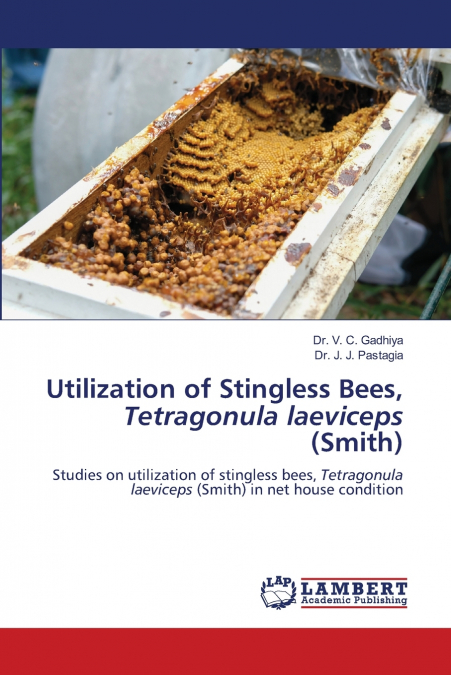
    The present investigations on utilization of stingless bees, T. laeviceps Smith in net house condition carried out with the broad aspects like flowers visited by stingless bees, T. laeviceps Smith, toxicity of insecticides to T. laeviceps Smith workers, floral biology of musk melon, foraging behavior of stingless bees, T. laeviceps Smith in net house condition, effect of pollin...
    Disponible

    84,80 €

  • La révolution verte
    Binitha Sophine Emmanuel
    La révolution verte, une ère transformatrice dans les annales de l’agriculture, est apparue comme une force qui a changé la donne au milieu du 20e siècle, remodelant fondamentalement la méthodologie de la production alimentaire et orientant la trajectoire de la sécurité alimentaire mondiale. Caractérisée par une série de percées technologiques, la révolution verte visait à augm...
    Disponible

    53,29 €