
Inicio > Tecnología, ingeniería, agricultura > Ingeniería mecánica y de materiales > Ingeniería mecánica > Model Order Reduction Techniques with Applications in Finite Element Analysis
Model Order Reduction Techniques with Applications in Finite Element Analysis

Model Order Reduction Techniques with Applications in Finite Element Analysis

Zu-Qing Qu

207,24 €
IVA incluido
Disponible
Editorial:
Springer Nature B.V.
Año de edición:
2010
Materia
Ingeniería mecánica
ISBN:
9781849969246
207,24 €
IVA incluido
Disponible

Selecciona una librería:

  • Librería Samer Atenea
  • Librería Aciertas (Toledo)
  • Kálamo Books
  • Librería Perelló (Valencia)
  • Librería Elías (Asturias)
  • Donde los libros
  • Librería Kolima (Madrid)
  • Librería Proteo (Málaga)

Despite the continued rapid advance in computing speed and memory the increase in the complexity of models used by engineers persists in outpacing them. Even where there is access to the latest hardware, simulations are often extremely computationally intensive and time-consuming when full-blown models are under consideration. The need to reduce the computational cost involved when dealing with high-order/many-degree-of-freedom models can be offset by adroit computation. In this light, model-reduction methods have become a major goal of simulation and modeling research. Model reduction can also ameliorate problems in the correlation of widely used finite-element analyses and test analysis models produced by excessive system complexity. Model Order Reduction Techniques explains and compares such methods focusing mainly on recent work in dynamic condensation techniques: - Compares the effectiveness of static, exact, dynamic, SEREP and iterative-dynamic condensation techniques in producing valid reduced-order models; - Shows how frequency shifting and the number of degrees of freedom affect the desirability and accuracy of using dynamic condensation; - Answers the challenges involved in dealing with undamped and non-classically damped models; - Requires little more than first-engineering-degree mathematics and highlights important points with instructive examples. Academics working in research on structural dynamics, MEMS, vibration, finite elements and other computational methods in mechanical, aerospace and structural engineering will find Model Order Reduction Techniques of great interest while it is also an excellent resource for researchers working on commercial finite-element-related software such as ANSYS and Nastran.
Artículos relacionados

  • Lab Manual-MSOE02-UFPT
    Dr. Medhat Khalil / DrMedhat Khalil / Medhat khalil
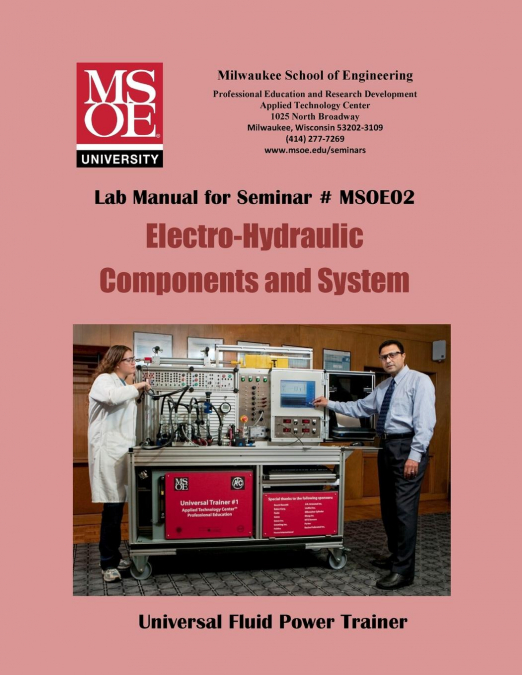
    Universal Trainer Lab Manual associated with the text book HSV2 and course MSOE02 (Electro-Hydraulic Components and Systems). The manual contains lab numbers 20 to 29. It also contains instructions about the lab objectives, the devices used in the lab, the step-by-step procedure of the lab and the expected observations. ...
    Disponible

    27,55 €

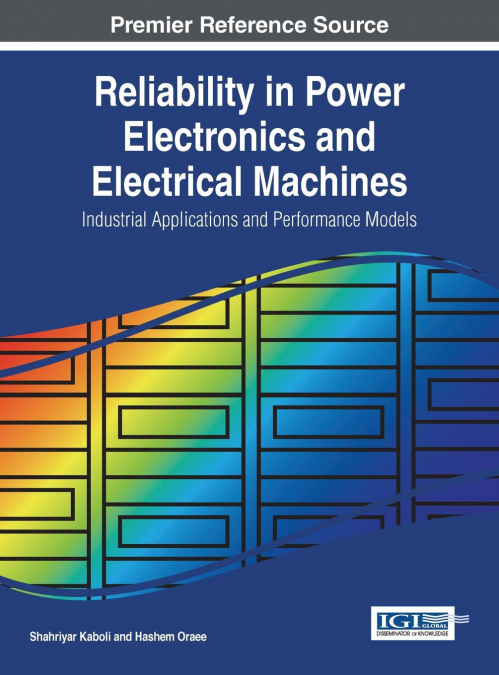
  • Reliability in Power Electronics and Electrical Machines
    Hashem Oraee / Shahriyar Kaboli
    In modern industries, electrical energy conversion systems consist of two main parts: electrical machines and power electronic converters. With global electricity use at an all-time high, uninterrupted operation of electrical power converters is essential. Reliability in Power Electronics and Electrical Machines: Industrial Applications and Performance Models provides an in-dep...
  • Introduction to Engineering Design, Book 11, 4th Edition
    Jim Dally
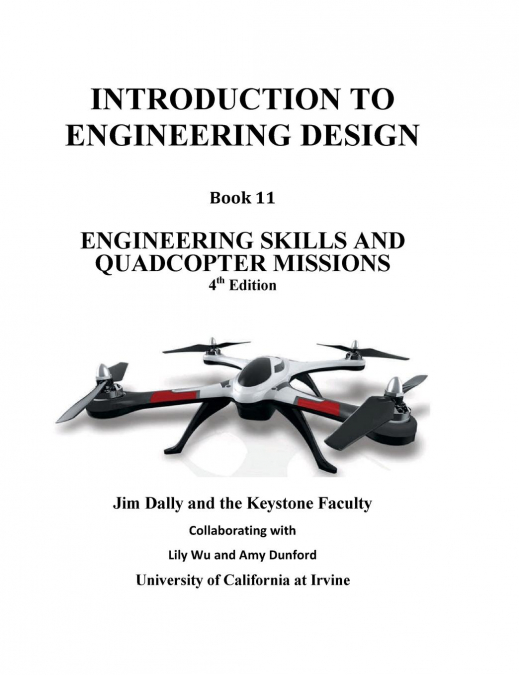
    This book is the fourth edition of the eBook edition of the eleventh textbook in this series: Introduction to Engineering Design.  Jim Dally, working with College House Enterprises, LLC and faculty members in the Keystone Program within the Clark School of Engineering, has prepared ten previous textbooks in this series—a new one almost every 18 months.  These books are written ...
    Disponible

    79,79 €

  • EMBEDDED COOLING OF ELECTRONIC DEVICES
    IYENGAR MADHUSUDAN / JUSTIN A WEIBEL MEH MADHUSUDAN IYENGAR
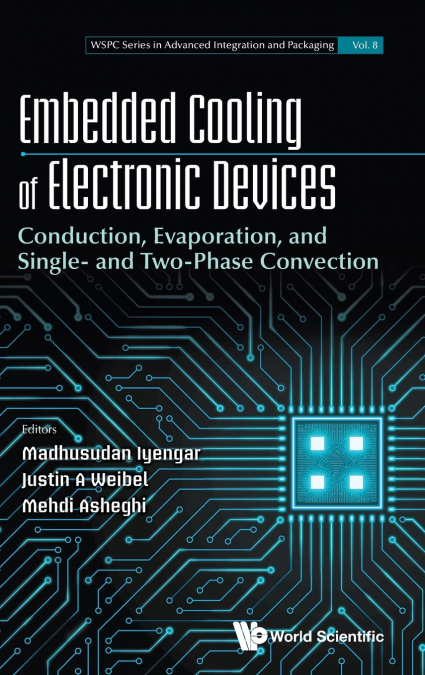
    This book is a comprehensive guide on emerging cooling technologies for processors in microelectronics. It covers various topics such as chip-embedded two-phase cooling, monolithic microfluidic cooling, numerical modeling, and advances in materials engineering for conduction-limited direct contact cooling, with a goal to remedy high heat flux issues.The book also discusses the ...
  • Motorcycle Design
    James Sadauckas / Roberto Lot
    This book aims to provide the core concepts of motorcycle dynamics and illustrates their application in vehicle design to readers who have a serious interest in the subject and in particular engineers with a career path in the powered two wheelers sector. ...
    Disponible

    83,23 €

  • Advances in MEMS and Microfluidic Systems
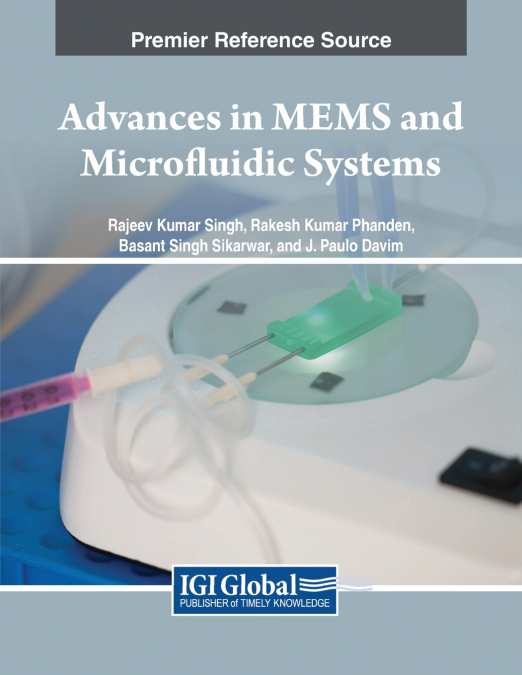
    Microelectromechanical systems (MEMS) device applications are common in many areas. Micromirror arrays are used as video projectors; microsensors find their application for measuring acceleration, temperature, and pressure; and they can also be used in the medical field for measuring blood pressure. Microfluidics have also been widely employed in life sciences applications, suc...
    Disponible

    235,81 €

Otros libros del autor

  • Model Order Reduction Techniques with Applications in Finite Element Analysis
    Zu-Qing Qu
    Despite the continued rapid advance in computing speed and memory the increase in the complexity of models used by engineers persists in outpacing them. Even where there is access to the latest hardware, simulations are often extremely computationally intensive and time-consuming when full-blown models are under consideration. The need to reduce the c...