Méthodes de production avancées de Yellow Sarson

Méthodes de production avancées de Yellow Sarson

Chayanika Thakuria / Khagen Kurmi / Md Mokidul Islam

83,17 €
IVA incluido
Disponible
Editorial:
KS OmniScriptum Publishing
Año de edición:
2025
Materia
Botánica y ciencias de las plantas
ISBN:
9786138259671
83,17 €
IVA incluido
Disponible

Selecciona una librería:

  • Librería Samer Atenea
  • Librería Aciertas (Toledo)
  • Kálamo Books
  • Librería Perelló (Valencia)
  • Librería Elías (Asturias)
  • Donde los libros
  • Librería Kolima (Madrid)
  • Librería Proteo (Málaga)

Le sarson jaune (Brassica rapa var. trilocularis) est l’une des principales cultures oléagineuses rabi en situation de fertilité résiduelle pluviale dans l’Assam, en Inde. Il est principalement utilisé comme condiments, épices et légumes-feuilles, ainsi que pour l’extraction d’huile. Une géométrie de plantation appropriée permet de modifier l’architecture du couvert végétal, ce qui affecte l’interception de la lumière et l’assimilation du CO2, et donc la productivité. Parmi les différents facteurs agronomiques responsables du rendement des cultures, une population végétale optimale et l’application d’engrais sont d’une importance capitale, car l’application d’engrais contribue de 18 à 73 % à l’augmentation du rendement de la culture du colza et de la moutarde. Les résultats des expériences sur le terrain ont révélé que les rendements en graines et en épis du sarson jaune étaient les plus élevés avec la méthode de semis bidirectionnelle. Tous les caractères de croissance et de rendement, le rendement en graines et en épis et l’indice de récolte ont augmenté avec l’augmentation des niveaux jusqu’à 90 kg N/ha ; cependant, la teneur en huile, le rendement en huile et l’efficacité de l’utilisation de l’azote n’étaient significatifs que jusqu’à 60 kg N/ha.
Artículos relacionados

  • The Green Architecture
    Ali Mirshafieyan / Ghazal Yeganeh / Maryam Zamani Motlagh
    Protecting green energy as well as non-renewable energy, as well as their sustainable use, many advances in the technology of extracting oil products and other reserves under the ground have caused many improvements. In this regard, proposing the design of buildings in which the consumption of fossil fuels reaches its lowest level is considered one of the important solutions in...
    Disponible

    82,54 €

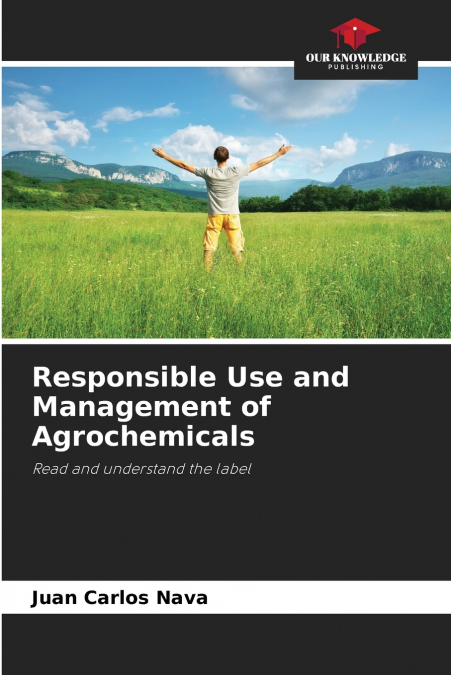
  • Responsible Use and Management of Agrochemicals
    Juan Carlos Nava
    Uso y manejo responsable de agroquímicos is a work product of the author’s experiences (undergraduate and graduate professor, with research and extension projects), aimed at producers, companies, professionals, students, advisors, researchers, among others.Due to its structure and content, it is expected to be a valuable aid to all people directly or indirectly involved in the ...
    Disponible

    49,45 €

  • Hope in the Soil
    Ellen G White
    Before edible classrooms began 'sprouting' in elementary schools, before buzzwords like 'sustainable agriculture', 'organic,' or 'veganic' came into existence, an exceptional woman named Ellen G. White penned numerous letters and articles on the importance of farming, an outdoor life, and manual labor. Though often remembered for other things, Mrs. White was actively engaged in...
    Disponible

    18,38 €

  • The Green Revolution
    Binitha Sophine Emmanuel
    The Green Revolution, a transformative era in the annals of agriculture, emerged as a game-changing force during the mid-20th century, fundamentally reshaping the methodology of food production and steering the trajectory of global food security. Characterized by a sequence of technological breakthroughs, the Green Revolution aimed to substantially augment agricultural producti...
    Disponible

    53,23 €

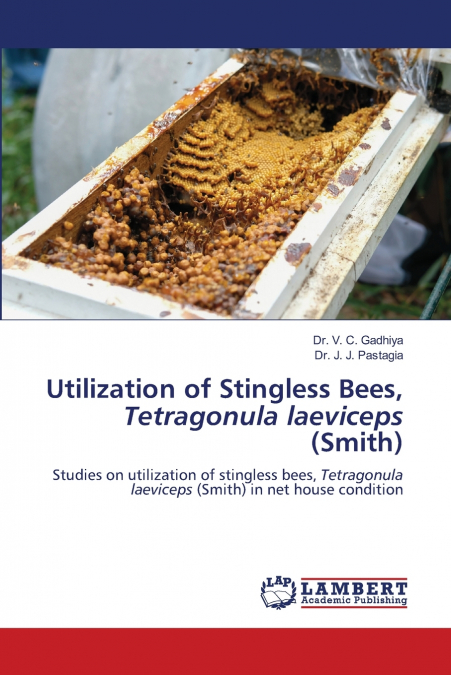
  • Utilization of Stingless Bees, Tetragonula laeviceps (Smith)
    Dr. J. J. Pastagia / Dr. V. C. Gadhiya
    The present investigations on utilization of stingless bees, T. laeviceps Smith in net house condition carried out with the broad aspects like flowers visited by stingless bees, T. laeviceps Smith, toxicity of insecticides to T. laeviceps Smith workers, floral biology of musk melon, foraging behavior of stingless bees, T. laeviceps Smith in net house condition, effect of pollin...
    Disponible

    84,80 €

  • La révolution verte
    Binitha Sophine Emmanuel
    La révolution verte, une ère transformatrice dans les annales de l’agriculture, est apparue comme une force qui a changé la donne au milieu du 20e siècle, remodelant fondamentalement la méthodologie de la production alimentaire et orientant la trajectoire de la sécurité alimentaire mondiale. Caractérisée par une série de percées technologiques, la révolution verte visait à augm...
    Disponible

    53,29 €

Otros libros del autor

  • Metodi di produzione avanzati di Sarson giallo
    Chayanika Thakuria / Khagen Kurmi / Md Mokidul Islam
    La saggina gialla (Brassica rapa var. trilocularis) è un’importante coltura di semi oleosi rabbiosi in condizioni di piovosità e fertilità residua nell’Assam, in India. Viene utilizzata soprattutto come condimento, spezia, verdura a foglia e per l’estrazione dell’olio. Una corretta geometria di impianto contribuisce a modificare l’architettura della chioma, influenzando l’inter...
    Disponible

    83,17 €

  • Zaawansowane metody produkcji Yellow Sarson
    Chayanika Thakuria / Khagen Kurmi / Md Mokidul Islam
    Sarson żółty (Brassica rapa var. trilocularis) jest jedną z ważnych upraw oleistych rabi w warunkach żyzności resztkowej w Assam w Indiach. Jest on używany głównie jako przyprawa, przyprawy i warzywa liściaste, a także do ekstrakcji oleju. Odpowiednia geometria sadzenia pomaga w zmianie architektury łanu, wpływając na przechwytywanie światła i asymilację CO2, co dodatkowo wpływ...
    Disponible

    83,04 €

  • Métodos avançados de produção de sarsão amarelo
    Chayanika Thakuria / Khagen Kurmi / Md Mokidul Islam
    O salsão amarelo (Brassica rapa var. trilocularis) é uma das importantes culturas oleaginosas de rabi em situação de fertilidade residual de sequeiro em Assam, na Índia. É sobretudo utilizada como condimento, especiaria e vegetais de folha, bem como para extração de óleo. Uma geometria de plantação adequada ajuda a alterar a arquitetura da copa das árvores, afectando a interceç...
    Disponible

    83,11 €

  • Fortgeschrittene Produktionsmethoden von Gelbem Sarson
    Chayanika Thakuria / Khagen Kurmi / Md Mokidul Islam
    Gelber Sarson (Brassica rapa var. trilocularis) ist eine der wichtigsten Ölsaaten im Regenfeldbau mit Restfruchtbarkeit in Assam, Indien. Sie wird hauptsächlich als Gewürz und Blattgemüse sowie zur Ölgewinnung verwendet. Die richtige Pflanzgeometrie trägt dazu bei, die Architektur der Baumkronen zu verändern, was sich auf die Lichtabsorption und die CO2-Assimilation auswirkt, w...
    Disponible

    83,17 €