Mancha foliar e míldio do algodão e sua gestão

Mancha foliar e míldio do algodão e sua gestão

Gopal Chopada / Ishita Hirpara / Rasikbhai Kapadiya

65,68 €
IVA incluido
Disponible
Editorial:
KS OmniScriptum Publishing
Año de edición:
2025
Materia
Botánica y ciencias de las plantas
ISBN:
9786208490546
65,68 €
IVA incluido
Disponible

Selecciona una librería:

  • Librería Samer Atenea
  • Librería Aciertas (Toledo)
  • Kálamo Books
  • Librería Perelló (Valencia)
  • Librería Elías (Asturias)
  • Donde los libros
  • Librería Kolima (Madrid)
  • Librería Proteo (Málaga)

O algodão (Gossypium sp.) é uma das culturas de rendimento de fibras mais importantes da Índia e do mundo.Sabe-se que esta cultura sofre de várias doenças. A doença produz pequenas manchas castanhas circulares necróticas nas folhas, com uma auréola arroxeada, que se expandem até cerca de 1 cm de diâmetro, tornando-se o centro cinzento e fissurado. Por fim, as manchas aumentam de tamanho, o que mais tarde resulta na desfoliação das folhas.O agente patogénico tem um crescimento lento e micélio aéreo septado e hialino. Os conidióforos mediam 30-132 x 5,2-7,9 µm. Os conídios, retirados diretamente do hospedeiro, mediam 24,8-124,6x 7,3-21,8 µmincluindo o comprimento do bico. Com base nas caraterísticas morfológicas, o fungo foi identificado como Alternaria macrospora Zimm. Em condições in vitro , o fungicida sistémico tebuconazol foi considerado o fungicida mais eficaz e inibiu (100%) o crescimento micelial. O tebuconazol (0,0375 %) provou ser o melhor no controlo da doença (82,66 %) in vivo, onde foi registada uma intensidade mínima da doença (5,66 %), resultando num maior rendimento do algodão (6331,02 kg/ha).
Artículos relacionados

  • The Green Architecture
    Ali Mirshafieyan / Ghazal Yeganeh / Maryam Zamani Motlagh
    Protecting green energy as well as non-renewable energy, as well as their sustainable use, many advances in the technology of extracting oil products and other reserves under the ground have caused many improvements. In this regard, proposing the design of buildings in which the consumption of fossil fuels reaches its lowest level is considered one of the important solutions in...
    Disponible

    82,54 €

  • Responsible Use and Management of Agrochemicals
    Juan Carlos Nava
    Uso y manejo responsable de agroquímicos is a work product of the author’s experiences (undergraduate and graduate professor, with research and extension projects), aimed at producers, companies, professionals, students, advisors, researchers, among others.Due to its structure and content, it is expected to be a valuable aid to all people directly or indirectly involved in the ...
    Disponible

    49,45 €

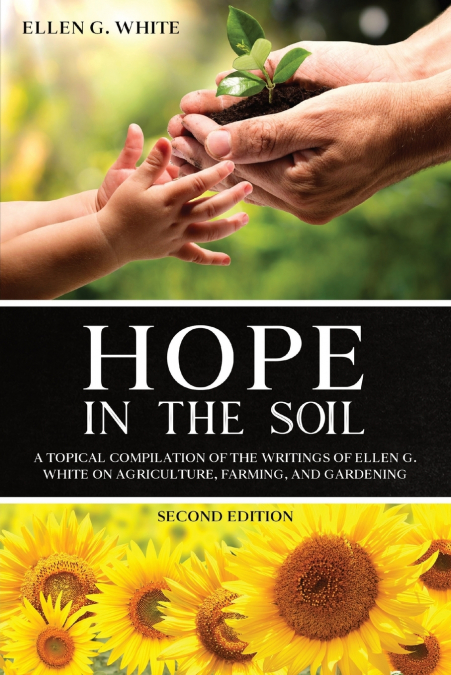
  • Hope in the Soil
    Ellen G White
    Before edible classrooms began 'sprouting' in elementary schools, before buzzwords like 'sustainable agriculture', 'organic,' or 'veganic' came into existence, an exceptional woman named Ellen G. White penned numerous letters and articles on the importance of farming, an outdoor life, and manual labor. Though often remembered for other things, Mrs. White was actively engaged in...
    Disponible

    18,38 €

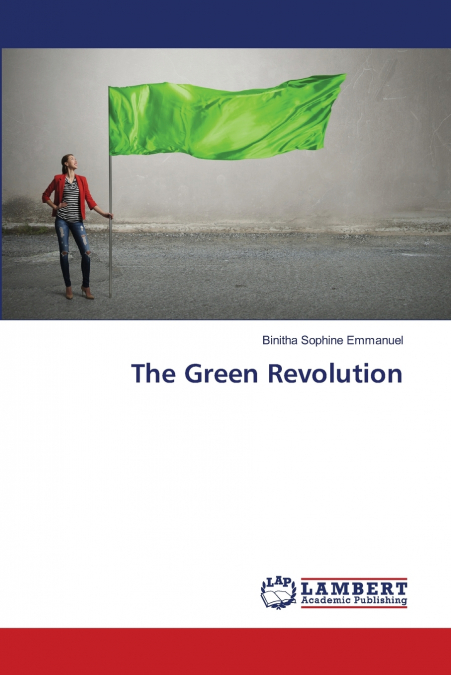
  • The Green Revolution
    Binitha Sophine Emmanuel
    The Green Revolution, a transformative era in the annals of agriculture, emerged as a game-changing force during the mid-20th century, fundamentally reshaping the methodology of food production and steering the trajectory of global food security. Characterized by a sequence of technological breakthroughs, the Green Revolution aimed to substantially augment agricultural producti...
    Disponible

    53,23 €

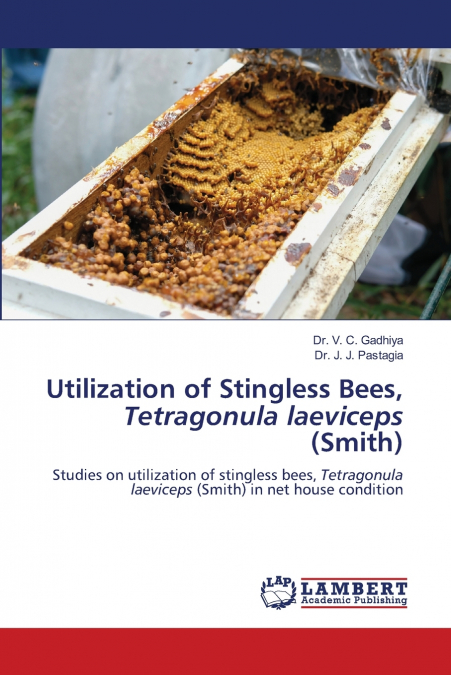
  • Utilization of Stingless Bees, Tetragonula laeviceps (Smith)
    Dr. J. J. Pastagia / Dr. V. C. Gadhiya
    The present investigations on utilization of stingless bees, T. laeviceps Smith in net house condition carried out with the broad aspects like flowers visited by stingless bees, T. laeviceps Smith, toxicity of insecticides to T. laeviceps Smith workers, floral biology of musk melon, foraging behavior of stingless bees, T. laeviceps Smith in net house condition, effect of pollin...
    Disponible

    84,80 €

  • La révolution verte
    Binitha Sophine Emmanuel
    La révolution verte, une ère transformatrice dans les annales de l’agriculture, est apparue comme une force qui a changé la donne au milieu du 20e siècle, remodelant fondamentalement la méthodologie de la production alimentaire et orientant la trajectoire de la sécurité alimentaire mondiale. Caractérisée par une série de percées technologiques, la révolution verte visait à augm...
    Disponible

    53,29 €

Otros libros del autor

  • Macchia fogliare e peronospora del cotone e sua gestione
    Gopal Chopada / Ishita Hirpara / Rasikbhai Kapadiya
    Il cotone (Gossypium sp.) è una delle più importanti colture di fibre da reddito dell’India e del mondo. La coltura è nota per essere affetta da diverse malattie. La malattia produce sulle foglie piccole macchie necrotiche circolari di colore marrone , con un alone violaceo, che si espandono fino a circa 1 cm di diametro e il cui centro diventa grigio e screpolato. Infine, le m...
    Disponible

    65,68 €

  • Plamistość liści i zaraza bawełny oraz zarządzanie nimi
    Gopal Chopada / Ishita Hirpara / Rasikbhai Kapadiya
    Bawełna (Gossypium sp.) jest jedną z najważniejszych roślin włóknistych w Indiach i naświecie. Uprawa ta jest znana z kilku chorób. Wśród nich ważną jest plamistość i zaraza liści wywoływana przez Alternaria macrospora . Choroba powoduje powstawanie małych, nekrotycznych, okrągłych brązowych plam na liściach, z fioletowawą otoczką i rozszerza się do około 1 cm średnicy, a środe...
    Disponible

    65,68 €

  • Blattflecken und Krautfäule bei Baumwolle und ihre Bekämpfung
    Gopal Chopada / Ishita Hirpara / Rasikbhai Kapadiya
    Baumwolle (Gossypium sp.) ist eine der wichtigsten Faserpflanzen sowohl in Indien als auch weltweit.Die Pflanze ist bekannt dafür, dass sie von verschiedenen Krankheiten befallen wird. Eine davon ist die durch Alternaria macrospora verursachte Blattfleckenkrankheit . Die Krankheit verursacht kleine, nekrotische, kreisförmige, braune Flecken auf den Blättern mit einem violetten ...
    Disponible

    65,68 €

  • Taches foliaires et mildiou du coton et leur gestion
    Gopal Chopada / Ishita Hirpara / Rasikbhai Kapadiya
    Le coton (Gossypium sp.) est l’une des principales cultures commerciales de fibres en Inde et dans le monde.Cette culture est connue pour souffrir de plusieurs maladies. Parmi celles-ci, les taches foliaires et le mildiou causés par Alternaria macrospora sont importants. La maladie produit de petites taches brunes circulaires nécrotiques sur les feuilles, avec un halo violacé e...
    Disponible

    65,68 €

  • Leaf spot and Blight of Cotton and its Management
    Gopal Chopada / Ishita Hirpara / Rasikbhai Kapadiya
    Cotton (Gossypium sp.) is one the most important fibre cash crop of India as well as the world. The crop is known to suffer from several diseases. Among them, leaf spot and blight caused by Alternaria macrospora is an important one. The disease produced small, necrotic, circular brown spots on leaves, with a purplish halo and expands to about 1 cm diameter the centre becoming g...
    Disponible

    65,74 €