
Inicio > > Ciencias de la computación > Inteligencia artificial > Machine Learning for Trading - Third Edition
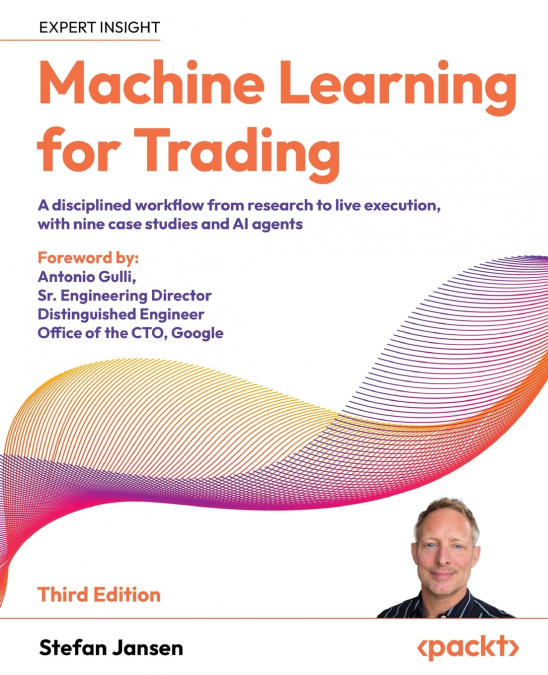
Machine Learning for Trading - Third Edition

Machine Learning for Trading - Third Edition

Stefan Jansen

113,71 €
IVA incluido
Disponible
Editorial:
Packt Publishing
Año de edición:
2026
Materia
Inteligencia artificial
ISBN:
9781803246970
113,71 €
IVA incluido
Disponible

Selecciona una librería:

  • Librería Samer Atenea
  • Kálamo Books
  • Librería Elías (Asturias)
  • Librería Kolima (Madrid)
  • Librería Proteo (Málaga)

Build and deploy AI-driven trading systems using the 7-Stage workflow with pandas, Polars, LightGBM, PyTorch, Optuna, zipline-reloaded, MLflow, Feast, and SHAPKey Features:- Build point-in-time pipelines, integrate alternative data, and ensure data integrity- Build and validate predictive models using GBMs, Transformers, and causal inference frameworks to create robust, interpretable alpha signals- Deploy RAG systems, autonomous financial agents, and diffusion-based synthetic data generatorsBook Description:The rapid rise of AI and the growing complexity of financial markets have transformed quantitative trading into a data-driven, process-oriented discipline. This third edition provides a comprehensive blueprint for designing, validating, and deploying systematic trading strategies powered by modern machine learning.It introduces the 7 stage ML4T Workflow, a professional framework that unites data engineering, model development, validation, and live deployment into one cohesive process. It demonstrates how to turn raw market, fundamental, and alternative data into predictive signals and robust, production-ready trading systems.You’ll learn to build advanced pipelines for feature engineering, model evaluation, and portfolio optimization using libraries such as Polars, LightGBM, PyTorch, and Optuna.Practical notebooks illustrate every stage of the workflow, from factor testing and backtesting with zipline reloaded to live deployment with MLOps tools such as MLflow, Feast, and Prometheus. Additional coverage of synthetic data generation, Graph Neural Networks, and Reinforcement Learning extends the toolkit for building resilient, adaptive strategies that thrive in dynamic markets.By the end of this book, you’ll be proficient to build your own industrial-grade 'alpha factory'.What You Will Learn:- Transform raw data into predictive alpha factors, validated with leak-proof cross-validation- Master advanced models, from Gradient Boosting Machines to Transformers, Graph Neural Networks, and Reinforcement Learning agents- Harness Generative AI, Retrieval Augmented Generation, and Causal Inference to make models interpretable, auditable, and compliant with regulatory standards- Build production-ready trading infrastructure using MLOps, feature stores, and model monitoring to transition research into live capital deployment safelyWho this book is for:If you are a data analyst, data scientist, Python developer, investment analyst, or portfolio manager interested in getting hands-on machine learning knowledge for trading, this book is for you. This book is for you if you want to learn how to extract value from a diverse set of data sources using machine learning to design your own systematic trading strategies.Some understanding of Python and machine learning techniques is required.Table of Contents- The Process is Your Edge- The Financial Data Universe- Market Microstructure- Fundamental and Alternative Data- Synthetic Financial Data- Strategy Research Framework- Defining the Learning Task- Financial Feature Engineering- Model-Based Feature Extraction- Text Feature Engineering- The ML Pipeline- Advanced Models for Tabular Data- Deep Learning for Time Series- Latent Factor Models- Causal Machine Learning- Strategy Simulation- Portfolio Construction- Transaction Costs- Risk Management- Strategy Synthesis- Reinforcement Learning- RAG for Financial Research- Knowledge Graphs- Autonomous Agents- Live Trading Systems- MLOps and Governance- The Systematic Edge

Artículos relacionados

  • Artificial Cognition Systems
    ...
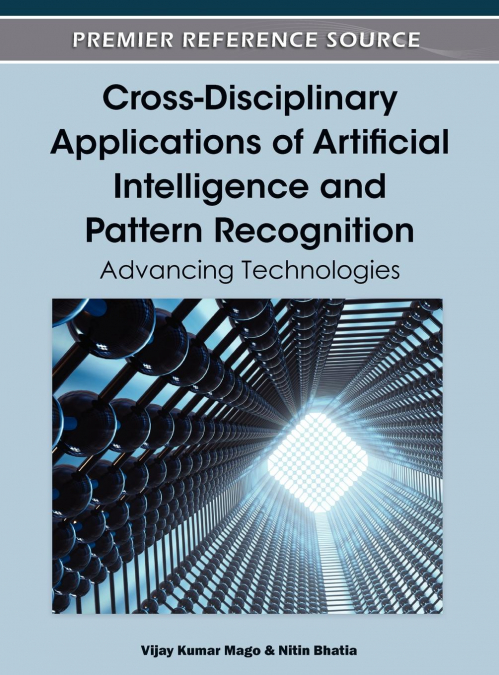
  • Cross-Disciplinary Applications of Artificial Intelligence and Pattern Recognition
    Vijay Kumar Mago
    The need for intelligent machines in areas such as medical diagnostics, biometric security systems, and image processing motivates researchers to develop and explore new techniques, algorithms, and applications in this evolving field. Cross-Disciplinary Applications of Artificial Intelligence and Pattern Recognition: Advancing Technologies provides a common platform for researc...
  • Emerging Applications of Natural Language Processing
    Over the last few years, the area of Natural Language Processing has drastically grown in recognition, not only within the research and development community, but also with industry professionals. As NLP continues to be discussed and researched, certain areas continue to grow and mature. As a result, the need for advanced research and information is in high demand. Emerging App...
  • Androids, Cyborgs, and Robots in Contemporary Culture and Society
    Steven John Thompson
    Mankind’s dependence on artificial intelligence and robotics is increasing rapidly as technology becomes more advanced. Finding a way to seamlessly intertwine these two worlds will help boost productivity in society and aid in a variety of ways in modern civilization. Androids, Cyborgs, and Robots in Contemporary Culture and Society is an essential scholarly resource that delve...
  • Deep Learning Innovations and Their Convergence With Big Data
    The expansion of digital data has transformed various sectors of business such as healthcare, industrial manufacturing, and transportation. A new way of solving business problems has emerged through the use of machine learning techniques in conjunction with big data analytics. Deep Learning Innovations and Their Convergence With Big Data is a pivotal reference for the latest sc...
  • Computational Psychoanalysis and Formal Bi-Logic Frameworks
    Giuseppe Iurato
    Computational psychoanalysis is a new field stemming from Freudian psychoanalysis. The new area aims to understand the primary formal structures and running mechanisms of the unconscious while implementing them into computer sciences. Computational Psychoanalysis and Formal Bi-Logic Frameworks provides emerging information on this new field which uses psychoanalysis and the unc...

Otros libros del autor

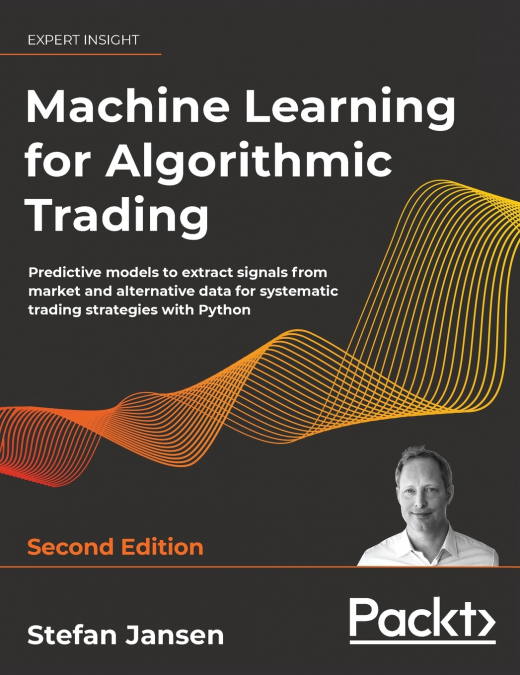
  • Machine Learning for Algorithmic Trading - Second Edition
    Stefan Jansen
    Leverage machine learning to design and back-test automated trading strategies for real-world markets using pandas, TA-Lib, scikit-learn, LightGBM, SpaCy, Gensim, TensorFlow 2, Zipline, backtrader, Alphalens, and pyfolio. Purchase of the print or Kindle book includes a free eBook in the PDF format.Key FeaturesDesign, train, and evaluate machine learning algorithms that underpin...
  • Machine Learning for Algorithmic Trading
    Stefan Jansen
    Leverage machine learning to design and back-test automated trading strategies for real-world markets using pandas, TA-Lib, scikit-learn, LightGBM, SpaCy, Gensim, TensorFlow 2, Zipline, backtrader, Alphalens, and pyfolio.Purchase of the print or Kindle book includes a free eBook in the PDF format.Key Features:- Design, train, and evaluate machine learning algorithms that underp...
    Disponible

    126,72 €

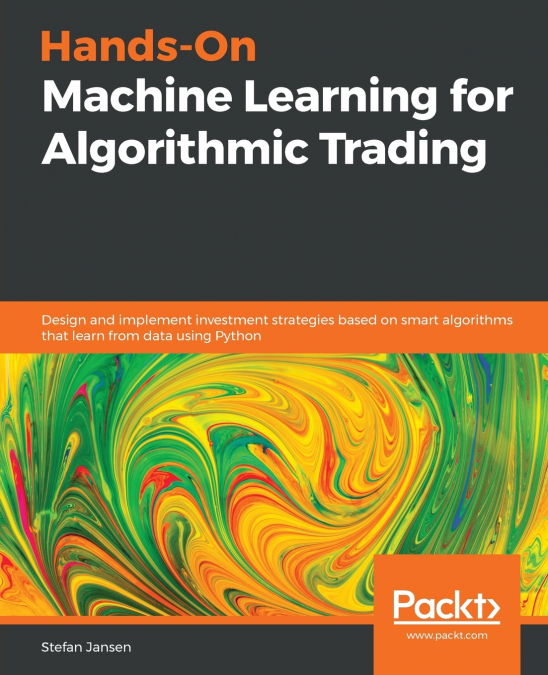
  • Hands-On Machine Learning for Algorithmic Trading
    Stefan Jansen
    Explore effective trading strategies in real-world markets using NumPy, spaCy, pandas, scikit-learn, and KerasKey Features:Implement machine learning algorithms to build, train, and validate algorithmic modelsCreate your own algorithmic design process to apply probabilistic machine learning approaches to trading decisionsDevelop neural networks for algorithmic trading to perfor...
    Disponible

    97,77 €