 Librería Samer Atenea
 Kálamo Books
 Librería Elías (Asturias)
 Librería Kolima (Madrid)
 Librería Proteo (Málaga)
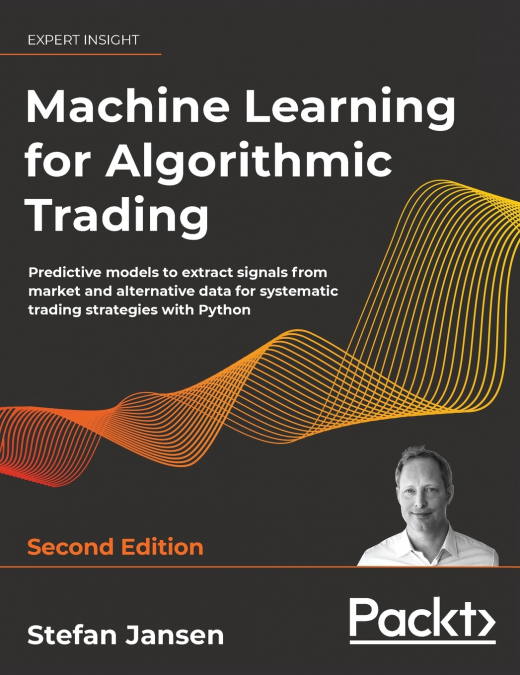
Leverage machine learning to design and back-test automated trading strategies for real-world markets using pandas, TA-Lib, scikit-learn, LightGBM, SpaCy, Gensim, TensorFlow 2, Zipline, backtrader, Alphalens, and pyfolio. Purchase of the print or Kindle book includes a free eBook in the PDF format.Key FeaturesDesign, train, and evaluate machine learning algorithms that underpin automated trading strategiesCreate a research and strategy development process to apply predictive modeling to trading decisionsLeverage NLP and deep learning to extract tradeable signals from market and alternative dataBook DescriptionThe explosive growth of digital data has boosted the demand for expertise in trading strategies that use machine learning (ML). This revised and expanded second edition enables you to build and evaluate sophisticated supervised, unsupervised, and reinforcement learning models.This book introduces end-to-end machine learning for the trading workflow, from the idea and feature engineering to model optimization, strategy design, and backtesting. It illustrates this by using examples ranging from linear models and tree-based ensembles to deep-learning techniques from cutting edge research.This edition shows how to work with market, fundamental, and alternative data, such as tick data, minute and daily bars, SEC filings, earnings call transcripts, financial news, or satellite images to generate tradeable signals. It illustrates how to engineer financial features or alpha factors that enable an ML model to predict returns from price data for US and international stocks and ETFs. It also shows how to assess the signal content of new features using Alphalens and SHAP values and includes a new appendix with over one hundred alpha factor examples.By the end, you will be proficient in translating ML model predictions into a trading strategy that operates at daily or intraday horizons, and in evaluating its performance.What you will learnLeverage market, fundamental, and alternative text and image dataResearch and evaluate alpha factors using statistics, Alphalens, and SHAP valuesImplement machine learning techniques to solve investment and trading problemsBacktest and evaluate trading strategies based on machine learning using Zipline and BacktraderOptimize portfolio risk and performance analysis using pandas, NumPy, and pyfolioCreate a pairs trading strategy based on cointegration for US equities and ETFsTrain a gradient boosting model to predict intraday returns using AlgoSeek s high-quality trades and quotes dataWho this book is forIf you are a data analyst, data scientist, Python developer, investment analyst, or portfolio manager interested in getting hands-on machine learning knowledge for trading, this book is for you. This book is for you if you want to learn how to extract value from a diverse set of data sources using machine learning to design your own systematic trading strategies. Some understanding of Python and machine learning techniques is required.Table of ContentsMachine Learning for Trading - From Idea to ExecutionMarket and Fundamental Data - Sources and TechniquesAlternative Data for Finance - Categories and Use CasesFinancial Feature Engineering - How to Research Alpha FactorsPortfolio Optimization and Performance EvaluationThe Machine Learning ProcessLinear Models - From Risk Factors to Return ForecastsThe ML4T Workflow - From Model to Strategy Backtesting(N.B. Please use the Look Inside option to see further chapters)