
Inicio > Sociedad y ciencias sociales > Sociedad y cultura: general > L’uso dei servizi finanziari mobili da parte delle donne nei sindacati
L’uso dei servizi finanziari mobili da parte delle donne nei sindacati

L’uso dei servizi finanziari mobili da parte delle donne nei sindacati

Mahuton Firmine ZOUNTOUNNOU

119,81 €
IVA incluido
Disponible
Editorial:
KS OmniScriptum Publishing
Año de edición:
2025
Materia
Sociedad y cultura: general
ISBN:
9786209207716
119,81 €
IVA incluido
Disponible

Selecciona una librería:

  • Librería Samer Atenea
  • Librería Aciertas (Toledo)
  • Kálamo Books
  • Librería Perelló (Valencia)
  • Librería Elías (Asturias)
  • Donde los libros
  • Librería Kolima (Madrid)
  • Librería Proteo (Málaga)

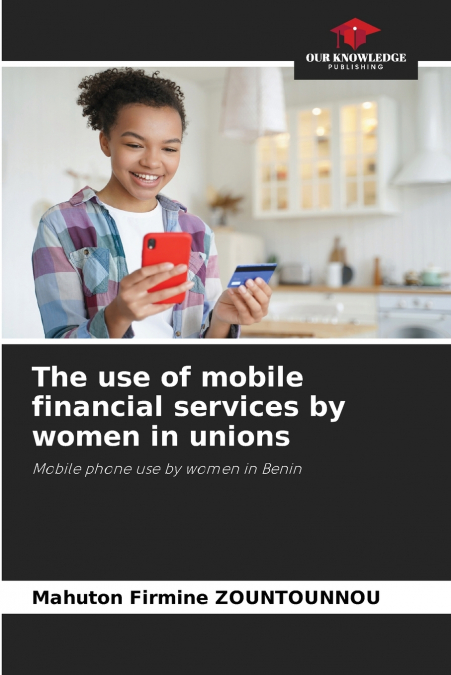
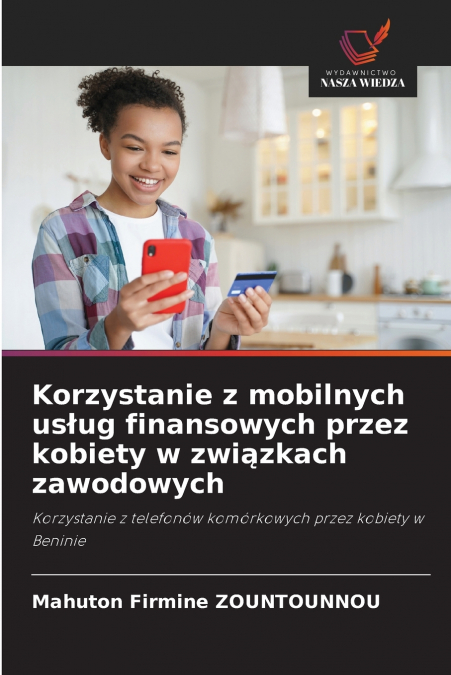
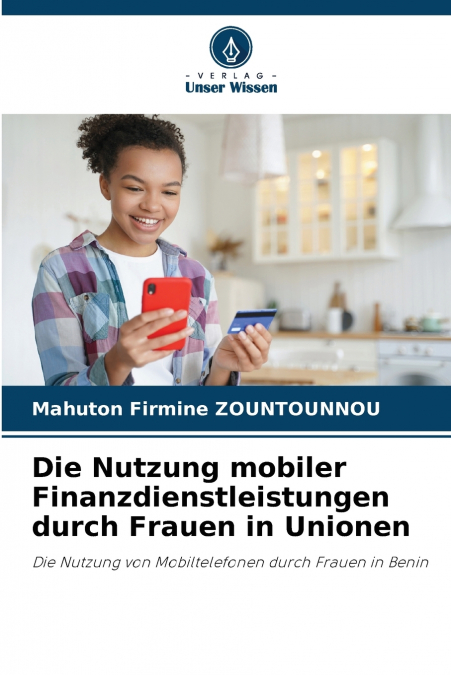
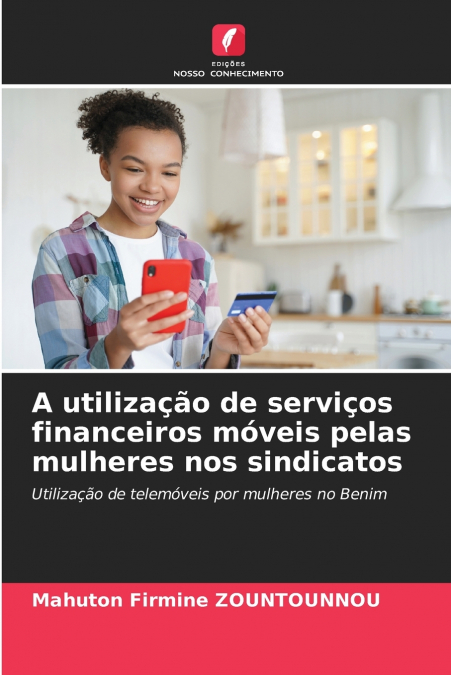
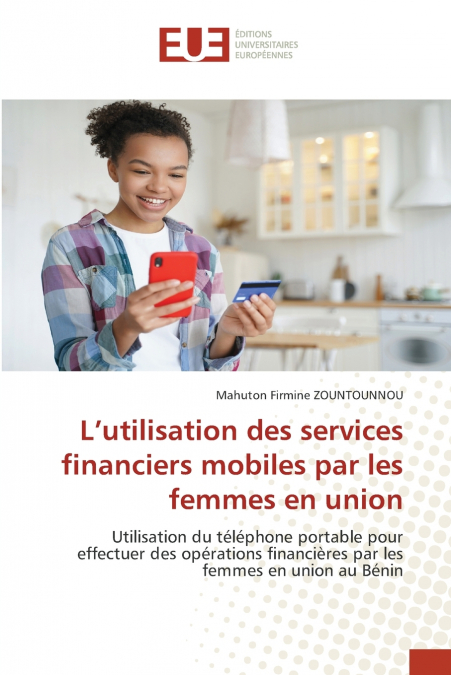
Oltre il 75% della popolazione del Benin non ha accesso ai servizi finanziari formali, banche e istituzioni di microfinanza insieme, e le donne hanno il 33,00% di probabilità in meno rispetto agli uomini di avere un telefono cellulare. Ad esempio, del 27% delle donne che usano il cellulare per le transazioni finanziarie, il 63,8% fa parte di sindacati (cioè il 24,3% delle donne nei sindacati lo usa) (INStaD, 2019). Questa situazione solleva la seguente domanda: quali fattori spiegano l’uso dei servizi finanziari mobili (MFS) da parte di queste donne nei sindacati per effettuare transazioni finanziarie? Per rispondere a questa domanda, l’obiettivo di questo studio è contribuire a migliorare la conoscenza dei fattori che spiegano l’uso dei servizi finanziari mobili da parte delle donne in unione in Benin. A tal fine, partiamo dall’ipotesi che i contesti istituzionali, economici e comunitari influenzino direttamente l’uso dei servizi finanziari mobili e indirettamente attraverso le caratteristiche della famiglia e le caratteristiche individuali della donna in unione.

Artículos relacionados

  • The Gandhian Iceberg
    Chris D Moore-Backman
    The Gandhian Iceberg presents a bold, new interpretation of Gandhian nonviolence from the rare perspective of an author who is equal parts writer, scholar, and frontlines practitioner. The book faces the current crisis of climate change and the intensification of social unrest around the world, and calls for a new convergence of serious, spiritually-rooted US nonviolence activi...
    Disponible

    11,52 €

  • Contemporary Developments in Child Protection
    Nigel Parton
    Volume 1 "Policy Changes and Challenges" takes as its central theme the ongoing and challenging issues which child protection agencies have to address and the policy and practice initiatives that are developed to try and address these. The volume includes papers on: the relationship between the decline in the rate of ‘unnatural’ deaths and the growth of concern about child abus...
  • Diversity in Information Technology Education
    Goran Trajkovski
    ...
  • Model-Driven Software Development
    Model-driven software development (MDSD) drastically alters the software development process, characterized by a high degree of innovation and productivity. However, quality assurance application in the domain of software models and model-driven software development is still in an emergent phase. Model-Driven Software Development: Integrating Quality Assurance provides in-depth...
  • Evidence-Based Practice in Nursing Informatics
    Andrew Chasin
    Because of the constant advances and dynamics within the nascent field of nursing informatics, many nurses struggle in practice as they continue to try and apply habitual communication practices in the new environment without any critical reflection on, and adaptation of, those practices. Evidence-Based Practice in Nursing Informatics: Concepts and Applications serves as a valu...
  • Actor-Network Theory and Technology Innovation
    Arthur Tatnall
    About 25 years ago, the first developments of ANT (Actor-Network Theory) took place, but it wasn’t until much later that researchers began to take it seriously. In the late 1990s, ANT began to take hold in the scientific community as a new and exciting approach to socio-technical research and social theory. Actor-Network Theory and Technology Innovation: Advancements and New Co...

Otros libros del autor

  • The use of mobile financial services by women in unions
    Mahuton Firmine ZOUNTOUNNOU
    Over 75% of Benin’s population have no access to formal financial services, banks and microfinance institutions combined, and women are 33.00% less likely than men to have cell phones. Thus, of the 27% of women who use their cell phones for financial transactions, 63.8% are in unions (i.e. 24.3% of women in unions who use them) (INStaD, 2019). This situation raises the followin...
    Disponible

    119,75 €

  • Korzystanie z mobilnych usług finansowych przez kobiety w związkach zawodowych
    Mahuton Firmine ZOUNTOUNNOU
    Ponad 75% populacji Beninu nie ma dostępu do formalnych usług finansowych, banków i instytucji mikrofinansowych łącznie, a prawdopodobieństwo posiadania telefonu komórkowego przez kobiety jest o 33,00% niższe niż w przypadku mężczyzn. Na przykład z 27% kobiet, które używają telefonów komórkowych do transakcji finansowych, 63,8% należy do związków zawodowych (tj. 24,3% kobiet w ...
    Disponible

    119,79 €

  • Die Nutzung mobiler Finanzdienstleistungen durch Frauen in Unionen
    Mahuton Firmine ZOUNTOUNNOU
    Mehr als 75% der beninischen Bevölkerung haben keinen Zugang zu formellen Finanzdienstleistungen, Banken und Mikrofinanzinstitute zusammengenommen, und Frauen besitzen mit 33,00% geringerer Wahrscheinlichkeit Mobiltelefone als Männer. So sind von den 27,0 % der Frauen, die ihr Mobiltelefon für Finanzgeschäfte nutzen, 63,8 % in einer Ehe (d. h. 24,3 % der Frauen in einer Ehe nut...
    Disponible

    119,79 €

  • A utilização de serviços financeiros móveis pelas mulheres nos sindicatos
    Mahuton Firmine ZOUNTOUNNOU
    Mais de 75% da população do Benim não tem acesso a serviços financeiros formais, bancos e instituições de microfinanças combinados, e as mulheres têm 33,00% menos probabilidades do que os homens de ter telemóveis. Por exemplo, dos 27% de mulheres que utilizam os seus telemóveis para transacções financeiras, 63,8% estão em sindicatos (ou seja, 24,3% das mulheres em sindicatos qu...
    Disponible

    119,81 €

  • L’utilisation des services financiers mobiles par les femmes en union
    Mahuton Firmine ZOUNTOUNNOU
    Plus de 75% de la population béninoise n’ont pas accès aux services financiers formels, les banques et les institutions de microfinance réunies et les femmes sont 33,00 % moins susceptibles que les hommes d’avoir des téléphones portables. Ainsi, parmi les 27 % de femmes utilisent leur téléphone portable pour des opérations financières, 63,8 % sont en union (soit 24,3 % de femme...
    Disponible

    95,07 €