Librería Samer Atenea
 Kálamo Books
 Librería Elías (Asturias)
 Librería Kolima (Madrid)
 Librería Proteo (Málaga)
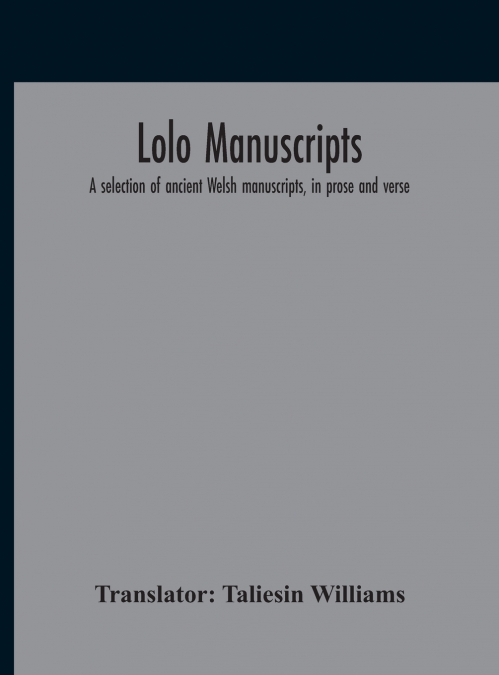
Lolo Manuscripts delivers a selection of ancient Welsh manuscripts that reanimate early voices of myth, law and song. Ancient voices return to life. Drawn from the Iolo Morganwg collection assembled by the late Edward Williams as part of an ambition to continue the Myvyrian Archaeology and to supply materials for a new history of Wales, this medieval literature anthology reunites prose and verse across centuries. Welsh historical documents stand beside Celtic mythology texts and impassioned bardic poetry selections, so readers move from genealogical rolls and annal fragments to lyric elegies and mythic cycle. The volume charts the forms of bardic practice, the cadences of oral tradition preserved on the page, and the often-surprising ways myth and history converse. Bardic poetry selections here not only charm but also register patronage, ritual and the social ties of community; genealogical material aids local history and family research. The language itself - shifting through Middle Welsh idioms and later forms - offers insight into continuity and change in the literary tradition. Accessible passages invite casual reading; sustained sections repay closer attention, offering primary material for researchers of Welsh history, students of genealogy and heritage studies, and anyone interested in British Isles folklore.Accessible enough for casual readers yet indispensable for researchers of Welsh history and students of genealogy and heritage studies, the Lolo Manuscripts bridges popular interest and serious enquiry. Out of print for decades and now republished by Alpha Editions. Restored for today’s and future generations. More than a reprint - a collector’s item and a cultural treasure. Presented as a Myvyrian Archaeology companion, this edition preserves the spirit of the originals while opening a door to the social worlds, devotional practice and heroic imaginations of eighteenth-century Wales. Both a readable introduction to Celtic literature and an important resource for classic-literature collectors, it rewards intermittent browsing and patient study alike. Whether approached as a casual anthology or a foundation for scholarly work, the book offers an authentic encounter with the sources that shaped Wales’s earliest literary identity.