Inicio > Derecho > Teoría general del derecho > Historia del derecho > Legal Professionals and Education in the Middle Ages
Legal Professionals and Education in the Middle Ages

Legal Professionals and Education in the Middle Ages

Connor Hill

19,17 €
IVA incluido
Disponible
Editorial:
Colloquium
Año de edición:
2025
Materia
Historia del derecho
ISBN:
9798232254100
19,17 €
IVA incluido
Disponible

Selecciona una librería:

  • Librería Samer Atenea

  • Kálamo Books
  • Librería Elías (Asturias)
  • Librería Kolima (Madrid)
  • Librería Proteo (Málaga)

This groundbreaking study reveals how the medieval world created the foundations of modern legal education and practice. From the dusty lecture halls of Bologna to the royal courts of England, from the bustling commercial centers of Italy to the serene monasteries of France, this book traces the remarkable story of how a new professional class emerged to shape European society.The revival of Roman law in the eleventh century sparked an intellectual revolution that would transform Europe. As universities arose in cities like Bologna, Paris, and Oxford, ambitious students flocked to study the ancient legal texts that promised pathways to power, prestige, and prosperity. These early law schools developed teaching methods, professional ethics, and institutional structures that continue to influence legal education today.Through vivid storytelling and analysis of original sources, the book introduces readers to the diverse characters who populated this legal landscape: brilliant professors whose commentaries became canonical texts, ambitious notaries whose precise documents structured daily life, powerful judges who shaped royal administration, and even the women who, despite formal exclusion, developed sophisticated legal knowledge to manage estates and religious houses.The narrative moves beyond the classroom to explore how legally trained individuals revolutionized medieval governance, creating sophisticated bureaucracies and jurisdictional theories that laid groundwork for the modern state. Their influence extended to commerce, church administration, international relations, and family life, demonstrating how legal expertise became central to nearly every aspect of medieval society.This comprehensive examination of medieval legal culture challenges outdated stereotypes about the Middle Ages. Rather than a period of superstition and disorder, readers discover a world increasingly structured by sophisticated legal reasoning, where technical expertise opened unprecedented opportunities for social advancement, and where competing jurisdictions created complex interactions between different legal systems that still resonate in today’s globalized legal environment.Written for both specialists and general readers interested in medieval history, legal development, or educational history, this accessible yet scholarly work illuminates how the medieval legal profession established patterns of education, practice, and social influence that would shape Western civilization for centuries to come. It offers not just a history of legal education but a window into a pivotal moment when European society began its long transformation toward the rule of law.

Artículos relacionados

  • Court-Hand Restored [1879]
    Andrew Wright
    A Rosetta Stone for Early English Legal Documents By 1776, the year Wright published the first edition of Court-Hand Restored, the written conventions of early English legal documents, which had been taught for generations, were becoming esoteric. Concerned that younger lawyers would be unable to understand the work of their predecessors, Wright intended his work to be a kind o...
    Disponible

    32,79 €

  • Commentary to the Germanic Laws and Mediaeval Documents [1915]
    Leo Wiener
    Based on an ambitious study of all accessible records from the early decades of the Roman Empire to 1300, this work proposes that the Visigothic, Burgundian, Salic and other Germanic legal systems were based almost entirely on Roman law. This was a controversial argument because it challenged the prevailing consensus about Germanic law. Though scholars have subsequently disprov...
  • The Ordeal
    Henry Charles Lea / Arthur E. Howland / Arthur EHowland
    Henry Charles Lea was one of the first American historians to use what would later be termed comparative and anthropological approaches to history. Under his pen, the study of the medieval ordeal becomes a study in cultural history.Reprinted here from the fourth revised edition of 1892, the book begins by tracing the role of the ordeal in non-Western and ancient societies, show...
    Disponible

    23,88 €

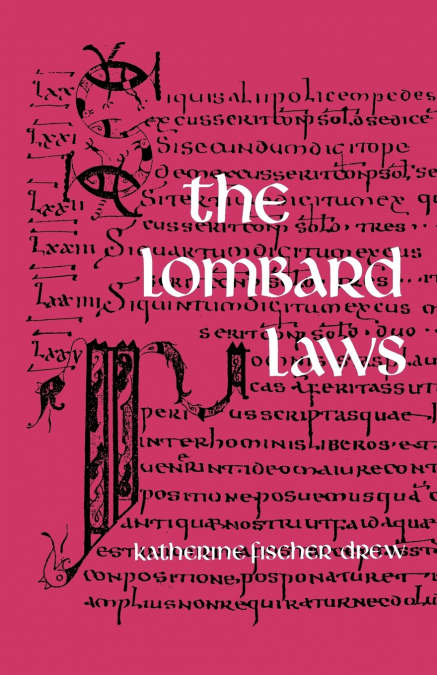
  • The Lombard Laws
    Katherine Fisher Drew
    ...
    Disponible

    31,40 €

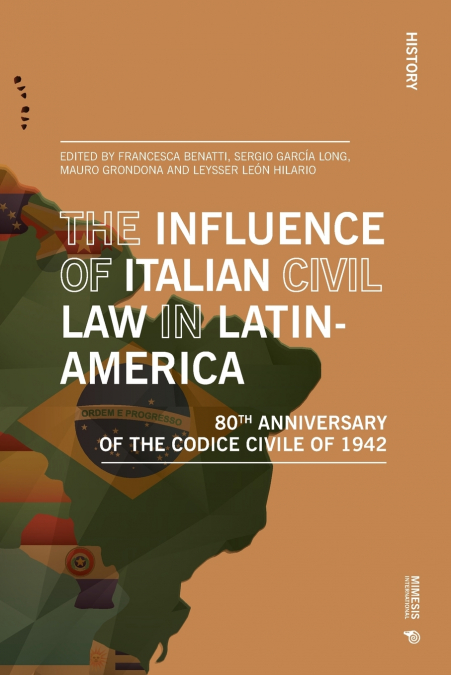
  • The Influence of Italian Civil Law in Latin-America
    There are many ways to mark the anniversary of a civil code: one of them is to analyse the cultural messages it has produced, in order to understand not only by whom such messages have been received but also how, when and to what extent. The current volume is based on a dialogue between European (and, in particular, Italian) legal culture on the one hand, and Latin American leg...
    Disponible

    42,00 €

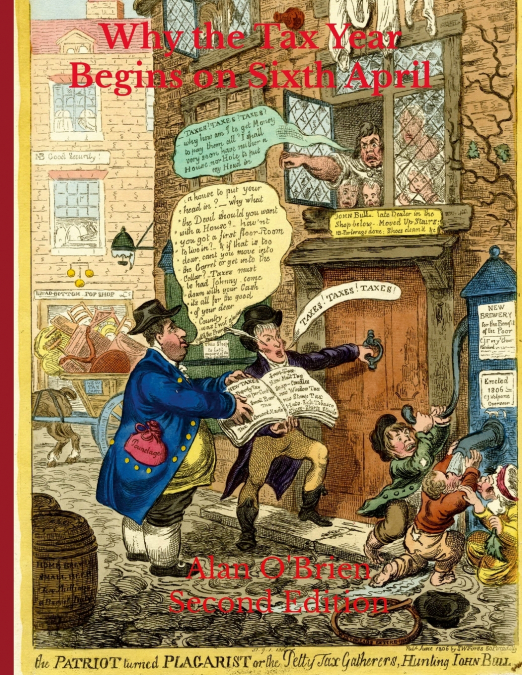
  • Why the Tax Year Begins on Sixth April
    Alan O’Brien
    Second Edition 2024This book explains why the UK tax year begins on 6 April and traces the history of the old tax year which ran from 25 March. It also covers other aspects of calendar history and related issues, including the continuing application of the 1750 British calendar reform statute to the USA and elsewhere.The move from the Julian to the Gregorian calendar in 1752 re...
    Disponible

    70,12 €

Otros libros del autor

  • The Rise of Medieval Islamic Scholarly Culture
    Connor Hill
    Few phenomena in world history rival the remarkable emergence of scholarly culture in the medieval Islamic world. Within a span of several centuries, communities stretching from the Atlantic shores of North Africa to the river valleys of Central Asia participated in the creation of one of the most extensive intellectual networks the premodern world had ever known. Across desert...
    Disponible

    20,97 €

  • The Thirteenth-Century Intellectual World
    Connor Hill
    The thirteenth century occupies a singular place in the history of human thought. Few periods before the modern age witnessed such a concentration of intellectual energy, institutional innovation, and cultural exchange. Across the cities, monasteries, courts, universities, and religious houses of Europe, new forms of inquiry transformed the understanding of nature, society, gov...
    Disponible

    20,87 €

  • The Translation Movements in Medieval Spain and Sicily
    Connor Hill
    The history of medieval Europe has often been told as a story of kingdoms, dynasties, wars, crusades, and religious transformation. Yet beneath these visible structures of political and social change lay another process that was equally consequential for the development of European civilization: the movement of knowledge across linguistic, cultural, and religious boundaries. Be...
    Disponible

    20,90 €

  • Christianity and Neoplatonism Before Augustine
    Connor Hill
    The encounter between Christianity and Platonism ranks among the most consequential intellectual events in the history of Western civilization. Long before Christianity emerged as the dominant religious force of the Roman Empire, the philosophical tradition originating with Plato had already shaped the intellectual language through which educated people understood reality, the ...
    Disponible

    20,96 €

  • The Platonic Influences on Later Christian Thought
    Connor Hill
    Few relationships in the history of ideas have generated as much fascination, controversy, and scholarly debate as the encounter between Christianity and Platonism. From the earliest centuries of the Christian era, believers and theologians found themselves living within a cultural world deeply shaped by Greek philosophical traditions. Among these traditions, none proved more i...
    Disponible

    21,05 €

  • Thomas Aquinas and the Christianization of Neoplatonism
    Connor Hill
    Few questions have exercised historians of philosophy and theology more persistently than the question of how Christianity came to appropriate, transform, and ultimately baptize elements of Greek philosophy. From the earliest centuries of the Church, Christian thinkers found themselves confronted by intellectual traditions that had been developed long before the emergence of Ch...
    Disponible

    21,03 €