Legal Pluralism in Medieval Society

Legal Pluralism in Medieval Society

Connor Hill

19,94 €
IVA incluido
Disponible
Editorial:
Colloquium
Año de edición:
2025
Materia
Ciencias políticas y teoría
ISBN:
9798231557660
19,94 €
IVA incluido
Disponible

Selecciona una librería:

  • Librería Samer Atenea

  • Kálamo Books
  • Librería Elías (Asturias)
  • Librería Kolima (Madrid)
  • Librería Proteo (Málaga)

In medieval Europe, justice was not the exclusive domain of kings or states. When a merchant faced a broken contract, a woman sought divorce, or a peasant disputed land boundaries, they entered a world where multiple legal systems competed for authority-and savvy individuals navigated this complexity to their advantage.This book reveals the fascinating reality of medieval legal pluralism, where royal courts, ecclesiastical tribunals, urban magistrates, feudal lords, merchant guilds, and village assemblies all claimed the right to dispense justice. This groundbreaking book explores how ordinary people strategically chose between these competing forums, how legal professionals managed jurisdictional conflicts, and how medieval society functioned despite-or perhaps because of-this remarkable legal diversity.Drawing on previously untapped archival sources and the latest scholarship, the author vividly reconstructs the experiences of individuals navigating this complex legal landscape. We follow a Jewish moneylender appealing to royal protection against local prejudice, a widow exploiting the distinctive features of ecclesiastical courts to secure her inheritance, and a guild craftsman using specialized commercial tribunals to enforce contracts across political boundaries.Beyond its historical significance, this book offers timely perspective on contemporary debates about legal pluralism in our increasingly globalized world. As modern states confront challenges from international law, religious legal systems, indigenous justice, and online dispute resolution, the medieval experience provides surprising insights into managing legal diversity without sacrificing social cohesion.Written with clarity and verve, this book transforms our understanding of medieval governance while illuminating one of the most distinctive features of European legal development. It will fascinate legal historians, medieval scholars, and general readers interested in how societies balance unity and diversity in their quest for justice.

Artículos relacionados

  • The Fundamentals of Extremism
    Ed Buckner / Herb Silverman
    On September 11, 2001, Americans witnessed horrific carnage inspired by religious extremism. We saw religious fundamentalists will stop at nothing to reign terror on those they regard as their enemies.  In our response, we began to focus on the oppressive treatment of women and children in other parts of the world where religious fundamentalism rules. But we failed to acknowled...
    Disponible

    11,68 €

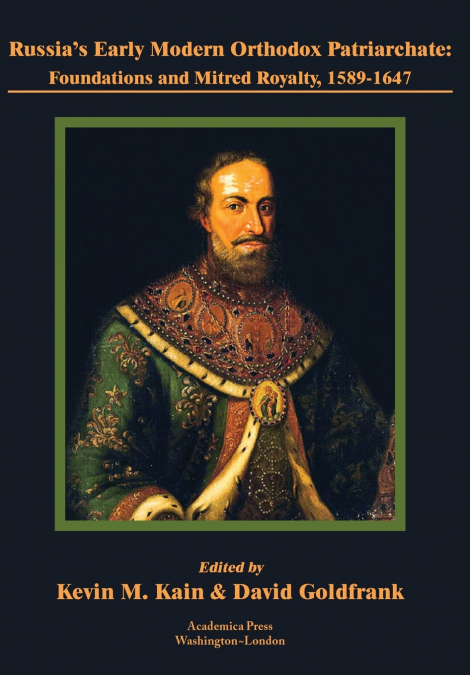
  • Russia’s early modern orthodox patriarchate
    David Goldfrank / Kevin M Kain
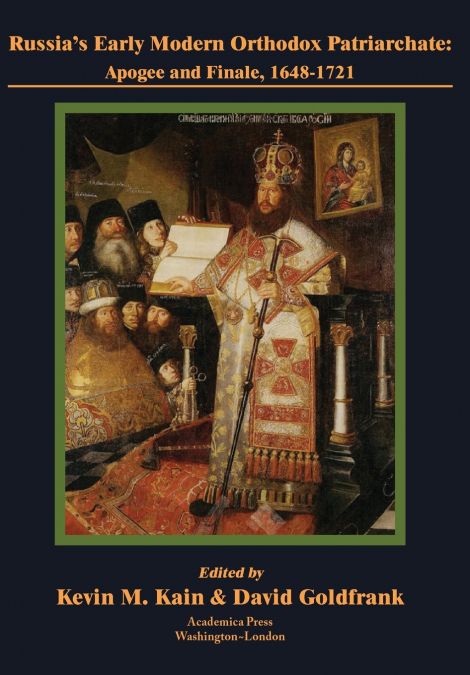
    Focusing on one of Russia’s most powerful and wide-reaching institutions in a period of shattering dynastic crisis and immense territorial and administrative expansion, this book addresses manifestations of religious thought, practice, and artifacts revealing the permeability of political boundaries and fluid transfers of ideas, texts, people, objects, and 'sacred spaces' with ...
  • Russia’s early modern orthodox patriarchate
    David Goldfrank / Kevin M Kain
    Patriarch Nikon, the most energetic, creative, influential, and obstinate of Russia’s early religious leaders, dominates this book. As Patriarch of the Russian Orthodox Church, Nikon’s most important initiative was to bring Russian religious rituals into line with Greek Orthodox tradition, from which Russia’s practices had diverted. Kiev’s Monastery of the Caves served as a med...
  • Peter’s Burn
    K.C. McCraw
    The story takes place in an imaginary city, Malfaxe, located near the east coast of Maryland. Although it concerns several dynamic personalities, it revolves mainly around Emmitt Braedeikk, an egotistical bank manager and bachelor who is persuaded to run for mayor.Comparatively speaking, the idea of Emmitt being a banker is of trivial importance. Both bizarre and sometimes humo...
    Disponible

    16,10 €

  • Exporting Global Jihad
    This timely 2 volume edited collection looks at the extent and nature of global jihad, focusing on the often-exoticised hinterlands of jihad beyond the traditionally viewed Middle Eastern ’centre’. As ISIS loses its footing in Syria and Iraq and al-Qaeda regroups, this comprehensive account will be a key work in the on-going battle to better understand the dynamics of jihad’s g...
  • Religion and Broken Solidarities
    The contributors to this original volume provide a new and nuanced approach to studying how discourses of religion shape public domains in sites of political contestation and 'broken solidarities.'Our public discourse is saturated with intractable debates about religion, race, gender, and nationalism. Examples range from Muslim women and headscarves to Palestine/Israel and to g...
    Disponible

    50,23 €

Otros libros del autor

  • The Rise of Medieval Islamic Scholarly Culture
    Connor Hill
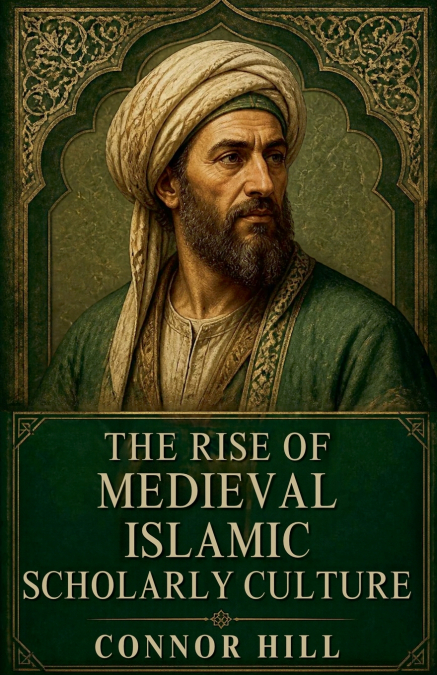
    Few phenomena in world history rival the remarkable emergence of scholarly culture in the medieval Islamic world. Within a span of several centuries, communities stretching from the Atlantic shores of North Africa to the river valleys of Central Asia participated in the creation of one of the most extensive intellectual networks the premodern world had ever known. Across desert...
    Disponible

    20,97 €

  • The Thirteenth-Century Intellectual World
    Connor Hill
    The thirteenth century occupies a singular place in the history of human thought. Few periods before the modern age witnessed such a concentration of intellectual energy, institutional innovation, and cultural exchange. Across the cities, monasteries, courts, universities, and religious houses of Europe, new forms of inquiry transformed the understanding of nature, society, gov...
    Disponible

    20,87 €

  • The Translation Movements in Medieval Spain and Sicily
    Connor Hill
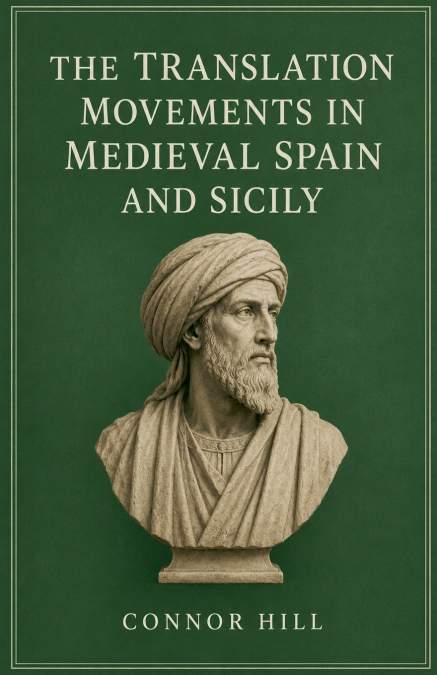
    The history of medieval Europe has often been told as a story of kingdoms, dynasties, wars, crusades, and religious transformation. Yet beneath these visible structures of political and social change lay another process that was equally consequential for the development of European civilization: the movement of knowledge across linguistic, cultural, and religious boundaries. Be...
    Disponible

    20,90 €

  • Christianity and Neoplatonism Before Augustine
    Connor Hill
    The encounter between Christianity and Platonism ranks among the most consequential intellectual events in the history of Western civilization. Long before Christianity emerged as the dominant religious force of the Roman Empire, the philosophical tradition originating with Plato had already shaped the intellectual language through which educated people understood reality, the ...
    Disponible

    20,96 €

  • The Platonic Influences on Later Christian Thought
    Connor Hill
    Few relationships in the history of ideas have generated as much fascination, controversy, and scholarly debate as the encounter between Christianity and Platonism. From the earliest centuries of the Christian era, believers and theologians found themselves living within a cultural world deeply shaped by Greek philosophical traditions. Among these traditions, none proved more i...
    Disponible

    21,05 €

  • Thomas Aquinas and the Christianization of Neoplatonism
    Connor Hill
    Few questions have exercised historians of philosophy and theology more persistently than the question of how Christianity came to appropriate, transform, and ultimately baptize elements of Greek philosophy. From the earliest centuries of the Church, Christian thinkers found themselves confronted by intellectual traditions that had been developed long before the emergence of Ch...
    Disponible

    21,03 €