 Librería Samer Atenea
 Kálamo Books
 Librería Elías (Asturias)
 Librería Kolima (Madrid)
 Librería Proteo (Málaga)
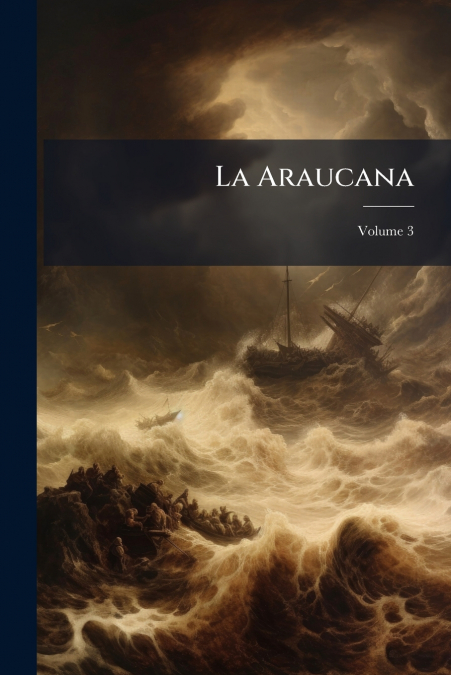
La Araucana, Volume 3, by Alonso de Ercilla y Zúñiga, is a celebrated epic poem written in Spanish that recounts the early stages of the Arauco War between the Spanish conquistadors and the Mapuche people of Chile. Published in three parts between 1569 and 1589, it blends historical narrative with elements of Renaissance epic poetry. Ercilla, who himself participated in the military campaigns he describes, offers a vivid and often sympathetic portrayal of both the Spanish soldiers and the indigenous warriors. This volume continues the saga, detailing key battles and the cultural clashes that defined this tumultuous period. The poem is notable for its detailed descriptions of the Chilean landscape and the customs of the Mapuche, as well as for its reflections on themes of honor, courage, and justice in the context of colonial expansion. La Araucana remains a cornerstone of Chilean literature and a valuable historical document, offering insights into the complex dynamics of the Spanish conquest and the resilience of the Mapuche people.This work has been selected by scholars as being culturally important, and is part of the knowledge base of civilization as we know it. This work was reproduced from the original artifact, and remains as true to the original work as possible. Therefore, you will see the original copyright references, library stamps (as most of these works have been housed in our most important libraries around the world), and other notations in the work.This work is in the public domain in the United States of America, and possibly other nations. Within the United States, you may freely copy and distribute this work, as no entity (individual or corporate) has a copyright on the body of the work.As a reproduction of a historical artifact, this work may contain missing or blurred pages, poor pictures, errant marks, etc. Scholars believe, and we concur, that this work is important enough to be preserved, reproduced, and made generally available to the public. We appreciate your support of the preservation process, and thank you for being an important part of keeping this knowledge alive and relevant.