 Librería Samer Atenea
 Kálamo Books
 Librería Elías (Asturias)
 Librería Kolima (Madrid)
 Librería Proteo (Málaga)
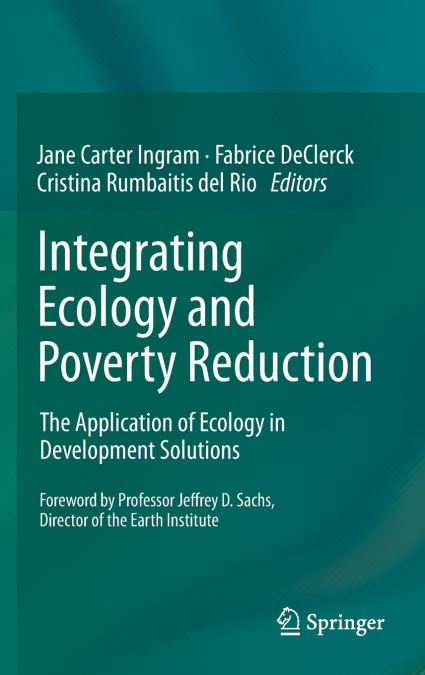
Chapter 1. Introduction: Changing Societal Paradigms-Education and Gender as Critical Starting PointsAuthors: Fabrice DeClerck and Jane Carter Ingram Chapter 2: Changing Societal Paradigms-Education and Gender as Critical Starting Points: Education, Ecology and Poverty Reduction Authors: Robin Sears and Angela M. Steward Chapter 3: Changing Societal Paradigms-Education and Gender as Critical Starting Points: Why Gender Matters to Ecological Management and PovertyAuthor: Isabelle Guttierez Chapter 4. Introduction to Population Growth, Ecology and PovertyAuthor: Alex de Sherbinin Chapter 5. Population Growth, Ecology and PovertyAuthors: Jason Bremner, Jason Davis, and David Carr Chapter 6. Alliances, conflicts and mediations: the role of population mobility in the integration of ecology into poverty reductionAuthors: Susana Adamo, Sara Curran Chapter 7. Urbanization, poverty reduction and ecosystem integrityAuthors: Peter Marcotullio, Hunter College, Sandra Baptista and Alex de SherbininChapter 8. Introduction to Innovative Financing for Conservation and Poverty ReductionAuthor: Jane Carter Ingram Chapter 9. Innovative Financing: Payments for Ecosystem Services- an IntroductionAuthor: Michael Jenkins Chapter 10. Innovative Financing: The potential of carbon offsetting projects in the forestry sector for poverty reduction in developing countriesAuthors: Manuel Estrada, Esteve Corbera Chapter 11. Innovative Financing: The Development of Payments for Ecosystem Services as a Community-based Conservation Strategy in East Africa Authors: Hassan Sachedina, Fred NelsonChapter 12. Innovative Financing: Poverty, Payments and Ecosystem Services in the Eastern Arc Mountains of Tanzania Author: Brendan Fisher Chapter 36. Innovative Financing: Prioritizing and targeting payments for ecosystem services for energy, biodiversity conservation and poverty alleviation. Authors: Natalia Estrada Carmona and Fabrice DeClerck Chapter 13. Introduction to Ecosystem Based Management for Conservation and Poverty ReductionAuthor: Jane Carter IngramChapter 14. Governing Ecosystems for Conservation and Poverty Reduction: Ecological Principles for Managing Sustainable Fisheries Author: Caleb McClennenChapter 15. Governing Ecosystems for Conservation and Poverty Reduction: Land Use Zoning as a Tool for Balancing Conservation and Poverty ReductionAuthor: Lisa Naughton Chapter 16. . Governing Ecosystems for Conservation and Poverty Reduction: The Role of Protected Areas for Poverty ReductionAuthor: Maggie Holland Chapter 17. Looking Ahead: The Future and Evolving Role of Ecology in Society Author: Shahid Naeem Chapter 18. ConclusionsAuthors: Jane Carter Ingram, Fabrice DeClerck, Cristina Rumbaitis del Rio