
Inicio > Humanidades > Historia > Historia regional y nacional > Historia de Asia > India’s Development Dilemma, Productivity or Bureaucracy
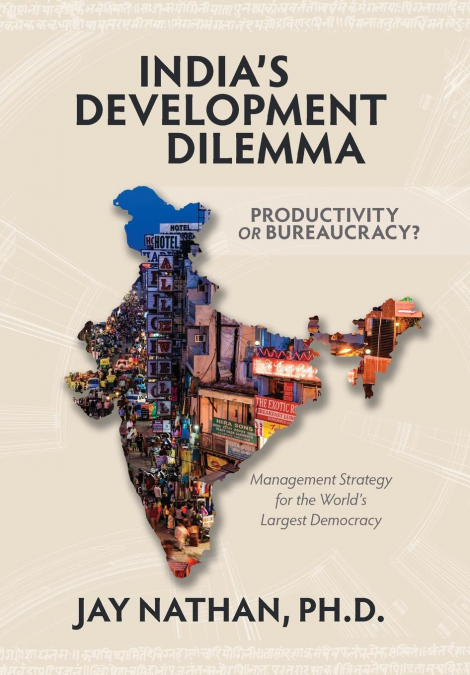
India’s Development Dilemma, Productivity or Bureaucracy

India’s Development Dilemma, Productivity or Bureaucracy

Jay Nathan

31,12 €
IVA incluido
Consulta disponibilidad
Editorial:
Jay Nathan
Año de edición:
2017
Materia
Historia de Asia
ISBN:
9780692983645

Selecciona una librería:

  • Librería Samer Atenea
  • Librería Aciertas (Toledo)
  • Kálamo Books
  • Librería Perelló (Valencia)
  • Librería Elías (Asturias)
  • Donde los libros
  • Librería Kolima (Madrid)
  • Librería Proteo (Málaga)

India is one of the oldest civilizations in the world. In many ways, India is perceived as a spiritual nation with rich traditions and a way of life quite different from Western countries. History shows that ancient Indian civilization had effective systems for planning and management, allowing them to create highly advanced architecture. The use of large-scale construction plans, and cartographic material was known to India with some regularity since the Vedic Period (first millennium BCE). To produce such intricate architecture would require efficient management—there would have to be a leader who organized that project, a financier, and laborers working in teams.In the modern world, unlike first-world countries, India is not exporting manufactured goods, especially high-end electronic and technological products to global markets. The big question: why has India, not progressed in the application of science and technology, which in turn can translate into sustained development across the sub-continent? Countries that were late adopters of science and technology, have done especially well with technology and productivity-induced development. The adoption-gap still exists in India. Why? By and large, India has done well for the largest democracy, but she can do better with improved work-culture, enhanced productivity across all sectors, and with professionalism in administration, executives, and workers. Given the substantial population of young people, this will be a noble goal, and a desirable one in the post-digital world. When India solves its development dilemma and chooses productivity over bureaucracy, all of her citizens will thrive.

Artículos relacionados

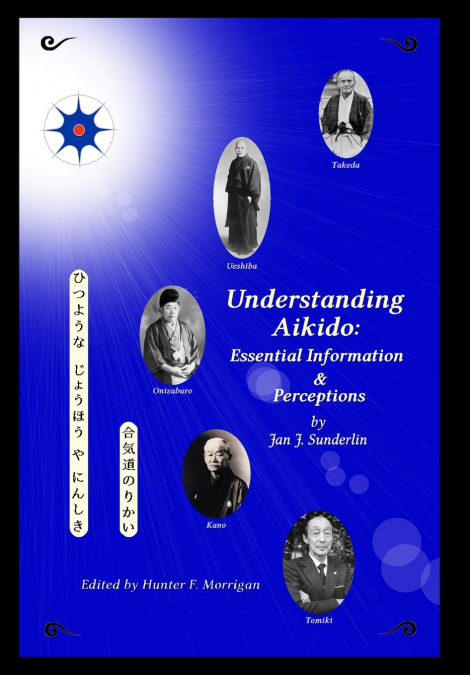
  • Understanding Aikido
    Jan J Sunderlin
    Understanding Aikido: Essential Information and Perceptions (Special Edition) presents an historical, cultural, and philosophical look at the development of the Japanese martial art of Aikido. Sunderlin focuses on the influences brought to bear on Morihei Ueshiba, the founder of Aikido, and the subsequent cultivation of the latter's martial art as a vessel of Budo. The author a...
    Disponible

    63,06 €

  • Not by Love Alone
    Margaret Mehl
    Suzuki Shin'ichi, the Tokyo String Quartet, Midori - How did Japanese violinists manage to revolutionize violin teaching, win international competitions, conquer Western concert stages, study at world-famous conservatoires and take up positions in leading orchestras and prestigious music faculties? What enabled the Japanese to master Western classical music within a few decades...
    Disponible

    29,32 €

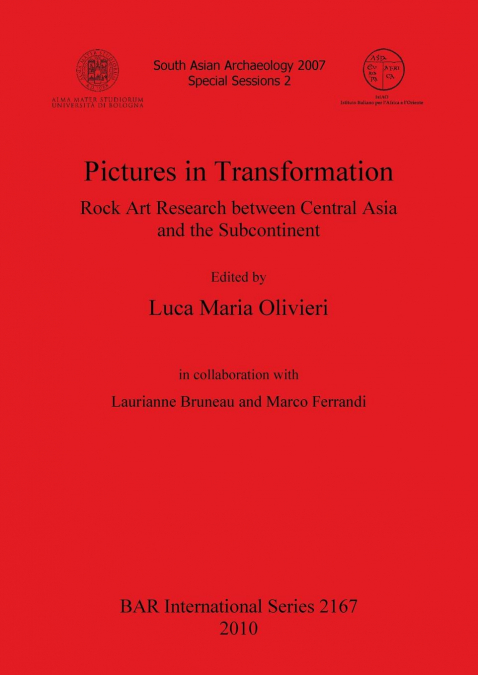
  • Pictures in Transformation
    Luca Maria Olivieri
    ...
    Disponible

    54,79 €

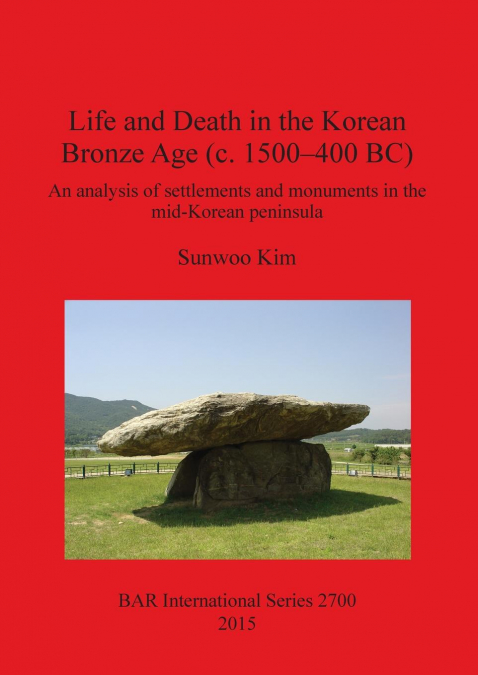
  • Life and Death in the Korean Bronze Age (c. 1500-400 BC)
    Sunwoo Kim
    This research focuses on the Bronze Age in selected areas of Korea; Seoul, Incheon, and Gyeonggi province. Two forms of evidence - settlements and monuments - are taken into account to identify their relationship with landscape and the social changes occurring between ca. 1500 to 400 cal BC. Life and death in the Bronze Age in Korea has not been synthetically investigated befor...
    Disponible

    108,34 €

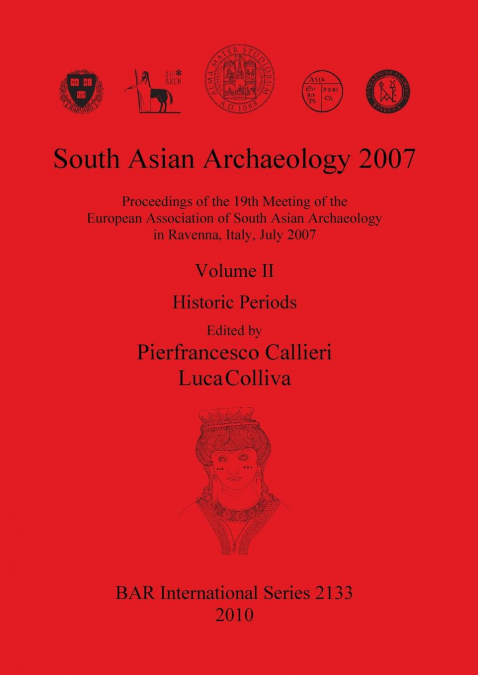
  • South Asian Archaeology 2007
    Proceedings of the 19th Meeting of the European Association of South Asian Archaeology in Ravenna, Italy, July 2007.                     ...
    Disponible

    182,04 €

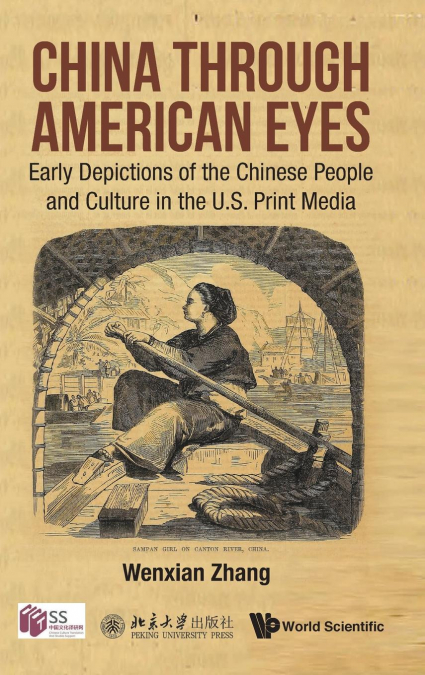
  • CHINA THROUGH AMERICAN EYES
    Wenxian Zhang / ZHANG WENXIAN
    Cultural understanding between the United States and China has been a long and complex process. The period from the mid-nineteenth century to the early twentieth century is not only a critical era in modern Chinese history, but also the peak time of illustrated news reporting in the United States. Besides images from newspapers and journals, this collection also contains pictur...