 Librería Samer Atenea
 Kálamo Books
 Librería Elías (Asturias)
 Librería Kolima (Madrid)
 Librería Proteo (Málaga)
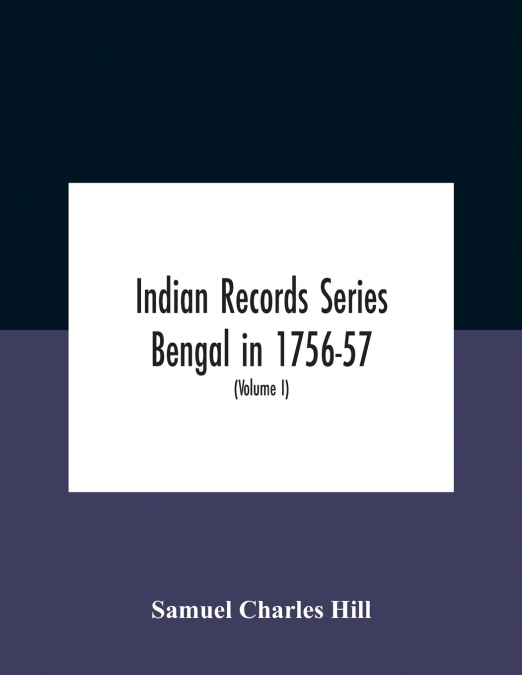
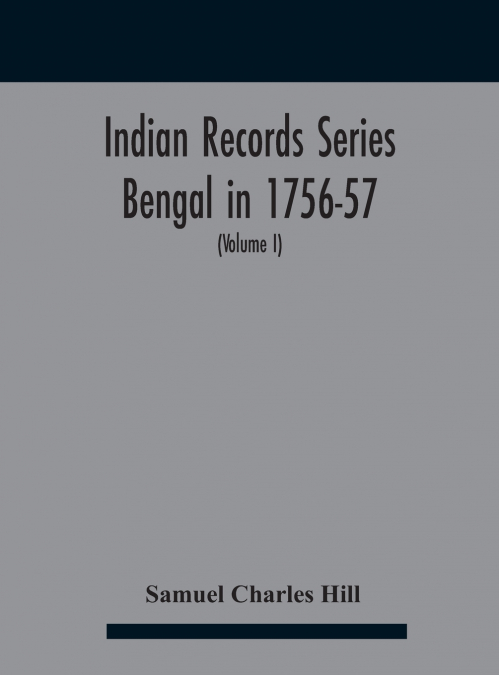
An uncompromising archive of the crisis that reshaped colonial Bengal. History speaks through these pages. Samuel Charles Hill’s Indian Records Series Bengal in 1756-57 assembles a careful selection of public and private papers produced during the reign of Siraj-Uddaula, presented with notes and an historical introduction. More than a compilation, it is a primary source anthology and historical documents collection that places readers alongside the dispatches, correspondence and official records which underpin studies of british colonial history and eighteenth-century India. Hill’s annotations are concise and pointed, offering context and cross-references that guide readers without standing between them and the documents. For general readers and researchers alike the arrangement reveals how public decrees and private exchanges intersected in an era that continues to shape india 1750s history and scholarship of the east india company papers.As a work of reference and of reading, this volume matters. Its archival depth gives historians and scholars an authoritative academic research resource for colonial Bengal studies and for anyone exploring the british empire archives of the mid-eighteenth century. Republished by Alpha Editions in a careful modern edition, this volume preserves the spirit of the original while making it effortless to enjoy today - a heritage title prepared for readers and collectors alike. Casual readers will find vivid documentary glimpses of commerce, administration and daily life in the Siraj-Uddaula era; classic-literature collectors and institutional libraries will prize the book as a cultural treasure and a primary reference for further study and teaching. The historical introduction frames the material for modern inquiry, and Hill’s selections highlight tensions between mercantile ambition and local authority without editorialising. Bibliographers and collectors will note its value as a window into the networks recorded across the british empire archives; producers of scholarship and narrative will find durable evidence here. Accessible yet rigorous, the volume bridges the demands of academic research and the curiosity of anyone interested in colonial Bengal studies.