 Librería Samer Atenea
 Kálamo Books
 Librería Elías (Asturias)
 Librería Kolima (Madrid)
 Librería Proteo (Málaga)
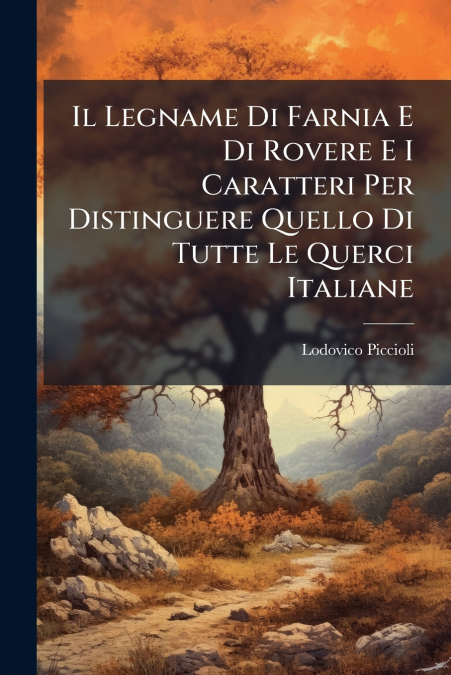
Il Legname Di Farnia E Di Rovere E I Caratteri Per Distinguere Quello Di Tutte Le Querci Italiane esplora in dettaglio le caratteristiche del legno di farnia e di rovere, fornendo una guida completa per distinguere il legno di tutte le querce italiane. Scritto da Lodovico Piccioli, questo libro rappresenta una risorsa preziosa per professionisti del settore forestale, falegnami e appassionati di botanica. L’opera offre un’analisi approfondita delle proprietà fisiche e meccaniche del legno, nonché delle tecniche di lavorazione e utilizzo. Con un linguaggio chiaro e preciso, Piccioli guida il lettore attraverso le peculiarità di ogni tipo di quercia, offrendo consigli pratici per l’identificazione e la selezione del legno più adatto a diversi scopi. Un testo fondamentale per chiunque sia interessato alla conoscenza e alla valorizzazione del patrimonio forestale italiano.This work has been selected by scholars as being culturally important, and is part of the knowledge base of civilization as we know it. This work was reproduced from the original artifact, and remains as true to the original work as possible. Therefore, you will see the original copyright references, library stamps (as most of these works have been housed in our most important libraries around the world), and other notations in the work.This work is in the public domain in the United States of America, and possibly other nations. Within the United States, you may freely copy and distribute this work, as no entity (individual or corporate) has a copyright on the body of the work.As a reproduction of a historical artifact, this work may contain missing or blurred pages, poor pictures, errant marks, etc. Scholars believe, and we concur, that this work is important enough to be preserved, reproduced, and made generally available to the public. We appreciate your support of the preservation process, and thank you for being an important part of keeping this knowledge alive and relevant.