 Librería Desdémona
 Librería Samer Atenea
 Librería Aciertas (Toledo)
 Kálamo Books
 Librería Perelló (Valencia)
 Librería Elías (Asturias)
 Donde los libros
 Librería Kolima (Madrid)
 Librería Proteo (Málaga)
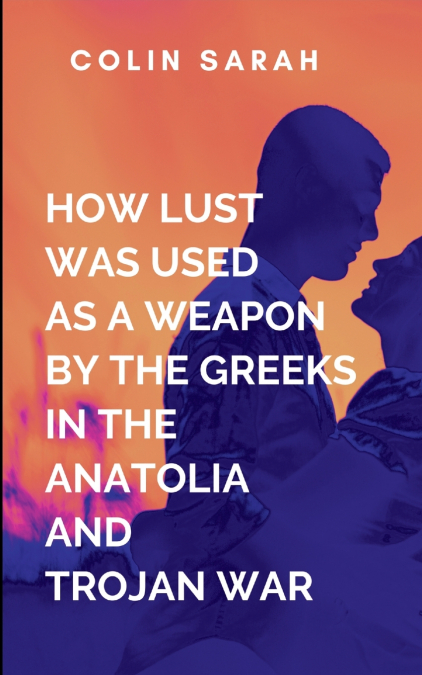
In 'How Lust Was Used As A Weapon By The Greeks In The Anatolia And Trojan War,' the ancient conflict between the Greeks and Trojans is re-examined through a provocative lens. This gripping exploration delves into the psychological and emotional forces that drove the warriors, kings, and gods to fight in the name of desire, power, and vengeance. Lust, in its many forms-romantic, political, and personal-becomes the driving force behind the war, with its consequences reverberating across the lives of those involved. The book reimagines the Trojan War not just as a battle of armies, but as a battle of desires that shaped the destiny of an entire civilization. The narrative examines the complex relationships between key figures like Helen, Paris, Menelaus, and Achilles, revealing how their actions were fueled by lust in all its destructive and seductive forms. Helen’s beauty, the desire for glory, and the thirst for revenge all intertwined to form a web of manipulation, betrayal, and suffering. The characters’ deepest yearnings, whether for love, power, or recognition, become tools wielded by both mortals and gods, ultimately leading to the war that forever changed the ancient world. As the war rages on, the lust for victory becomes all-consuming, pushing the warriors to make sacrifices that defy reason. The gods, too, are not immune to this lust, using mortals as pawns in their own power struggles. In the end, the Greek and Trojan heroes find that their desires, which once seemed so vital and all-encompassing, can be as much a curse as a blessing. With the fall of Troy, the victors and the vanquished alike are left to confront the repercussions of their actions, realizing that lust, while an ancient weapon, is one that has no true victor. The story explores the aftermath of the war through the survivors, including Menelaus, Odysseus, and Agamemnon. Each hero faces the consequences of the lust-driven decisions that led to Troy’s destruction. As they return to their homes, they must navigate the complexities of relationships, redemption, and reconciliation. The book offers a nuanced perspective on the cost of glory, power, and desire, illustrating how each hero’s return home is fraught with the psychological scars of a war fought in the name of lust.