Inicio > Artes > How Hitler Came to Power
How Hitler Came to Power

How Hitler Came to Power

How Hitler Came to Power

Sara Moore

22,93 €
IVA incluido
Disponible
Editorial:
AuthorHouse UK
Año de edición:
2006
Materia
Artes
ISBN:
9781420885576
22,93 €
IVA incluido
Disponible

Selecciona una librería:

  • Librería Samer Atenea
  • Librería Aciertas (Toledo)
  • Kálamo Books
  • Librería Perelló (Valencia)
  • Librería Elías (Asturias)
  • Donde los libros
  • Librería Kolima (Madrid)
  • Librería Proteo (Málaga)

President Woodrow Wilson made a dreadful mistake in 1918 when he disregarded military advice and the wishes of the American people and forced the allies to accept a conditional peace, rather than insisting on the German army’s unconditional surrender. The Allies were too weak to enforce the Versailles Treaty and soon became open to German propaganda that it was onerous and unfair. Yet newly uncovered statistics reveal that by 1925 Germany’s economy was stronger than before the Great War.The German people voted for democracy and a pacifist agenda in 1928. Yet Alfred Hugenberg, Chairman of the bellicose Pan German League before the War and now newspaper magnate and leader of Germany’s second largest political party, maintained that dictatorship could still be achieved legally in Germany ’if the condition of the country seems to warrant it’. He put Hitler on the committee of his newspapers’ virulent campaign against the reparations, which gave him massive publicity. Meanwhile fellow Pan-German armaments maker Gustav Krupp agreed to sell Stalin arms and help him create giant farms to grow wheat to pay for them, provided that Stalin forced the German Communists to vote against the Social Democrats in the Reichstag. Stalin’s wheat would devastate the world’s agricultural economy, while the German Communists voting with Hitler, helped torpedo German democracy.Ex-army officer, Heinrich Brüning, became Germany’s Chancellor in 1930 and planned to rid Germany of war reparations and secure re-armament and a Presidential regime, by swamping other nations with exports, while stifling home consumption. Taxes rose dramatically and unemployment soared. In the 1931 banking crisis, Brüning secured a reparations payments moratorium, despite Germany being the world’s largest exporter, by pointing to the misery and unemployment of the German people.Their plight worsened in 1932. Hitler won a landslide victory at the polls through his defiance of the Versailles treaty. Both Left and Right supported him. Stalin expressly ordered the Communists to destroy the power of the Social Democrats while Hugenberg persuaded the Right that Hitler was the man who could save Germany from Communism. Only a short time later President Hindenburg allowed Hitler to become dictator. Hugenberg had proved in four short years that a popular dictator could come to power in Germany legally ’if the circumstances warranted it’. Yet he and the others who helped Hitler’s rise seem to have escaped all censure.

Artículos relacionados

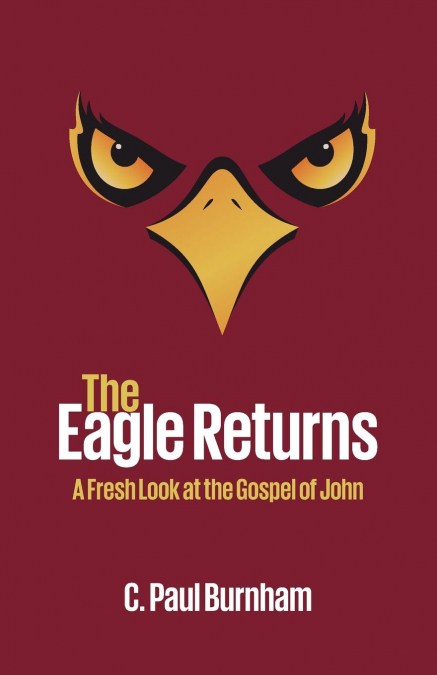
  • The Eagle Returns
    C. Paul Burnham / CPaul Burnham
    The Gospel of John was long assumed to be the work of an eyewitness, usually identified as John, son of Zebedee. More recently, many have judged it the unhistorical product of a ''Johannine community.'' Reconsideration by Richard Bauckham has suggested that the author was a Jerusalem disciple who housed the ''Last Supper.'' This book explores the possibility that he was present...
    Disponible

    11,04 €

  • The Old Testament in Theology and Teaching
    APTS Press is privileged to offer this festschrift honoring Dr. Kay Fountain, who for more than twenty years has served the Lord at the Asia Pacific Theological Seminary (APTS), in Baguio City, Philippines, first as a student, then as a faculty member and finally as the Academic Dean. Our hope is that this book will reflect her passion for teaching and understanding the Old Tes...
    Disponible

    22,13 €

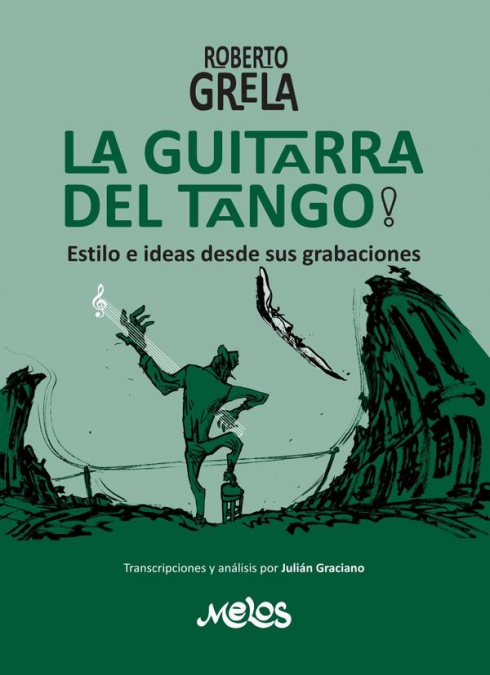
  • MEL4414 - Roberto Grela, La guitarra del tango
    Julián Graciano
    del mayor guitarrista de la historia del tango. Con solo percibir el empleo del plectro (la llamada púa de guitarra en nuestro canyengue) descubrimos un sonido y estilo tan particular que terminó por deslumbrar a todos. Pero si decimos “bastaría”, en potencial, es que nos debemos mucho más: suele decirse del gran Aníbal Troilo que su música y sus orquestas son la gran marca de ...
    Disponible

    29,64 €

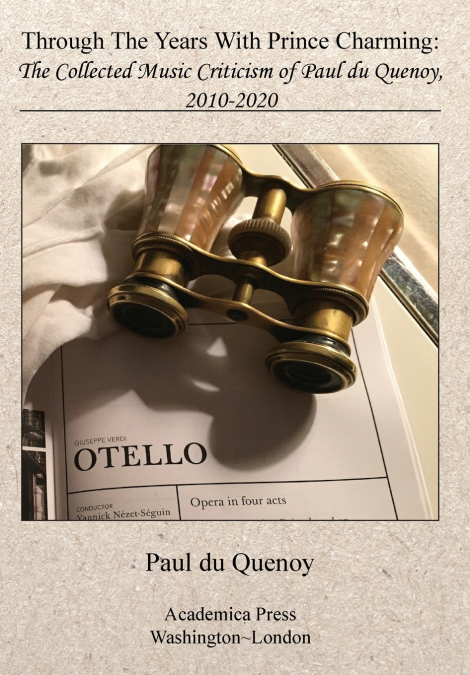
  • Through the years with prince charming
    Paul du Quenoy
    The past decade has overflowed in a raging stream of contradictions. Old certainties have yielded to relentless insecurity over a time when much of the human experience got immeasurably better even as many things only ever seemed to get worse. As Paul du Quenoy’s globetrotting criticism reveals, the arts were in a ferment that matched profound and yet totally unpredicted social...
    Disponible

    141,06 €

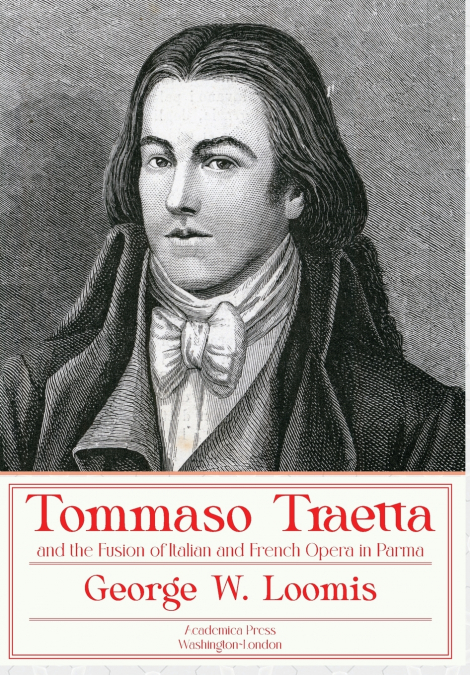
  • Tommaso Traetta and the Fusion of Italian and French Opera in Parma
    George W. Loomis
    In 1759, the court of the Italian Duchy of Parma adopted the inspiration of cultural creators who recommended a reform of Italian opera along French lines. These writers favored combining Italian-style music with the wider range of musical genres and scenic variety of French opera. As the music critic and commentator George W. Loomis shows in this groundbreaking volume, the you...
    Disponible

    198,69 €

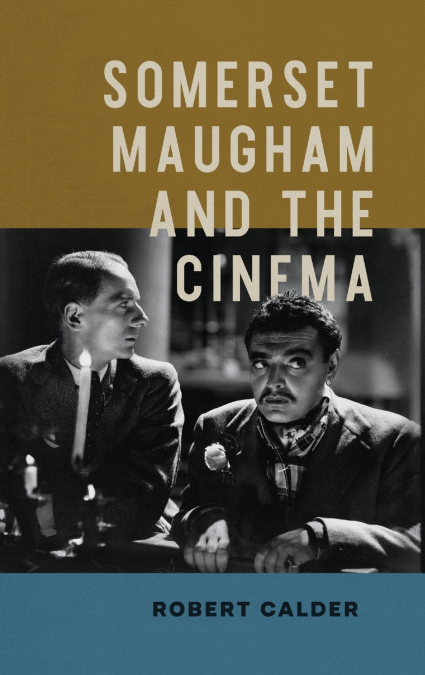
  • Somerset Maugham and the Cinema
    Robert Calder
    William Somerset Maugham (1874-1965) was one of the most prominent and productive authors of the twentieth century-and his works have been among the most cinematically transformed in history. For more than five decades, adaptations of his plays, stories, and novels dominated movie theaters and, later, television screens. More than ninety individual works were filmed, and for ma...
    Disponible

    113,99 €

Otros libros del autor

  • Is Prussia Returning to Europe Instead of Pacifist Germany?
    Sara Moore
    This book reveals how the ’Prussian’ Otto von Bismarck created the German Reich through a series of wars against his neighbours. His successors schemed to extend his empire and destroy the rising tide of democracy. The war against France in 1914 was bloodier than anticipated but Germany won huge swathes of Ukraine and Russia in 1918, before her army was reluctantly forced to re...
    Disponible

    25,86 €