How Democracy Works

How Democracy Works

Marcio Goldman

126,25 €
IVA incluido
Consulta disponibilidad
Editorial:
Sean Kingston
Año de edición:
2013
Materia
Estructuras políticas: democracia
ISBN:
9781907774157

Selecciona una librería:

  • Librería Samer Atenea
  • Librería Aciertas (Toledo)
  • Kálamo Books
  • Librería Perelló (Valencia)
  • Librería Elías (Asturias)
  • Donde los libros
  • Librería Kolima (Madrid)
  • Librería Proteo (Málaga)

In this book, Marcio Goldman provides an interpretation of a ’big’ theme - the functioning of a modern political system - based on the ethnographic analysis of a ’small’ one - the political involvement of a group of African-Brazilian people living in the town of Ilheus in the north-east of Brazil, and belonging to Afro-Brazilian religions, black movement factions, families and neighbourhoods. By giving a description ’from the native’s point of view’ he leads us to a truly anthropological perception of modern democracies, showing how we need to take seriously the actions and the reflections of those generally viewed as passive, manipulated, ignorant and not really interested in the political game. Only this can lead us to an ’ethnographic theory of politics’ A ground-breaking work of real importance - not only to the anthropology of politics, but to the continuing development of theory and epistemology in anthropology and the social sciences at large. - Prof. Christina Toren, University of St Andrews Goldman has masterfully analysed the terrain of politics in this town, illuminating not only its local specifics.... but what he calls the ’constitutive ambiguities’ of democracy in Brazil - and indeed of democracy as a whole. In the process he robustly challenges various accepted wisdoms about poor people’s political choices, gives new life to classic anthropological ideas like ’segmentation’, and strips away the veil that, for many of us, obscures ’how democracy works’. He achieves this ambitious task with consummate skill, combining fine-grained detail with bold theoretical insight.- Prof. Deborah James, London School of EconomicsIf the intellectual contemplation of collectively instituted irrationality is what got anthropology going in the first place, then it must, at some point, address such entities as politicians, and why people vote for them. Read this book and learn. - Prof. Peter Gow, University of St Andrews

Artículos relacionados

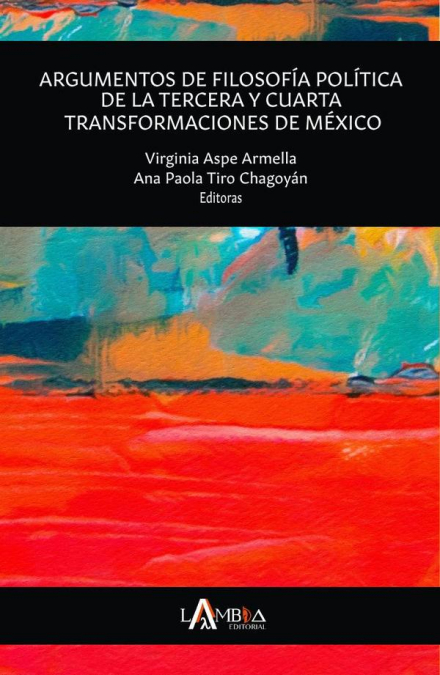
  • Argumentos de filosofía política de la tercera y cuarta transformaciones de México. Una aproximación interdisciplinar
    Ana Paola Tiro Chagoyán / Virginia Aspe Armella
    Presentamos al lector el tercero de los tres libros que fueron resultado del proyecto de investigación semilla Fondo Fomento a la Investigación de la Universidad Panamericana que en nuestro caso fue titulado Argumentos de filosofía política de las cuatro transformaciones de México, etapa primera, la Ilustración mexicana de los siglos XVIII y primeros años del XIX, la Independen...
    Disponible

    30,68 €

  • Making Democracy Fun
    Josh A. Lerner
    ...
    Disponible

    33,87 €

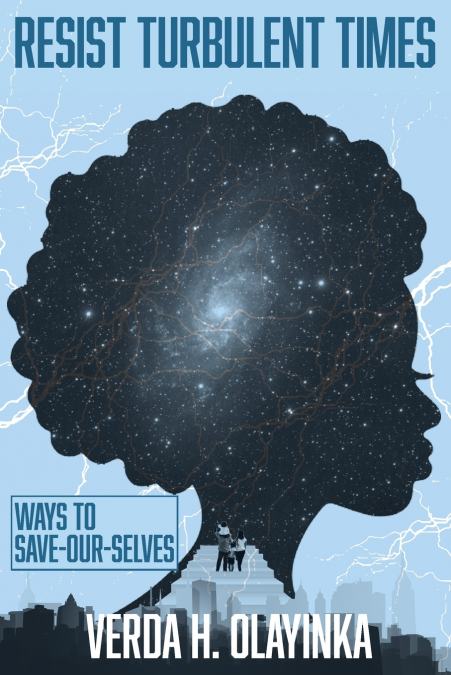
  • Resist Turbulent Times
    Verda Harris-Olayinka
    Resist Turbulent Times is for Everyday People and College students (who are also Everyday Ppl) - and their professors who assign textbooks for their students.Verda H. Olayinka followed the advice of noted Kemetic (African) American visionary, Harold Cruse who advised theCultural Intellectual to 'Synthesize a Black Social Science methodology in the process of developing a functi...
    Disponible

    16,64 €

  • By Executive Order
    Andrew Rudalevige
    How the executive branch-not the president alone-formulates executive orders, and how this process constrains the chief executive’s ability to act unilaterallyThe president of the United States is commonly thought to wield extraordinary personal power through the issuance of executive orders. In fact, the vast majority of such orders are proposed by federal agencies and shaped ...
    Disponible

    43,00 €

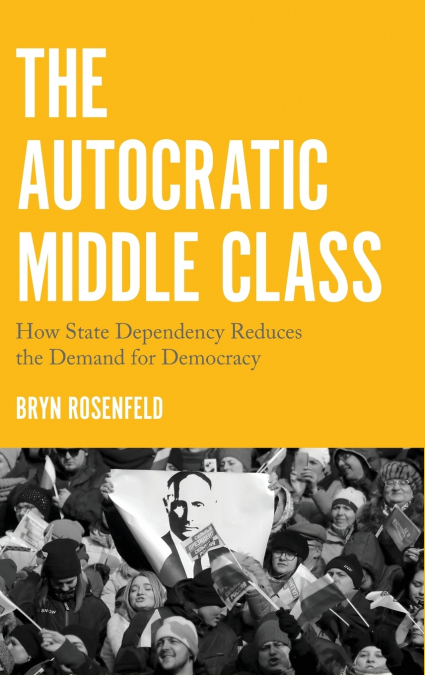
  • The Autocratic Middle Class
    Bryn Rosenfeld
    How middle-class economic dependence on the state impedes democratization and contributes to authoritarian resilienceConventional wisdom holds that the rising middle classes are a force for democracy. Yet in post-Soviet countries like Russia, where the middle class has grown rapidly, authoritarianism is deepening. Challenging a basic tenet of democratization theory, Bryn Rosenf...
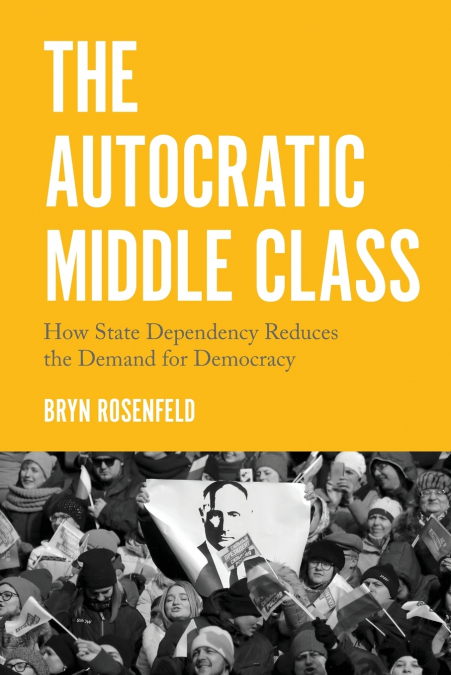
  • The Autocratic Middle Class
    Bryn Rosenfeld
    How middle-class economic dependence on the state impedes democratization and contributes to authoritarian resilienceConventional wisdom holds that the rising middle classes are a force for democracy. Yet in post-Soviet countries like Russia, where the middle class has grown rapidly, authoritarianism is deepening. Challenging a basic tenet of democratization theory, Bryn Rosenf...
    Disponible

    54,14 €