
History of the Asian Continent

History of the Asian Continent

History of the Asian Continent

Hugh Coon

27,45 €
IVA incluido
Disponible
Editorial:
Alpha Editions
Año de edición:
2018
Materia
Historia de Asia
ISBN:
9789352979677
27,45 €
IVA incluido
Disponible

Selecciona una librería:

  • Librería Samer Atenea
  • Librería Aciertas (Toledo)
  • Kálamo Books
  • Librería Perelló (Valencia)
  • Librería Elías (Asturias)
  • Donde los libros
  • Librería Kolima (Madrid)
  • Librería Proteo (Málaga)

"The history of Asia can be seen as the collective history of several distinct peripheral coastal regions such as, East Asia, South Asia, and the Middle East linked by the interior mass of the Eurasian steppe.The coastal periphery was the home to some of the world's earliest known civilizations, with each of the three regions developing early civilizations around fertile river valleys. These valleys were fertile because the soil there was rich and could bear many root crops. The civilizations in Mesopotamia, India, and China shared many similarities and likely exchanged technologies and ideas such as mathematics and the wheel. Other notions such as that of writing likely developed individually in each area. Cities, states and then empires developed in these lowlands.The steppe region had long been inhabited by mounted nomads, and from the central steppes they could reach all areas of the Asian continent. The northern part of the continent, covering much of Siberia was also inaccessible to the steppe nomads due to the dense forests and the tundra. These areas in Siberia were very sparsely populated.The centre and periphery were kept separate by mountains and deserts. The Caucasus, Himalaya, Karakum Desert, and Gobi Desert formed barriers that the steppe horsemen could only cross with difficulty. While technologically and culturally the city dwellers were more advanced, they could do little militarily to defend against the mounted hordes of the steppe. However, the lowlands did not have enough open grasslands to support a large horsebound force. Thus the nomads who conquered states in the Middle East were soon forced to adapt to the local societies.Asia's history would feature major developments seen in other parts of the world, as well as events that would affect those other regions. These include the trade of the Silk Road, which spread cultures, languages, religion, and disease throughout Afro-Eurasian trade. Another major advancement was the innovation of gunpowder in medieval China, which led to advanced warfare through the use of guns." 
Artículos relacionados

  • Understanding Aikido
    Jan J Sunderlin
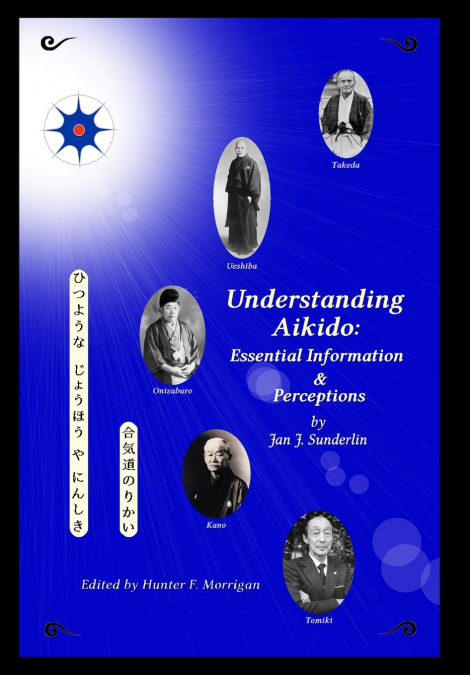
    Understanding Aikido: Essential Information and Perceptions (Special Edition) presents an historical, cultural, and philosophical look at the development of the Japanese martial art of Aikido. Sunderlin focuses on the influences brought to bear on Morihei Ueshiba, the founder of Aikido, and the subsequent cultivation of the latter's martial art as a vessel of Budo. The author a...
    Disponible

    63,06 €

  • Not by Love Alone
    Margaret Mehl
    Suzuki Shin'ichi, the Tokyo String Quartet, Midori - How did Japanese violinists manage to revolutionize violin teaching, win international competitions, conquer Western concert stages, study at world-famous conservatoires and take up positions in leading orchestras and prestigious music faculties? What enabled the Japanese to master Western classical music within a few decades...
    Disponible

    29,32 €

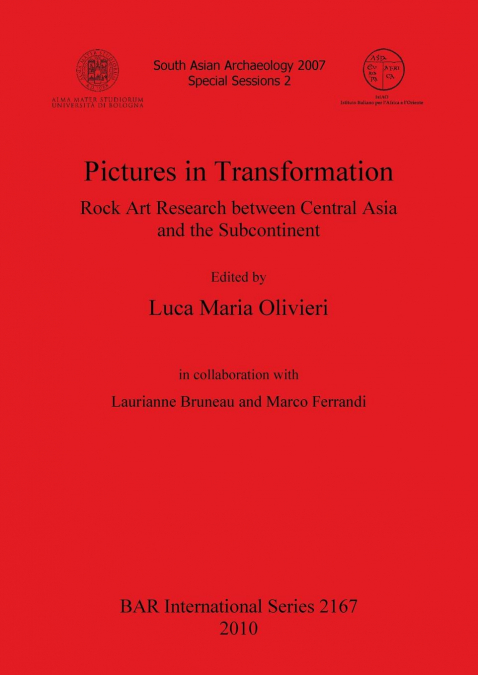
  • Pictures in Transformation
    Luca Maria Olivieri
    ...
    Disponible

    54,79 €

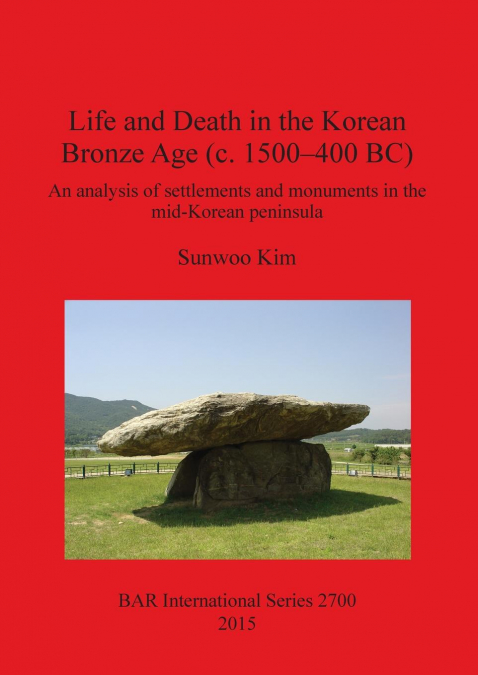
  • Life and Death in the Korean Bronze Age (c. 1500-400 BC)
    Sunwoo Kim
    This research focuses on the Bronze Age in selected areas of Korea; Seoul, Incheon, and Gyeonggi province. Two forms of evidence - settlements and monuments - are taken into account to identify their relationship with landscape and the social changes occurring between ca. 1500 to 400 cal BC. Life and death in the Bronze Age in Korea has not been synthetically investigated befor...
    Disponible

    108,34 €

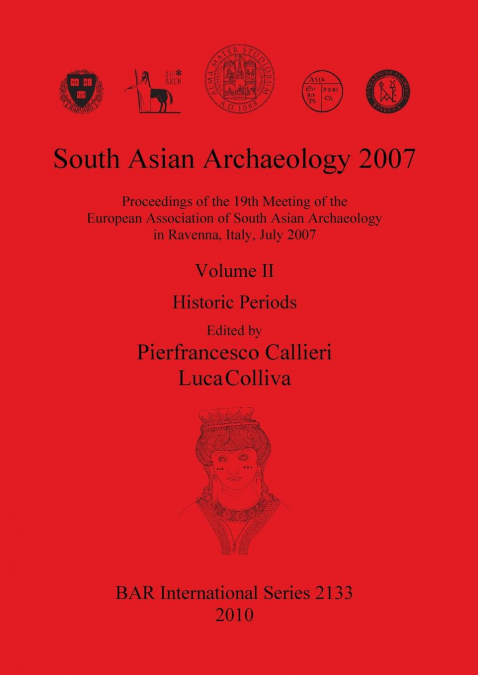
  • South Asian Archaeology 2007
    Proceedings of the 19th Meeting of the European Association of South Asian Archaeology in Ravenna, Italy, July 2007.                     ...
    Disponible

    182,04 €

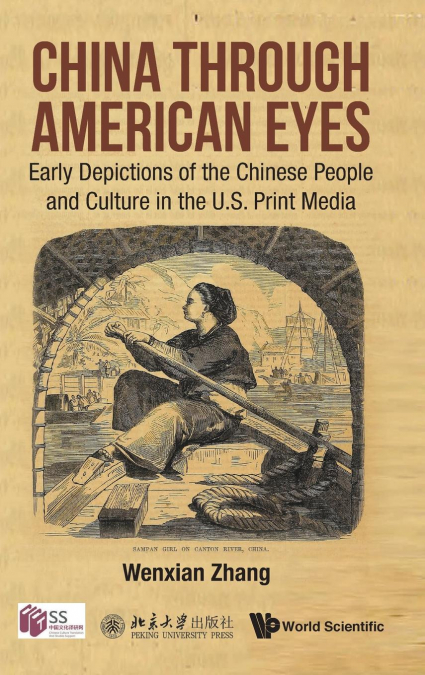
  • CHINA THROUGH AMERICAN EYES
    Wenxian Zhang / ZHANG WENXIAN
    Cultural understanding between the United States and China has been a long and complex process. The period from the mid-nineteenth century to the early twentieth century is not only a critical era in modern Chinese history, but also the peak time of illustrated news reporting in the United States. Besides images from newspapers and journals, this collection also contains pictur...

Otros libros del autor

  • Origin of Life
    Hugh Coon
    Abiogenesis, or informally the origin of life, is the natural process by which life arises from non-living matter, such as simple organic compounds. The transition from non-living to living entities was not a single event, but a gradual process of increasing complexity.Researchers study abiogenesis through a combination of molecular biology, paleontology, astrobiology and bioch...
    Disponible

    16,32 €