
Haldane, Mayr, and Beanbag Genetics

Haldane, Mayr, and Beanbag Genetics

Krishna Dronamraju

100,52 €
IVA incluido
Consulta disponibilidad
Editorial:
Oxford University Press
Año de edición:
2011
Materia
Evolución
ISBN:
9780195387346

Selecciona una librería:

  • Librería Samer Atenea
  • Librería Aciertas (Toledo)
  • Kálamo Books
  • Librería Perelló (Valencia)
  • Librería Elías (Asturias)
  • Donde los libros
  • Librería Kolima (Madrid)
  • Librería Proteo (Málaga)

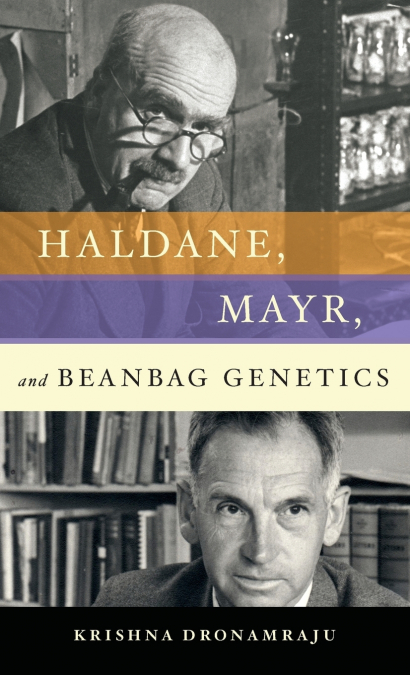
Haldane, Mayr, and Beanbag Genetics presents a summary of the classic exchange between two great biologists - J.B.S. Haldane and Ernst Mayr - regarding the value of the contributions of the mathematical school represented by J.B.S. Haldane, R.A. Fisher and S. Wright to the theory of evolution. Their pioneering contributions from 1918 to the 1960s dominated and shaped the field of population genetics, unique in the annals of science. In 1959, Mayr questioned what he regarded as the beanbag genetic approach of these pioneers to evolutionary theory, "an input or output of genes, as the adding of certain beans to a beanbag and the withdrawing of others." In 1964, Mayr's contention was refuted by Haldane in a remarkably witty, vigorous and pungent essay, "A defense of beanbag genetics" which compared the mathematical theory to a scaffolding within which a reasonably secure theory expressible in words may be built up. Correspondence between Haldane and Mayr is included.Beanbag genetics has come a long way since 1964. Mayr's (1959) critique of simple uncomplicated population genetics is no longer valid. Population genetics today includes much more than Mayr's beanbag genetics. Population genetics models now include multiple factors, linkage, dominance and epistasis. These may be regarded as the advanced beanbag models. Furthermore, population genetics and developmental genetics have become interdependent. Contemporary beanbag genetics includes molecular clocks, nucleotide diversity, coalescence and DNA-based phylogenetic trees, along with the four major holdovers from classical genetics, mutation, selection, migration and random drift. Molecular genetics has made it possible to study evolution rates at the nucleotide level. It is also possible today to compare DNA similarities and divergence in diverse species of animals and plants, which were not previously crossable.
Artículos relacionados

  • From Logos to Bios
    Wynand de Beer
    ...
  • L’età dell’oro dei cacciatori
    Alberto Peruffo
    L'universo, il pianeta Terra, l'uomo. L'avventura della specie umana si dipana lentamente dall'essere unicellulare fino all'uomo dei giorni nostri che, tra mille travagli, ha raggiunto la condizione di assoluta supremazia.La presenza nell'uomo moderno dei geni del DNA dell'uomo di Neanderthal ha chiarito che, questi antichi uomini, facevano parte, a ...
    Disponible

    40,53 €

  • Exploring Genome’s Junkyard
    Subir Ranjan Kundu
    Exploring Genome’s Junkyard: In the Labyrinth of Evolution narrates the progress of biological evolution, beginning with the conceptual introspection of gene and continuing with the contemporary understanding of the structural and function aspects of the human genome. Recent advances in human genome research have led scientists to the term 'biological dark matter,' which refers...
  • European Hair, Eye, and Skin Color
    Peter Frost
    Europeans, especially those from northern and eastern Europe, are unique in having diverse hair and eye colors and a skin almost as pale as an albino’s. Those colors are not only brighter than the original black and brown but also 'purer'-they lie within thin slices of the visible spectrum. Overall, that color scheme is more developed in women, who naturally have a higher incid...
  • Mitochondrial Eve and Y-Chromosomal Adam
    Subir Ranjan Kundu
    Mitochondrial Eve and Y-Chromosomal Adam discusses theoretical ideas, interpretations, and paleontological evidence to narrate the origin and evolutionary story of Sapiens through the transitional stages of archaic human species involved in the evolutionary pilgrimage, from the great apes and to modern humans. Author Subir Ranjan Kundu investigates the DNA footprints of primate...
  • When Evolution Stops
    Armando Simon
    Evolution is a fact. The evidence for it is simply overwhelming. However, the original mechanism that generates the evolutionary process, as first put forth simultaneously by Charles Darwin and Alfred R. Wallace and which became known as Natural Selection, has now been seen to be too simplistic by some scientists aside from the hard-core neo-Darwinists who insist that nothing w...
    Disponible

    28,77 €

Otros libros del autor

  • A Century of Geneticists
    Krishna Dronamraju
    Genetics, like all scientific disciplines, is a human endeavor. Thus, the lives of geneticists - their friendships, colleagues and associations - play an important role in the historical development of the science. This book summarizes the history of genetics by reviewing the lives of the prominent and influential researchers. ...
    Disponible

    87,78 €

  • A Century of Geneticists
    Krishna Dronamraju
    Genetics, like all scientific disciplines, is a human endeavor. Thus, the lives of geneticists - their friendships, colleagues and associations - play an important role in the historical development of the science. This book summarizes the history of genetics by reviewing the lives of the prominent and influential researchers. ...