
Inicio > Tecnología, ingeniería, agricultura > Ciencia, ingeniería y tecnología medioambientales > Groundwater Recharge from Run-off, Infiltration and Percolation
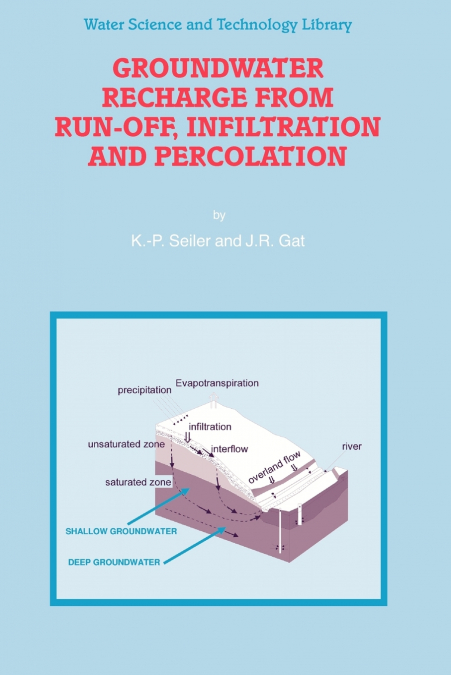
Groundwater Recharge from Run-off, Infiltration and Percolation

Groundwater Recharge from Run-off, Infiltration and Percolation

J.R. Gat / K.-P. Seiler

183,23 €
IVA incluido
Disponible
Editorial:
Springer Nature B.V.
Año de edición:
2010
Materia
Ciencia, ingeniería y tecnología medioambientales
ISBN:
9789048173334
183,23 €
IVA incluido
Disponible

Selecciona una librería:

  • Librería Samer Atenea
  • Librería Aciertas (Toledo)
  • Kálamo Books
  • Librería Perelló (Valencia)
  • Librería Elías (Asturias)
  • Donde los libros
  • Librería Kolima (Madrid)
  • Librería Proteo (Málaga)

Preface Abbreviations and dimensions Definitions 1 Introduction 2 The water cycle 2.1 Distribution of water on earth 2.2 The continental water cycle 2.2.1 The components of the Water Cycle 2.2.1.1 Characteristics of different climate zones 2.3 The vadose zone and its water balance for different climate zones 2.4 Rechargeable and fossil groundwater and water exploitation 2.5 The place of recharge in the water cycle 3 Mechanisms and processes of recharge 3.1 The input: precipitation and snowmelt 3.2 Wet and dry deposition at the interface atmosphere/lithosphere/biosphere 3.3 Overland-flow and infiltration 3.4 Matrix-flow and preferential-flow 3.5 Inter-flow 3.6 River-infiltration 3.7 Artificial recharge 3.8 Water vapor-fluxes in the subsurface 4 Research tools and methods in the study of recharge 4.1 Water balance estimates 4.1.1 Estimate of evapo-transpiration 4.1.2 Hydrograph analysis 4.1.3 Groundwater level fluctuations 4.2 Lysimeter studies 4.3 Hydraulic methods in the vadose zone 4.4 Isotope and chemical tracers 4.4.1 Stable and radioactive environmental isotopes 4.4.1.1 Preparation techniques 4.4.1.2 Measuring techniques 4.4.2 Environmental tracers for recharge determination 4.4.2.1 Environmental chloride 4.4.2.2 Environmental tritium 4.4.2.3 Environmental 2H and 18O 4.4.3 Artificial tracers 4.4.4 Application of tracers 4.5 Water sampling and sample conservation 4.6 Comparison between tracers and conventional techniques 5 Recharge under different climate regimes 5.1 Humid climates 5.1.1 Conceptual models 5.1.2 Water balance and separation of discharge components 5.2 Semi-arid climates 5.3 Arid climates 5.4 Cold climates 6 Man’s impact on the groundwater recharge 6.1 Land use change: Agriculture 6.2 Land use change: Urban areas 6.3 Global changes and the water cycle 7 Literature survey Subject index

Artículos relacionados

  • Ocean Remote Sensing with Synthetic Aperture Radar
    The ocean covers approximately 71% of the Earth’s surface, 90% of the biosphere and contains 97% of Earth’s water. The Synthetic Aperture Radar (SAR) can image the ocean surface in all weather conditions and day or night. SAR remote sensing on ocean and coastal monitoring has become a research hotspot in geoscience and remote sensing. This book—Progress in SAR Oceanography—prov...
    Disponible

    83,90 €

  • Handbook of Research on Advancements in Environmental Engineering
    Nediljka Gaurina-Medjimurec
    The protection of clean water, air, and land for the habitation of humans and other organisms has become a pressing concern amid the intensification of industrial activities and the rapidly growing world population. The integration of environmental science with engineering principles has been introduced as a means of long-term sustainable development. The Handbook of Research o...
  • Computer Vision and Pattern Recognition in Environmental Informatics
    Computer Vision and Pattern Recognition (CVPR) together play an important role in the processes involved in environmental informatics due to their pervasive, non-destructive, effective, and efficient natures. As a result, CVPR has made significant contributions to the field of environmental informatics by enabling multi-modal data fusion and feature extraction, supporting fast ...
  • Handbook of Research on Environmental Policies for Emergency Management and Public Safety
    Augustine Nduka Eneanya
    In a world of earthquakes, tsunamis, and hurricanes, it is evident that emergency response plans are crucial to solve problems, overcome challenges, and restore and improve communities affected by such negative events. Although the necessity for quick and efficient aid is understood, researchers and professionals continue to strive for the best practices and methodologies to pr...
  • A New Water Future
    Ric Davidge
    Just as cities and nations face the challenge of providing clean water to their citizens and their economies, a new opportunity has finally been constructed that can fix these challenges.  This is a time-sensitive opportunity, and this book is provided to help you move forward. AQUEOUS International, Inc. has developed this over the past 30 years with global research and the co...
    Disponible

    12,86 €

  • Microbial Bioremediation
    P Gunasekaran / P Rajendran
    Discover the groundbreaking world of bioremediation with 'Microbial Bioremediation' authored by Dr. P. Rajendran and Dr. P. Gunasekaran. This comprehensive book unveils the power of living organisms, including plants in phytoremediation and microbes such as bacteria, algae, and fungi in microbial bioremediation, as efficient, eco-friendly, and cost-effective alternatives to con...
    Disponible

    30,82 €

Otros libros del autor

  • Groundwater Recharge from Run-off, Infiltration and Percolation
    J.R. Gat / K.-P. Seiler
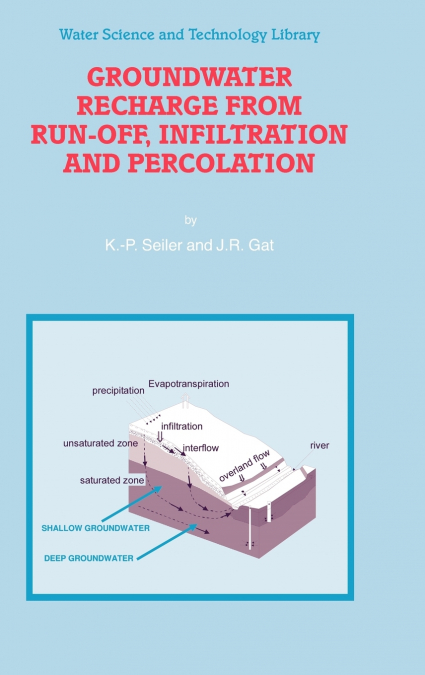
    To face the threats to the water supply and to maintain sustainable water management policies, detailed knowledge is needed on the surface-to-subsurface transformation link in the water cycle. Recharge flux is covered in this book as well as many other groundwater issues, including a comparison of the traditional and modern approaches to determine gro...