
Green Nanoremediation

Green Nanoremediation


47,31 €
IVA incluido
Disponible
Editorial:
Springer Nature B.V.
Año de edición:
2023
Materia
Ciencia, ingeniería y tecnología medioambientales
ISBN:
9783031305597
47,31 €
IVA incluido
Disponible

Selecciona una librería:

  • Librería Samer Atenea
  • Librería Aciertas (Toledo)
  • Kálamo Books
  • Librería Perelló (Valencia)
  • Librería Elías (Asturias)
  • Donde los libros
  • Librería Kolima (Madrid)
  • Librería Proteo (Málaga)

This book focuses on green nanoremediation addressing aspects related to the use of nanomaterials generated through green synthesis protocols to efficiently restore polluted environs. Nanomaterials’ characteristics such as large surface area, capacity to easily reach into contaminated sites, good reactivity, and possibility of being developed to present photocatalytic activity and/or to deal with targeted substances by chemical surface modification are useful specially to perform remediation. As an alternative to conventional physicochemical methods, the green-based synthesis protocols reject the use of harmful reagents, prevent waste production, apply renewable energy source and/or materials, and consider in first place offering the smallest negative impact possible to living beings and to the ecosystem. Green synthesis in nanotechnology field involves the use of seaweeds, bacteria, cyanobacteria, yeasts, fungi, plants (living ones, biomass, extracts) and/or bio-derived products to generate the nanomaterials. The introductory chapter will be dedicated to nanomaterials’ characteristics that enable them to be used in environmental remediation. The first part of the book will be dedicated to organic and inorganic pollution and the threats they pose to living forms; advantages, disadvantages and mechanisms of nanoremediation; comparison between conventional strategies of environmental pollution remediation and the green nanoremediation; carbon-based and non-carbon-based green nanomaterials capable of promoting environs’ remediation; cost/benefits of using nanomaterials and nanoinformatics to a safe nanotechnology. The second part will be dedicated to green nanoremediation of water and soil, microbe-based, algae-based and plant-based synthesis of nanomaterials to nanoremediation. This part will also contain chapters dedicated to relevant nanomaterials for green nanoremediation protocols, nano-phytoremediation strategies, strategies to evaluate the efficiency of protocols related to this kind of remediation, main interactions of green nanomaterials and microbes during nanoremediation and, as a consequence of it, biocompatibility of green nanomaterials. This book’s main purpose is to offer readers extensive knowledge on green nanoremediation as a feasible strategy to fight pollution’s harmful consequences and clean environmental pollution, but also present the challenges that should be surpassed.
Artículos relacionados

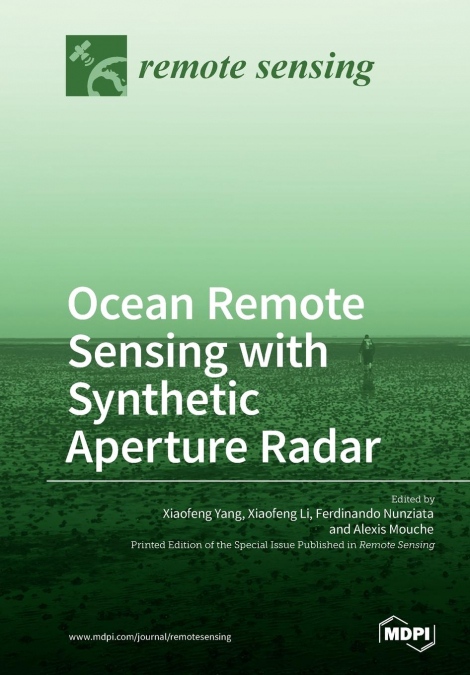
  • Ocean Remote Sensing with Synthetic Aperture Radar
    The ocean covers approximately 71% of the Earth’s surface, 90% of the biosphere and contains 97% of Earth’s water. The Synthetic Aperture Radar (SAR) can image the ocean surface in all weather conditions and day or night. SAR remote sensing on ocean and coastal monitoring has become a research hotspot in geoscience and remote sensing. This book—Progress in SAR Oceanography—prov...
    Disponible

    83,90 €

  • Handbook of Research on Advancements in Environmental Engineering
    Nediljka Gaurina-Medjimurec
    The protection of clean water, air, and land for the habitation of humans and other organisms has become a pressing concern amid the intensification of industrial activities and the rapidly growing world population. The integration of environmental science with engineering principles has been introduced as a means of long-term sustainable development. The Handbook of Research o...
  • Computer Vision and Pattern Recognition in Environmental Informatics
    Computer Vision and Pattern Recognition (CVPR) together play an important role in the processes involved in environmental informatics due to their pervasive, non-destructive, effective, and efficient natures. As a result, CVPR has made significant contributions to the field of environmental informatics by enabling multi-modal data fusion and feature extraction, supporting fast ...
  • Handbook of Research on Environmental Policies for Emergency Management and Public Safety
    Augustine Nduka Eneanya
    In a world of earthquakes, tsunamis, and hurricanes, it is evident that emergency response plans are crucial to solve problems, overcome challenges, and restore and improve communities affected by such negative events. Although the necessity for quick and efficient aid is understood, researchers and professionals continue to strive for the best practices and methodologies to pr...
  • A New Water Future
    Ric Davidge
    Just as cities and nations face the challenge of providing clean water to their citizens and their economies, a new opportunity has finally been constructed that can fix these challenges.  This is a time-sensitive opportunity, and this book is provided to help you move forward. AQUEOUS International, Inc. has developed this over the past 30 years with global research and the co...
    Disponible

    12,86 €

  • Microbial Bioremediation
    P Gunasekaran / P Rajendran
    Discover the groundbreaking world of bioremediation with 'Microbial Bioremediation' authored by Dr. P. Rajendran and Dr. P. Gunasekaran. This comprehensive book unveils the power of living organisms, including plants in phytoremediation and microbes such as bacteria, algae, and fungi in microbial bioremediation, as efficient, eco-friendly, and cost-effective alternatives to con...
    Disponible

    30,82 €