
Inicio > Artes > Geschichte des Berliner Verkehrs
Geschichte des Berliner Verkehrs

Geschichte des Berliner Verkehrs

Janine Boßmann

23,64 €
IVA incluido
Disponible
Editorial:
GRIN Verlag
Año de edición:
2007
Materia
Artes
ISBN:
9783638747189
23,64 €
IVA incluido
Disponible

Selecciona una librería:

  • Librería Samer Atenea
  • Librería Aciertas (Toledo)
  • Kálamo Books
  • Librería Perelló (Valencia)
  • Librería Elías (Asturias)
  • Donde los libros
  • Librería Kolima (Madrid)
  • Librería Proteo (Málaga)

Studienarbeit aus dem Jahr 2004 im Fachbereich Soziologie - Sonstiges, Note: 2,7, Technische Universität Berlin, Sprache: Deutsch, Abstract: Die Geschichte des Berliner Verkehrs begann bereits im 18. Jahrhundert. Berlin entwickelte sich als Hauptstadt des Königreichs Preußen zu einer aufstrebenden Metropole und so kam es, dass 1792 die erste gepflasterte Landstrasse im gesamten Königreich Preußen von Berlin nach Potsdam verlief. 1816 verkehrte dann das erste deutsche Dampfschiff auf Spree und Havel. Seit 1864 bestand dann eine regelmäßige Dampfschifffahrtsroute von der Jannowitzbrücke die Oberspree hinauf. Diese Route existiert auch heute noch. Da die Einwohnerzahl stark zugenommen hat, sie betrug 1820 ca. 200.000 Einwohner, drängten die obersten Baubehörden auch auf eine Änderung der unzumutbaren unbefestigten Wege, welche auch für den zunehmenden Fuhrverkehr zum Problem wurden. Seit 1824 verwendete man Granitplatten- Trottoire. Diese kamen jedoch zunächst nur vereinzelt auf bestimmten Strassen und Plätzen zum Einsatz, so z.Bsp. im Lustgarten.Des weiteren wurde die Straßenbeleuchtung verbessert, allerdings konnte erst nach 1826( Bau der englischen Gasanstalt) bzw. nach 1847 ( Bau der ersten städtischen Gasanstalt) überall eine preisgünstige Straßenbeleuchtung eingeführt werden. Damit konnte auch die Berliner Chaussee „ Unter den Linden' durch Gaslaternen erhellt werden.Da Droschken und Lastfuhrwerke sehr teuer waren, spielten öffentliche und private Transportmittel bis in die Mitte des 19. Jahrhunderts eine völlig untergeordnete Rolle.Obwohl die Droschkenzahl im Jahr 1825 von 32 auf 89 gestiegen war, Grund dafür war ein neues Angebot für den Vorortverkehr mittels Kremsern. Der Fuhrunternehmer Simon Kremser erhielt 1825 die Erlaubnis seine als „ Omnibusse' bezeichneten Pferdewagen außerhalb der Stadttore aufzustellen. Torwagen, also Kremser, dienten als Verkehrsverbindung in die umliegenden Dörfer und Städte, sowie dem Ausflugs- und Wochenendverkehr ins Umland.


Artículos relacionados

  • The Eagle Returns
    C. Paul Burnham / CPaul Burnham
    The Gospel of John was long assumed to be the work of an eyewitness, usually identified as John, son of Zebedee. More recently, many have judged it the unhistorical product of a ''Johannine community.'' Reconsideration by Richard Bauckham has suggested that the author was a Jerusalem disciple who housed the ''Last Supper.'' This book explores the possibility that he was present...
    Disponible

    11,04 €

  • The Old Testament in Theology and Teaching
    APTS Press is privileged to offer this festschrift honoring Dr. Kay Fountain, who for more than twenty years has served the Lord at the Asia Pacific Theological Seminary (APTS), in Baguio City, Philippines, first as a student, then as a faculty member and finally as the Academic Dean. Our hope is that this book will reflect her passion for teaching and understanding the Old Tes...
    Disponible

    22,13 €

  • MEL4414 - Roberto Grela, La guitarra del tango
    Julián Graciano
    del mayor guitarrista de la historia del tango. Con solo percibir el empleo del plectro (la llamada púa de guitarra en nuestro canyengue) descubrimos un sonido y estilo tan particular que terminó por deslumbrar a todos. Pero si decimos “bastaría”, en potencial, es que nos debemos mucho más: suele decirse del gran Aníbal Troilo que su música y sus orquestas son la gran marca de ...
    Disponible

    29,64 €

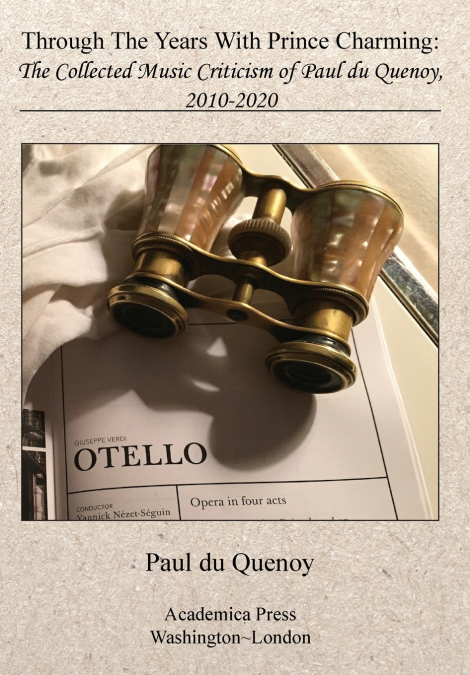
  • Through the years with prince charming
    Paul du Quenoy
    The past decade has overflowed in a raging stream of contradictions. Old certainties have yielded to relentless insecurity over a time when much of the human experience got immeasurably better even as many things only ever seemed to get worse. As Paul du Quenoy’s globetrotting criticism reveals, the arts were in a ferment that matched profound and yet totally unpredicted social...
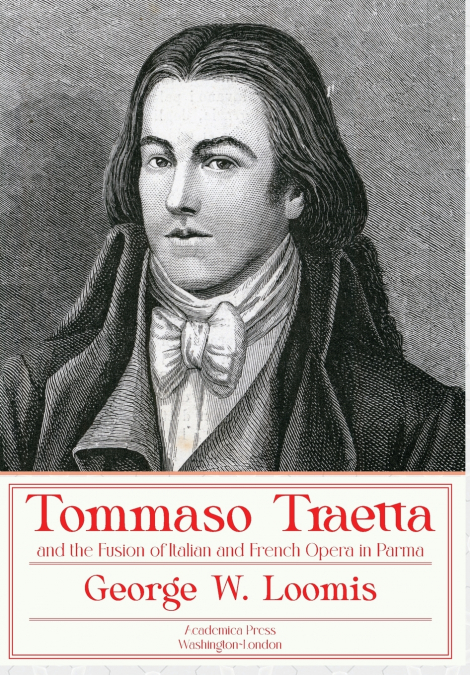
  • Tommaso Traetta and the Fusion of Italian and French Opera in Parma
    George W. Loomis
    In 1759, the court of the Italian Duchy of Parma adopted the inspiration of cultural creators who recommended a reform of Italian opera along French lines. These writers favored combining Italian-style music with the wider range of musical genres and scenic variety of French opera. As the music critic and commentator George W. Loomis shows in this groundbreaking volume, the you...
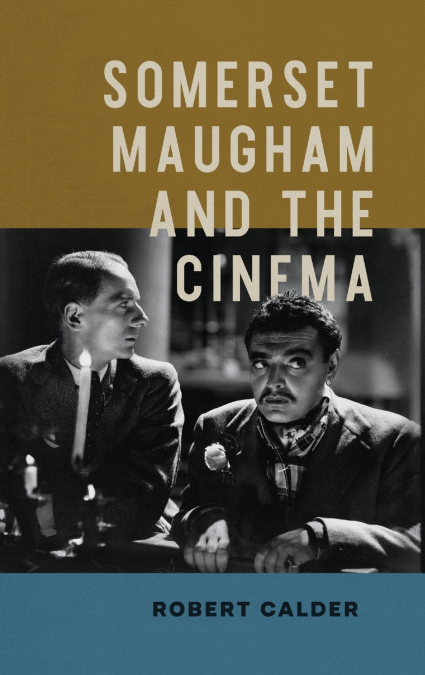
  • Somerset Maugham and the Cinema
    Robert Calder
    William Somerset Maugham (1874-1965) was one of the most prominent and productive authors of the twentieth century-and his works have been among the most cinematically transformed in history. For more than five decades, adaptations of his plays, stories, and novels dominated movie theaters and, later, television screens. More than ninety individual works were filmed, and for ma...

Otros libros del autor

  • Otto III. und der Akt von Gnesen
    Janine Boßmann
    Studienarbeit aus dem Jahr 2000 im Fachbereich Geschichte Europa - and. Länder - Mittelalter, Frühe Neuzeit, Note: 2,7, Technische Universität Berlin, Sprache: Deutsch, Abstract: Die vorliegende Arbeit befasst sich mit dem Thema 'Otto III. und der Akt von Gnesen', hierbei werden folgende Punkte insbesondere besprochen: das Leben Ottos III., der Heilige Adalbert, Gnesen und die ...
    Disponible

    26,63 €