Inicio > Tecnología, ingeniería, agricultura > Ingeniería mecánica y de materiales > Ingeniería mecánica > Frequency-Shaped and Observer-Based Discrete-time Sliding Mode Control
Frequency-Shaped and Observer-Based Discrete-time Sliding Mode Control

Frequency-Shaped and Observer-Based Discrete-time Sliding Mode Control

Axaykumar Mehta / Bijnan Bandyopadhyay

67,11 €
IVA incluido
Disponible
Editorial:
Springer Nature B.V.
Año de edición:
2015
Materia
Ingeniería mecánica
ISBN:
9788132222378
67,11 €
IVA incluido
Disponible

Selecciona una librería:

  • Librería Samer Atenea
  • Librería Aciertas (Toledo)
  • Kálamo Books
  • Librería Perelló (Valencia)
  • Librería Elías (Asturias)
  • Donde los libros
  • Librería Kolima (Madrid)
  • Librería Proteo (Málaga)

It is well established that the sliding mode control strategy provides an effective and robust method of controlling the deterministic system due to its well-known invariance property to a class of bounded disturbance and parameter variations. Advances in microcomputer technologies have made digital control increasingly popular among the researchers worldwide. And that led to the study of discrete-time sliding mode control design and its implementation. This brief presents, a method for multi-rate frequency shaped sliding mode controller design based on switching and non-switching type of reaching law. In this approach, the frequency dependent compensator dynamics are introduced through a frequency-shaped sliding surface by assigning frequency dependent weighing matrices in a linear quadratic regulator (LQR) design procedure. In this way, the undesired high frequency dynamics or certain frequency disturbance can be eliminated. The states are implicitly obtained by measuring the output at a faster rate than the control. It is also known that the vibration control of smart structure is a challenging problem as it has several vibratory modes. So, the frequency shaping approach is used to suppress the frequency dynamics excited during sliding mode in smart structure. The frequency content of the optimal sliding mode is shaped by using a frequency dependent compensator, such that a higher gain can be obtained at the resonance frequencies. The brief discusses the design methods of the controllers based on the proposed approach for the vibration suppression of the intelligent structure. The brief also presents a design of discrete-time reduced order observer using the duality to discrete-time sliding surface design. First, the duality between the coefficients of the discrete-time reduced order observer and the sliding surface design is established and then, the design method for the observer using Riccati equation is explained. Using the proposed method, the observer for the Power System Stabilizer (PSS) for Single Machine Infinite Bus (SMIB) system is designed and the simulation is carried out using the observed states. The discrete-time sliding mode controller based on the proposed reduced order observer design method is also obtained for a laboratory experimental servo system and verified with the experimental results.
Artículos relacionados

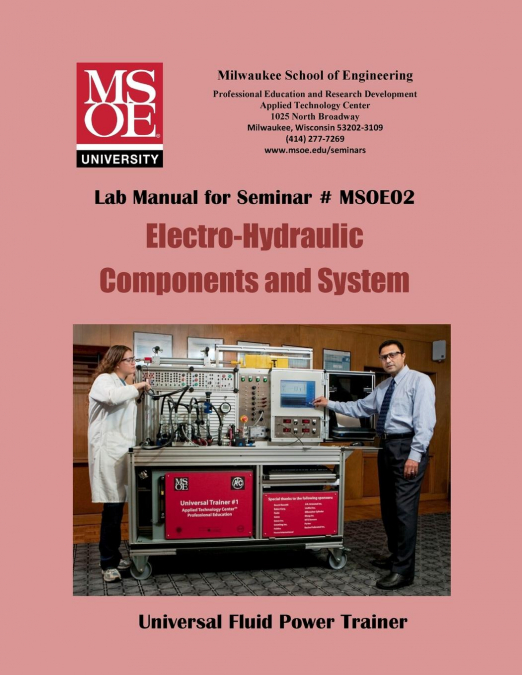
  • Lab Manual-MSOE02-UFPT
    Dr. Medhat Khalil / DrMedhat Khalil / Medhat khalil
    Universal Trainer Lab Manual associated with the text book HSV2 and course MSOE02 (Electro-Hydraulic Components and Systems). The manual contains lab numbers 20 to 29. It also contains instructions about the lab objectives, the devices used in the lab, the step-by-step procedure of the lab and the expected observations. ...
    Disponible

    27,55 €

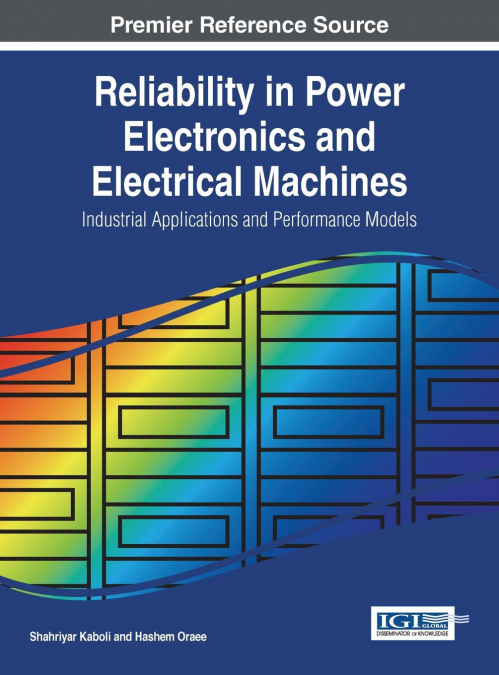
  • Reliability in Power Electronics and Electrical Machines
    Hashem Oraee / Shahriyar Kaboli
    In modern industries, electrical energy conversion systems consist of two main parts: electrical machines and power electronic converters. With global electricity use at an all-time high, uninterrupted operation of electrical power converters is essential. Reliability in Power Electronics and Electrical Machines: Industrial Applications and Performance Models provides an in-dep...
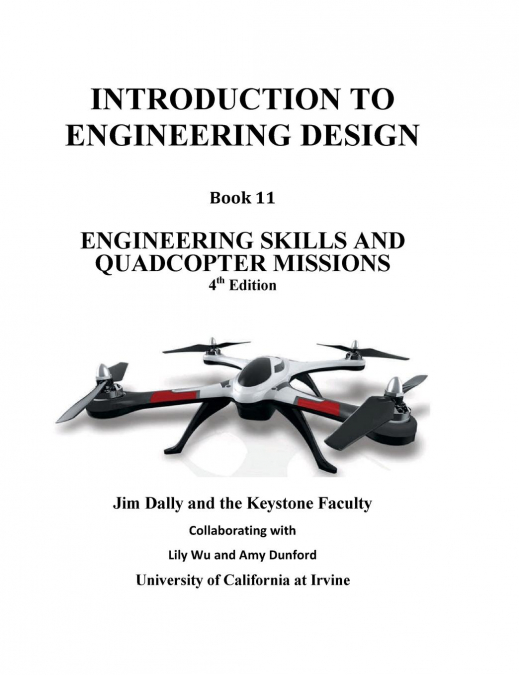
  • Introduction to Engineering Design, Book 11, 4th Edition
    Jim Dally
    This book is the fourth edition of the eBook edition of the eleventh textbook in this series: Introduction to Engineering Design.  Jim Dally, working with College House Enterprises, LLC and faculty members in the Keystone Program within the Clark School of Engineering, has prepared ten previous textbooks in this series—a new one almost every 18 months.  These books are written ...
    Disponible

    79,79 €

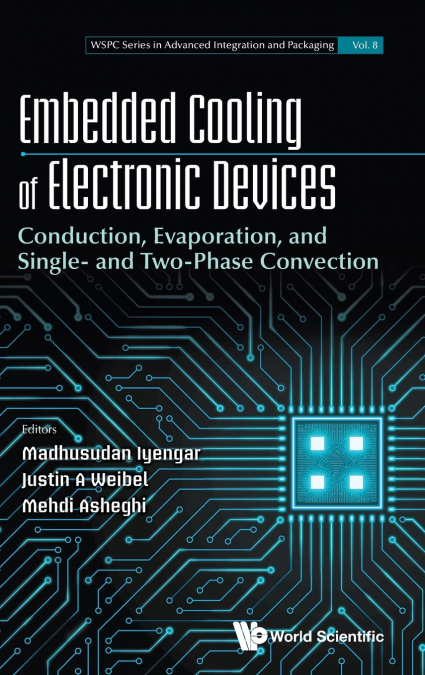
  • EMBEDDED COOLING OF ELECTRONIC DEVICES
    IYENGAR MADHUSUDAN / JUSTIN A WEIBEL MEH MADHUSUDAN IYENGAR
    This book is a comprehensive guide on emerging cooling technologies for processors in microelectronics. It covers various topics such as chip-embedded two-phase cooling, monolithic microfluidic cooling, numerical modeling, and advances in materials engineering for conduction-limited direct contact cooling, with a goal to remedy high heat flux issues.The book also discusses the ...
  • Motorcycle Design
    James Sadauckas / Roberto Lot
    This book aims to provide the core concepts of motorcycle dynamics and illustrates their application in vehicle design to readers who have a serious interest in the subject and in particular engineers with a career path in the powered two wheelers sector. ...
    Disponible

    83,23 €

  • Advances in MEMS and Microfluidic Systems
    Microelectromechanical systems (MEMS) device applications are common in many areas. Micromirror arrays are used as video projectors; microsensors find their application for measuring acceleration, temperature, and pressure; and they can also be used in the medical field for measuring blood pressure. Microfluidics have also been widely employed in life sciences applications, suc...
    Disponible

    235,81 €