 Librería Samer Atenea
 Kálamo Books
 Librería Elías (Asturias)
 Librería Kolima (Madrid)
 Librería Proteo (Málaga)
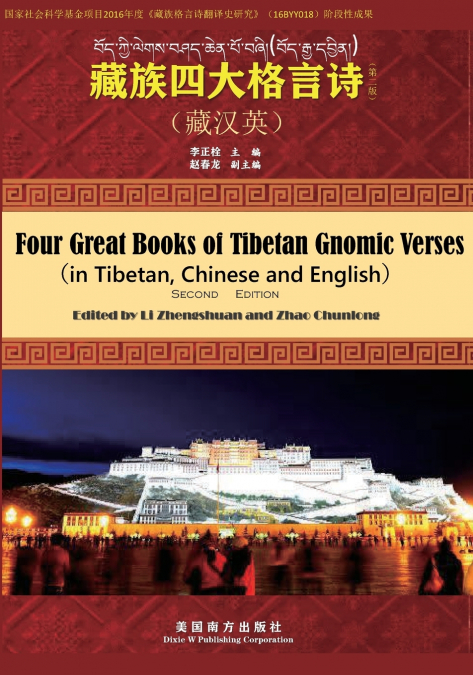
Tibetans have lived on the Qinghai-Tibetan Plateau known as the roof of the world ever since over 4000 years ago, mainly inhabiting in the region of the Yarlung Tsangpo River. According to records of historical books written in Chinese, Tibetan people derived from the Western Qiang people in the Western Han and Eastern Han Dynasties, which proves that they belonged to China long ago. With the long-term exchange with people from China’s hinterland, their range of activity has been expanding. At present, Tibetan people mainly live in Tibet, Sichuan Province, Qinghai Province, Yunnan Province and Gansu Province. As is shown in the statistics of the seventh national population census made in 2020, the population of Tibetans counts up to 3137901. Given that Tibetans belong to the Qiang people, we need to trace back the origin of the Qiang. According to related research, human activities had appeared in Lanzhou of Gansu Province in Late Pleistocene of the quaternary period. These people, ancestors of the Qiang people, integrated with the natives around and then formed into new ethnic groups such as Tubo, Sumpa, Di, Yangtong, Yi and Tibetan. So Tibetan people share the same lineage as Chinese nation and are an indispensable part of Chinese family. Before the Tang dynasty in 7th century, the exchange between Chinese inner land and Tibet was limited by the obstruction of natural environment and underdeveloped transportation. Since the reign of Li Shimin in the Tang dynasty, their communication became more frequent after the establishment of Ancient Tangbo Road. In about March in 641, Songtsen Gampo, the 33rd ruler of the Tubo Regime, came to the Tang dynasty to propose a marriage, which was approved by Li Shimin. Since his marriage with Princess Wencheng, the integration and exchange between Han and Tibetan people started a new chapter. rincess Wencheng brought 300 classic books of divination, 60 books about distinguishing the good and evil, construction and techniques, 100 prescriptions, 4 medical works, 5 books about diagnostics, 6 kinds of medicaldevices, all kinds of grains and turnip seeds to Tibet. In addition, she also took a gilded life-size bronze statue of 12-year-old Sakaya Muni which was kept in The Jokhang in Lhasa. There are only three statues of Sakaya Muni in this world, among which the one in India had been broken and other two are now kept in Lhasa. Princess Wencheng’s arrival in Tibet had promoted the development of Tibetan economy and culture and strengthened the friendship between Han and Tibet people.