Evil and the Philosophy of Retribution

Evil and the Philosophy of Retribution

Sanjay Palshikar

95,15 €
IVA incluido
Disponible
Editorial:
Taylor & Francis Ltd
Año de edición:
2016
Materia
Historia de Asia
ISBN:
9781138660168
95,15 €
IVA incluido
Disponible

Selecciona una librería:

  • Librería Samer Atenea
  • Librería Aciertas (Toledo)
  • Kálamo Books
  • Librería Perelló (Valencia)
  • Librería Elías (Asturias)
  • Donde los libros
  • Librería Kolima (Madrid)
  • Librería Proteo (Málaga)

What is ’evil’? What are the ways of overcoming this destructive and morally recalcitrant phenomenon? To what extent is the use of punitive violence tenable? Evil and the Philosophy of Retribution compares the responses of three modern Indian commentators on the Bhagavad-Gita - Aurobindo Ghose, Bal Gangadhar Tilak and Mahatma Gandhi. The book reveals that some of the central themes in the Bhagavad-Gita were transformed by these intellectuals into categories of modern socio-political thought by reclaiming them from pre-modern debates on ritual and renunciation. Based on canonical texts, this work presents a fascinating account of how the relationship between ’good’, ’evil’ and retribution is construed against the backdrop of militant nationalism and the development of modern Hinduism. Amid competing constructions of Indian tradition as well as contemporary concerns, it traces the emerging representations of modern Hindu self-consciousness under colonialism, and its very understanding of evil surrounding a textual ethos.Replete with Sanskrit, English, Marathi, and Gujarati sources, this will especially interest scholars of modern Indian history, philosophy, political science, history of religion, and those interested in the Bhagavad-Gita.

Artículos relacionados

  • Understanding Aikido
    Jan J Sunderlin
    Understanding Aikido: Essential Information and Perceptions (Special Edition) presents an historical, cultural, and philosophical look at the development of the Japanese martial art of Aikido. Sunderlin focuses on the influences brought to bear on Morihei Ueshiba, the founder of Aikido, and the subsequent cultivation of the latter's martial art as a vessel of Budo. The author a...
    Disponible

    63,06 €

  • Not by Love Alone
    Margaret Mehl
    Suzuki Shin'ichi, the Tokyo String Quartet, Midori - How did Japanese violinists manage to revolutionize violin teaching, win international competitions, conquer Western concert stages, study at world-famous conservatoires and take up positions in leading orchestras and prestigious music faculties? What enabled the Japanese to master Western classical music within a few decades...
    Disponible

    29,32 €

  • Pictures in Transformation
    Luca Maria Olivieri
    ...
    Disponible

    54,79 €

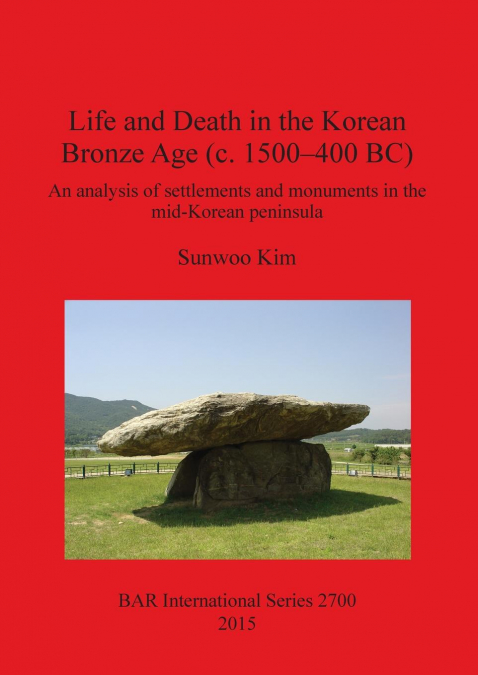
  • Life and Death in the Korean Bronze Age (c. 1500-400 BC)
    Sunwoo Kim
    This research focuses on the Bronze Age in selected areas of Korea; Seoul, Incheon, and Gyeonggi province. Two forms of evidence - settlements and monuments - are taken into account to identify their relationship with landscape and the social changes occurring between ca. 1500 to 400 cal BC. Life and death in the Bronze Age in Korea has not been synthetically investigated befor...
    Disponible

    108,34 €

  • South Asian Archaeology 2007
    Proceedings of the 19th Meeting of the European Association of South Asian Archaeology in Ravenna, Italy, July 2007.                     ...
    Disponible

    182,04 €

  • CHINA THROUGH AMERICAN EYES
    Wenxian Zhang / ZHANG WENXIAN
    Cultural understanding between the United States and China has been a long and complex process. The period from the mid-nineteenth century to the early twentieth century is not only a critical era in modern Chinese history, but also the peak time of illustrated news reporting in the United States. Besides images from newspapers and journals, this collection also contains pictur...

Otros libros del autor

  • Evil and the Philosophy of Retribution
    Sanjay Palshikar
    This book examines the concept of ’evil’ and the responses to it through modern interpretations of the Bhagavad-Gita by Tilak, Gandhi and Sri Aurobindo. Using sources as diverse as puranic stories, medieval inscriptions and Gita-commentaries across centuries, it draws attention to the intriguing nexus between the attribution of evil and justification of violence. ...