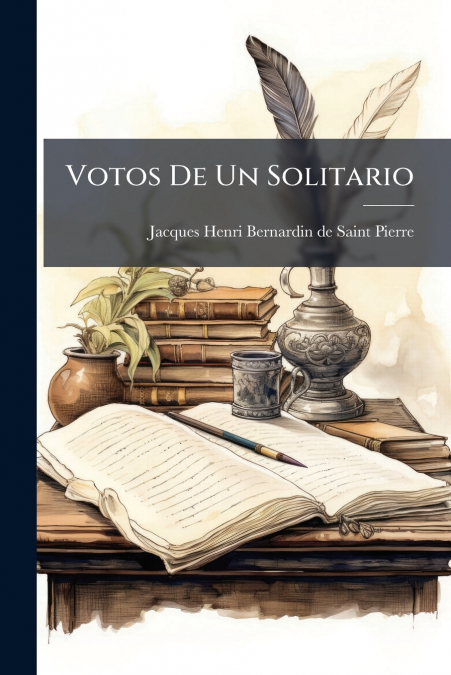
Jacques-Henri-Bernardin de Saint-Pierre
 Librería Samer Atenea
 Kálamo Books
 Librería Elías (Asturias)
 Librería Kolima (Madrid)
 Librería Proteo (Málaga)
Etudes de la nature by Jacques-Henri-Bernardin de Saint-Pierre is a seminal work of French literature, blending natural history with philosophical and moral reflections. Published in the late 18th century, these essays offer a unique perspective on the natural world, emphasizing its beauty, harmony, and the interconnectedness of all living things. Saint-Pierre’s evocative prose invites readers to contemplate the wonders of nature and their significance in the broader context of human existence. This collection not only showcases Saint-Pierre’s keen observational skills and scientific curiosity but also his profound sensitivity to the aesthetic and spiritual dimensions of the environment. Influenced by Enlightenment ideals and pre-romantic sensibilities, 'Etudes de la nature' stands as a testament to the enduring appeal of nature writing and its capacity to inspire both intellectual inquiry and emotional resonance.This work has been selected by scholars as being culturally important, and is part of the knowledge base of civilization as we know it. This work was reproduced from the original artifact, and remains as true to the original work as possible. Therefore, you will see the original copyright references, library stamps (as most of these works have been housed in our most important libraries around the world), and other notations in the work.This work is in the public domain in the United States of America, and possibly other nations. Within the United States, you may freely copy and distribute this work, as no entity (individual or corporate) has a copyright on the body of the work.As a reproduction of a historical artifact, this work may contain missing or blurred pages, poor pictures, errant marks, etc. Scholars believe, and we concur, that this work is important enough to be preserved, reproduced, and made generally available to the public. We appreciate your support of the preservation process, and thank you for being an important part of keeping this knowledge alive and relevant.