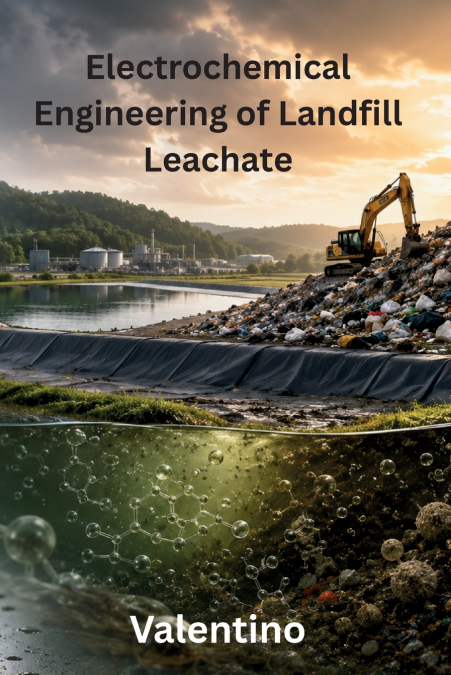

Electrochemical Engineering of Landfill Leachate

Electrochemical Engineering of Landfill Leachate

Valentino

21,00 €
IVA incluido
Disponible
Editorial:
Indy Pub
Año de edición:
2026
Materia
Ciencia, ingeniería y tecnología medioambientales
ISBN:
9798256293710
21,00 €
IVA incluido
Disponible

Selecciona una librería:

  • Librería Samer Atenea

  • Kálamo Books
  • Librería Elías (Asturias)
  • Librería Kolima (Madrid)
  • Librería Proteo (Málaga)

It presents a focused engineering perspective on the treatment and management of landfill leachate through electrochemical principles and processes. Landfill leachate is a complex liquid generated when water moves through waste materials, carrying dissolved organic matter, inorganic constituents, salts, metals, nitrogen compounds, and other contaminants. Its variable composition and treatment requirements make leachate management an important challenge within environmental engineering, chemical engineering, and waste treatment technology.The book centers on the engineering application of electrochemistry to landfill leachate treatment, providing a technical framework for understanding how electrochemical processes can be considered for contaminant removal and leachate remediation. Relevant concepts include electrode reactions, oxidation and reduction, electrochemical reactors, charge transfer, current density, electrode materials, reaction conditions, mass transfer, and process performance. These principles provide a foundation for evaluating how electrical energy can drive chemical transformations in complex waste-derived liquid streams.Particular attention is given to the relationship between landfill characteristics, leachate composition, and treatment processes. The electrochemical treatment of leachate involves interactions among organic pollutants, inorganic species, electrode surfaces, and operating conditions. Understanding these interactions is important when assessing treatment mechanisms, process design considerations, contaminant transformation, and the practical engineering requirements of electrochemical systems.The subject connects environmental engineering with electrochemical engineering, wastewater and leachate treatment, chemical reaction engineering, and solid waste management. It is relevant to the broader field of advanced treatment technologies, where physical, chemical, and electrochemical approaches may be evaluated according to contaminant characteristics and treatment objectives. The engineering perspective also provides useful context for considering process efficiency, energy requirements, electrode selection, reactor configuration, operating parameters, and treatment performance.

Artículos relacionados

  • Ocean Remote Sensing with Synthetic Aperture Radar
    The ocean covers approximately 71% of the Earth’s surface, 90% of the biosphere and contains 97% of Earth’s water. The Synthetic Aperture Radar (SAR) can image the ocean surface in all weather conditions and day or night. SAR remote sensing on ocean and coastal monitoring has become a research hotspot in geoscience and remote sensing. This book—Progress in SAR Oceanography—prov...
    Disponible

    83,90 €

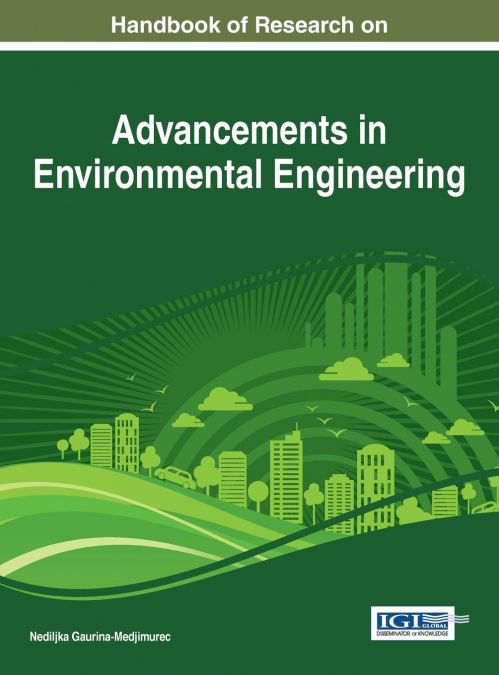
  • Handbook of Research on Advancements in Environmental Engineering
    Nediljka Gaurina-Medjimurec
    The protection of clean water, air, and land for the habitation of humans and other organisms has become a pressing concern amid the intensification of industrial activities and the rapidly growing world population. The integration of environmental science with engineering principles has been introduced as a means of long-term sustainable development. The Handbook of Research o...
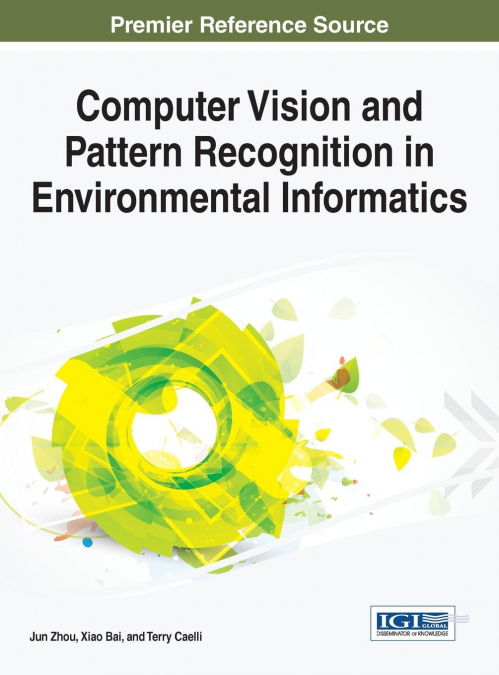
  • Computer Vision and Pattern Recognition in Environmental Informatics
    Computer Vision and Pattern Recognition (CVPR) together play an important role in the processes involved in environmental informatics due to their pervasive, non-destructive, effective, and efficient natures. As a result, CVPR has made significant contributions to the field of environmental informatics by enabling multi-modal data fusion and feature extraction, supporting fast ...
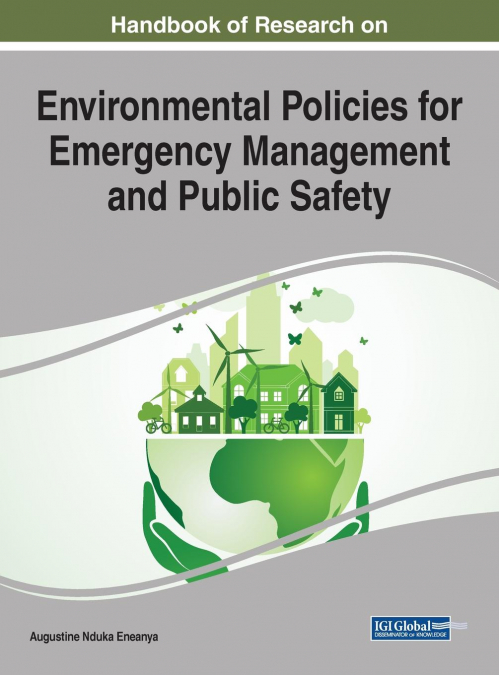
  • Handbook of Research on Environmental Policies for Emergency Management and Public Safety
    Augustine Nduka Eneanya
    In a world of earthquakes, tsunamis, and hurricanes, it is evident that emergency response plans are crucial to solve problems, overcome challenges, and restore and improve communities affected by such negative events. Although the necessity for quick and efficient aid is understood, researchers and professionals continue to strive for the best practices and methodologies to pr...
  • A New Water Future
    Ric Davidge
    Just as cities and nations face the challenge of providing clean water to their citizens and their economies, a new opportunity has finally been constructed that can fix these challenges.  This is a time-sensitive opportunity, and this book is provided to help you move forward. AQUEOUS International, Inc. has developed this over the past 30 years with global research and the co...
    Disponible

    12,86 €

  • Microbial Bioremediation
    P Gunasekaran / P Rajendran
    Discover the groundbreaking world of bioremediation with 'Microbial Bioremediation' authored by Dr. P. Rajendran and Dr. P. Gunasekaran. This comprehensive book unveils the power of living organisms, including plants in phytoremediation and microbes such as bacteria, algae, and fungi in microbial bioremediation, as efficient, eco-friendly, and cost-effective alternatives to con...
    Disponible

    30,82 €

Otros libros del autor

  • La arquitectura cómplice
    Valentino
    En el marco de la cultura contemporánea, la teoría y la práctica de la arquitectura no plantean hoy marcos estables ni sistemas generalizables. El carácter fragmentario es característico de los escritos de los arquitectos y también de las publicaciones teóricas, que adoptan el formato antológico. En este horizonte, la disciplina modifica la mirada sobre su propia condición e in...
    Disponible

    22,36 €