Ekologiczne zwalczanie szkodników upraw

Ekologiczne zwalczanie szkodników upraw

Hayyo HALILOU

72,02 €
IVA incluido
Disponible
Editorial:
KS OmniScriptum Publishing
Año de edición:
2026
Materia
Botánica y ciencias de las plantas
ISBN:
9786630222968
72,02 €
IVA incluido
Disponible

Selecciona una librería:

  • Librería Samer Atenea

  • Kálamo Books
  • Librería Elías (Asturias)
  • Librería Kolima (Madrid)
  • Librería Proteo (Málaga)

Fasola niébé (Vigna unguiculata L. Walp.) i proso (Pennisetum glaucum (L.) R. Br.) zajmują czołowe miejsca wśród roślin strączkowych i zbóż uprawianych i spożywanych w Nigrze. Jednak uprawa tych roślin jest utrudniona przez liczne szkodniki owadzie, które powodują straty w plonach sięgające od 80 do 100%, jeśli nie zastosuje się żadnych środków zwalczania. Stosowanie biopestycydów w walce ze szkodnikami okazało się skuteczne, tańsze, przyjazne dla środowiska oraz nietoksyczne dla ludzi i zwierząt. Wyciągi z drzewa neem (Azadirachta indica A. Juss) są skuteczne przeciwko szkodnikom wielu upraw. Ich substancje czynne (azadirachtina) działają poprzez zakłócanie odżywiania owadów oraz ich cyklu hormonalnego, uniemożliwiając w ten sposób ich normalny rozwój. Badania te pozwoliły nam ocenić skuteczność różnych preparatów biopestycydu na bazie miodli indyjskiej w zwalczaniu szkodników fasoli niébé oraz szkodnika łodyg prosa C. ignefusalis. Poprzez ograniczenie porażenia przez szkodniki ekstrakty z neem przyczyniły się do znacznego wzrostu plonów tych upraw.
Artículos relacionados

  • The Green Architecture
    Ali Mirshafieyan / Ghazal Yeganeh / Maryam Zamani Motlagh
    Protecting green energy as well as non-renewable energy, as well as their sustainable use, many advances in the technology of extracting oil products and other reserves under the ground have caused many improvements. In this regard, proposing the design of buildings in which the consumption of fossil fuels reaches its lowest level is considered one of the important solutions in...
    Disponible

    82,54 €

  • Responsible Use and Management of Agrochemicals
    Juan Carlos Nava
    Uso y manejo responsable de agroquímicos is a work product of the author’s experiences (undergraduate and graduate professor, with research and extension projects), aimed at producers, companies, professionals, students, advisors, researchers, among others.Due to its structure and content, it is expected to be a valuable aid to all people directly or indirectly involved in the ...
    Disponible

    49,45 €

  • Hope in the Soil
    Ellen G White
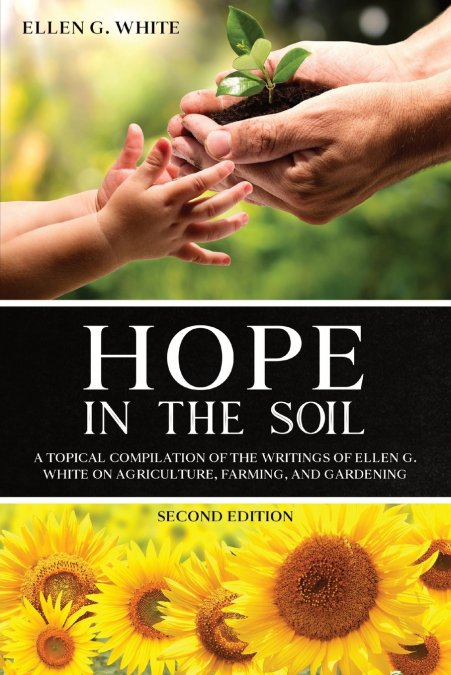
    Before edible classrooms began 'sprouting' in elementary schools, before buzzwords like 'sustainable agriculture', 'organic,' or 'veganic' came into existence, an exceptional woman named Ellen G. White penned numerous letters and articles on the importance of farming, an outdoor life, and manual labor. Though often remembered for other things, Mrs. White was actively engaged in...
    Disponible

    18,38 €

  • The Green Revolution
    Binitha Sophine Emmanuel
    The Green Revolution, a transformative era in the annals of agriculture, emerged as a game-changing force during the mid-20th century, fundamentally reshaping the methodology of food production and steering the trajectory of global food security. Characterized by a sequence of technological breakthroughs, the Green Revolution aimed to substantially augment agricultural producti...
    Disponible

    53,23 €

  • Utilization of Stingless Bees, Tetragonula laeviceps (Smith)
    Dr. J. J. Pastagia / Dr. V. C. Gadhiya
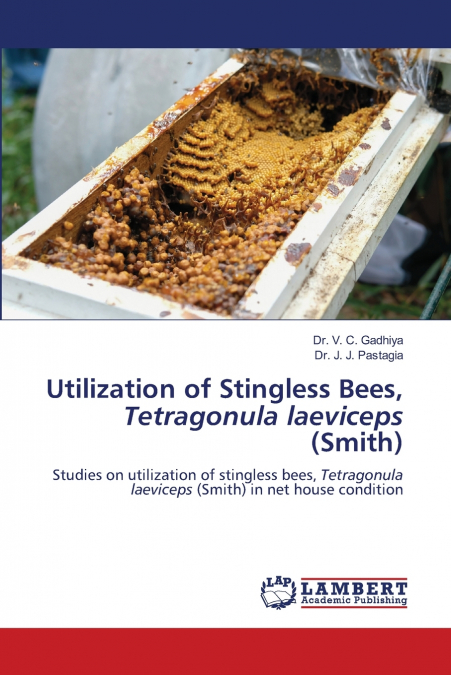
    The present investigations on utilization of stingless bees, T. laeviceps Smith in net house condition carried out with the broad aspects like flowers visited by stingless bees, T. laeviceps Smith, toxicity of insecticides to T. laeviceps Smith workers, floral biology of musk melon, foraging behavior of stingless bees, T. laeviceps Smith in net house condition, effect of pollin...
    Disponible

    84,80 €

  • La révolution verte
    Binitha Sophine Emmanuel
    La révolution verte, une ère transformatrice dans les annales de l’agriculture, est apparue comme une force qui a changé la donne au milieu du 20e siècle, remodelant fondamentalement la méthodologie de la production alimentaire et orientant la trajectoire de la sécurité alimentaire mondiale. Caractérisée par une série de percées technologiques, la révolution verte visait à augm...
    Disponible

    53,29 €

Otros libros del autor

  • Umweltfreundliche Bekämpfung von Schädlingen an Getreidepflanzen
    Hayyo HALILOU
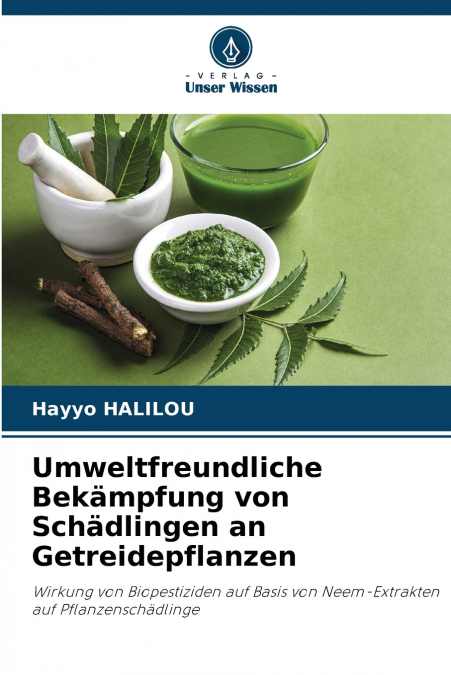
    Die Niébé-Bohne (Vigna unguiculata L. Walp.) und die Hirse (Pennisetum glaucum (L.) R. Br.) nehmen bei den im Niger angebauten und verzehrten Hülsenfrüchten und Getreidesorten die Spitzenplätze ein. Der Anbau dieser Kulturen wird jedoch durch zahlreiche Schädlinge beeinträchtigt, die ohne entsprechende Bekämpfungsmaßnahmen zu Ertragsverlusten von 80 bis 100 % führen. Der Einsat...
    Disponible

    72,08 €

  • Ecological Management of Insect Pests of Crops
    Hayyo HALILOU
    Cowpeas (Vigna unguiculata L. Walp.) and millet (Pennisetum glaucum (L.) R. Br.) rank first among the legumes and cereals produced and consumed in Niger. However, the production of these crops is hampered by numerous insect pests that cause yield losses of 80 to 100 percent if no control measures are implemented. The use of biopesticides to control insect pests has proven to be...
    Disponible

    71,96 €

  • Gestão ecológica das pragas dos colmos
    Hayyo HALILOU
    O feijão-frade (Vigna unguiculata L. Walp.) e o milho-miúdo (Pennisetum glaucum (L.) R. Br.) ocupam os primeiros lugares entre as leguminosas e os cereais produzidos e consumidos no Níger. No entanto, a produção destas culturas é prejudicada por inúmeras pragas de insetos, que provocam perdas de produção de 80 a 100%, caso não sejam aplicadas medidas de controlo. A utilização d...
    Disponible

    72,02 €

  • Gestione ecologica degli insetti nocivi delle colture
    Hayyo HALILOU
    Il fagiolo dall’occhio (Vigna unguiculata L. Walp.) e il miglio (Pennisetum glaucum (L.) R. Br.) occupano i primi posti tra i legumi e i cereali prodotti e consumati in Niger. Tuttavia, la produzione di queste colture è ostacolata da numerosi insetti nocivi che causano perdite di produzione comprese tra l’80 e il 100% se non vengono applicate misure di controllo. L’uso dei biop...
    Disponible

    72,02 €

  • Gestion écologique des insectes ravageurs des cultures
    Hayyo HALILOU
    Le niébé (Vigna unguiculata L. Walp.) et le mil (Pennisetum glaucum (L.) R. Br.) occupent les premières places des légumineuses et des céréales produites et consommées au Niger. Cependant, la production de ces cultures, est entravée par des nombreux insectes ravageurs provoquant des pertes de production de 80 à 100% si aucune mesure de contrôle n’est appliquée. L’utilisation de...
    Disponible

    72,33 €