Inicio > Matemáticas y ciencia > Biologia, ciencias de la vida > Botánica y ciencias de las plantas > Effetto dei bioregolatori sulla varietà di uva Flame Seedless
Effetto dei bioregolatori sulla varietà di uva Flame Seedless

Effetto dei bioregolatori sulla varietà di uva Flame Seedless

Dilip Zate / Sharad Wagh / Vinod Shinde

66,91 €
IVA incluido
Disponible
Editorial:
KS OmniScriptum Publishing
Año de edición:
2026
Materia
Botánica y ciencias de las plantas
ISBN:
9786209602771
66,91 €
IVA incluido
Disponible

Selecciona una librería:

  • Librería Samer Atenea
  • Kálamo Books
  • Librería Elías (Asturias)
  • Librería Kolima (Madrid)
  • Librería Proteo (Málaga)

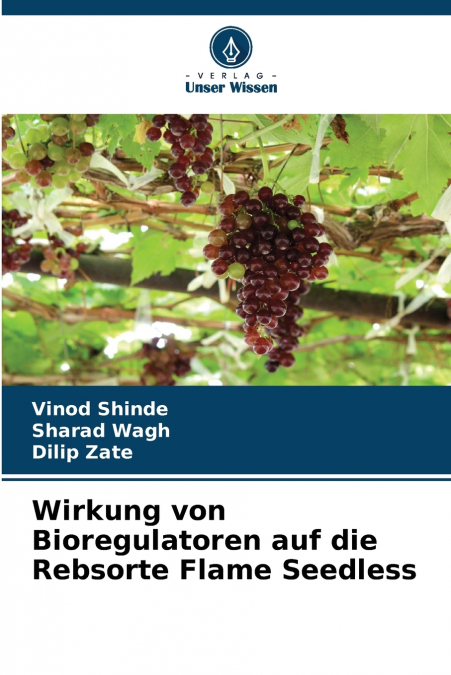
L’uva (Vitis vinifera L.) appartiene alla famiglia delle Vitaceae, che si divide in due sottogeneri, Euvitis Planch (2n=38) e Muscadinia Planch (2n=40). La maggior parte delle uve commerciali appartiene al genere Vitis, che comprende circa 60 specie presenti principalmente nelle zone temperate dell’emisfero settentrionale e distribuite in modo quasi equamente tra America e Asia. Si tratta di un importante frutto commerciale e uno dei più coltivati nelle regioni temperate, subtropicali e tropicali del mondo. La presente indagine ha indicato che il bioregolatore ABA è risultato adatto a sviluppare un colore uniforme nell’uva Flame Seedless, ovvero il trattamento T6 ABA @ 400 ppm prima della fase di invaiatura. Per quanto riguarda le caratteristiche di resa, il trattamento T4, ovvero 6-BA @ 300 ppm prima della fase di invaiatura, ha mostrato un aumento significativo della resa, mentre per quanto riguarda le caratteristiche di qualità, i grappoli immersi in ABA @ 300 ppm, ovvero il trattamento T5, ABA @ 400 ppm, ovvero il trattamento T6 prima della fase di invaiatura, e ABA @ 300 ppm, ovvero Trattamento T11, ABA @ 400 ppm, ovvero Trattamento T12 dopo la fase di invaiatura, hanno mostrato un miglioramento della qualità.

Artículos relacionados

  • The Green Architecture
    Ali Mirshafieyan / Ghazal Yeganeh / Maryam Zamani Motlagh
    Protecting green energy as well as non-renewable energy, as well as their sustainable use, many advances in the technology of extracting oil products and other reserves under the ground have caused many improvements. In this regard, proposing the design of buildings in which the consumption of fossil fuels reaches its lowest level is considered one of the important solutions in...
    Disponible

    82,54 €

  • Responsible Use and Management of Agrochemicals
    Juan Carlos Nava
    Uso y manejo responsable de agroquímicos is a work product of the author’s experiences (undergraduate and graduate professor, with research and extension projects), aimed at producers, companies, professionals, students, advisors, researchers, among others.Due to its structure and content, it is expected to be a valuable aid to all people directly or indirectly involved in the ...
    Disponible

    49,45 €

  • Hope in the Soil
    Ellen G White
    Before edible classrooms began 'sprouting' in elementary schools, before buzzwords like 'sustainable agriculture', 'organic,' or 'veganic' came into existence, an exceptional woman named Ellen G. White penned numerous letters and articles on the importance of farming, an outdoor life, and manual labor. Though often remembered for other things, Mrs. White was actively engaged in...
    Disponible

    18,38 €

  • The Green Revolution
    Binitha Sophine Emmanuel
    The Green Revolution, a transformative era in the annals of agriculture, emerged as a game-changing force during the mid-20th century, fundamentally reshaping the methodology of food production and steering the trajectory of global food security. Characterized by a sequence of technological breakthroughs, the Green Revolution aimed to substantially augment agricultural producti...
    Disponible

    53,23 €

  • Utilization of Stingless Bees, Tetragonula laeviceps (Smith)
    Dr. J. J. Pastagia / Dr. V. C. Gadhiya
    The present investigations on utilization of stingless bees, T. laeviceps Smith in net house condition carried out with the broad aspects like flowers visited by stingless bees, T. laeviceps Smith, toxicity of insecticides to T. laeviceps Smith workers, floral biology of musk melon, foraging behavior of stingless bees, T. laeviceps Smith in net house condition, effect of pollin...
    Disponible

    84,80 €

  • La révolution verte
    Binitha Sophine Emmanuel
    La révolution verte, une ère transformatrice dans les annales de l’agriculture, est apparue comme une force qui a changé la donne au milieu du 20e siècle, remodelant fondamentalement la méthodologie de la production alimentaire et orientant la trajectoire de la sécurité alimentaire mondiale. Caractérisée par une série de percées technologiques, la révolution verte visait à augm...
    Disponible

    53,29 €

Otros libros del autor

  • Efeito dos biorreguladores na casta Flame Seedless
    Dilip Zate / Sharad Wagh / Vinod Shinde
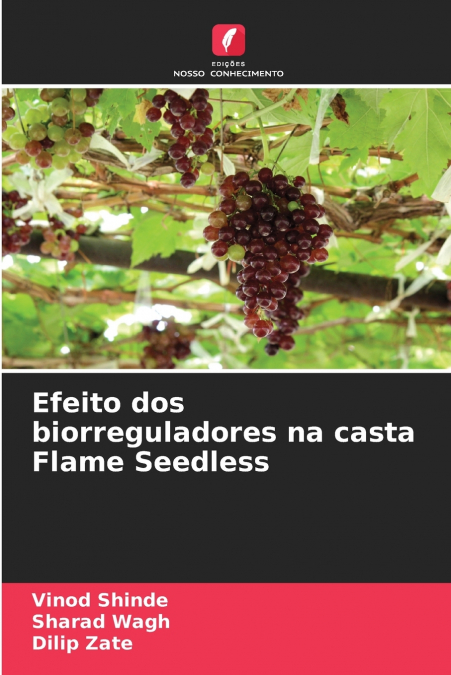
    A uva (Vitis vinifera L.) pertence à família Vitaceae, que se divide em dois subgéneros, Euvitis Planch (2n=38) e Muscadinia Planch (2n=40). A maioria das uvas comerciais pertence ao género Vitis, que contém cerca de 60 espécies encontradas principalmente nas zonas temperadas do hemisfério norte e distribuídas quase igualmente entre a América e a Ásia. É uma importante cultura ...
    Disponible

    66,91 €

  • Effet des biorégulateurs sur le cépage Flame Seedless
    Dilip Zate / Sharad Wagh / Vinod Shinde
    Le raisin (Vitis vinifera L.) appartient à la famille des Vitaceae, qui se divise en deux sous-genres, Euvitis Planch (2n=38) et Muscadinia Planch (2n=40). La plupart des raisins commerciaux appartiennent au genre Vitis, qui comprend environ 60 espèces présentes principalement dans les zones tempérées de l’hémisphère nord et réparties de manière presque égale entre l’Amérique e...
    Disponible

    66,99 €

  • Wpływ bioregulatorów na odmianę winogron Flame Seedless
    Dilip Zate / Sharad Wagh / Vinod Shinde
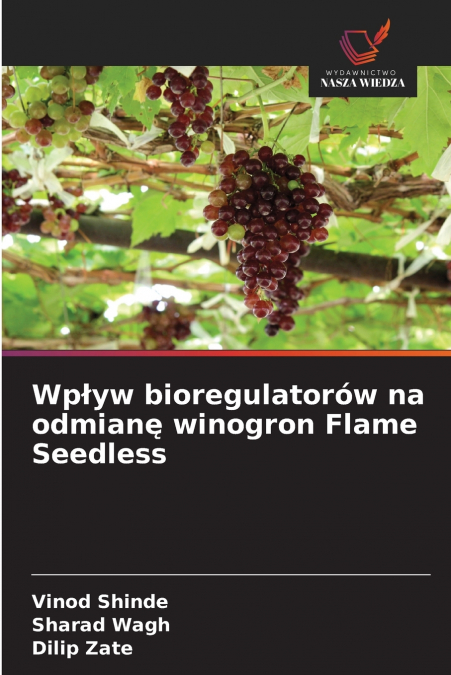
    Winogrono (Vitis vinifera L.) należy do rodziny vitaceae, która dzieli się na dwa podrodzaje: Euvitis Planch (2n=38) i Muscadinia Planch (2n=40). Większość winogron dostępnych w handlu należy do rodzaju Vitis, który obejmuje około 60 gatunków występujących głównie w strefach umiarkowanych półkuli północnej i rozmieszczonych niemal równomiernie między Ameryką a Azją. Jest to waż...
    Disponible

    66,99 €

  • Wirkung von Bioregulatoren auf die Rebsorte Flame Seedless
    Dilip Zate / Sharad Wagh / Vinod Shinde
    Die Traube (Vitis vinifera L.) gehört zur Familie der Vitaceae, die in zwei Untergattungen unterteilt ist: Euvitis Planch (2n=38) und Muscadinia Planch (2n=40). Die meisten kommerziellen Trauben gehören zur Gattung Vitis, die etwa 60 Arten umfasst, die hauptsächlich in den gemäßigten Zonen der nördlichen Hemisphäre vorkommen und fast gleichmäßig zwischen Amerika und Asien verte...
    Disponible

    66,99 €