Inicio > Matemáticas y ciencia > Biologia, ciencias de la vida > Botánica y ciencias de las plantas > Efeito de diferentes fontes orgânicas e cobertura morta no amendoim
Efeito de diferentes fontes orgânicas e cobertura morta no amendoim

Efeito de diferentes fontes orgânicas e cobertura morta no amendoim

Kandarp Mevada / Mahendra Kavad / Payal Makavana

86,85 €
IVA incluido
Disponible
Editorial:
KS OmniScriptum Publishing
Año de edición:
2024
Materia
Botánica y ciencias de las plantas
ISBN:
9786208070380
86,85 €
IVA incluido
Disponible

Selecciona una librería:

  • Librería Samer Atenea
  • Librería Aciertas (Toledo)
  • Kálamo Books
  • Librería Perelló (Valencia)
  • Librería Elías (Asturias)
  • Donde los libros
  • Librería Kolima (Madrid)
  • Librería Proteo (Málaga)

Entre as sementes oleaginosas, o amendoim (Arachis hypogaea L.) é conhecido por ser uma leguminosa única e importante, com uma cultura de sementes oleaginosas na Índia, representando 33% da área mundial de amendoim e cerca de 27,3% da produção. Pertence à família Fabaceae. É também conhecido como amendoim, noz de macaco, noz da terra, noz de manila e goober. É a maior fonte de óleo comestível do mundo e ocupa o 13º lugar entre as culturas alimentares. Os estrumes orgânicos desempenham um papel vital no aumento da produtividade das leguminosas por vários meios. O estrume de quintal (FYM) não só fornece todos os macro e micro nutrientes como também actua como um condicionador do solo. O vermicomposto é um produto da biodegradação não termofílica de material orgânico pela ação combinada de minhocas e micróbios associados.O estrume orgânico rico em fósforo (PROM) é o fertilizante orgânico rico em fósforo, que é um tipo de fertilizante utilizado como alternativa ao fosfato de di-amónio e ao superfosfato simples. A cobertura morta é uma cobertura protetora espalhada sobre o solo para reduzir a evaporação, manter a temperatura do solo, evitar a erosão, controlar as ervas daninhas e enriquecer o solo, etc.O melhor crescimento e qualidade foram encontrados em adubos com 20 kg N/ha de vermicomposto juntamente com 250 kg PROM/ha.
Artículos relacionados

  • The Green Architecture
    Ali Mirshafieyan / Ghazal Yeganeh / Maryam Zamani Motlagh
    Protecting green energy as well as non-renewable energy, as well as their sustainable use, many advances in the technology of extracting oil products and other reserves under the ground have caused many improvements. In this regard, proposing the design of buildings in which the consumption of fossil fuels reaches its lowest level is considered one of the important solutions in...
    Disponible

    82,54 €

  • Responsible Use and Management of Agrochemicals
    Juan Carlos Nava
    Uso y manejo responsable de agroquímicos is a work product of the author’s experiences (undergraduate and graduate professor, with research and extension projects), aimed at producers, companies, professionals, students, advisors, researchers, among others.Due to its structure and content, it is expected to be a valuable aid to all people directly or indirectly involved in the ...
    Disponible

    49,45 €

  • Hope in the Soil
    Ellen G White
    Before edible classrooms began 'sprouting' in elementary schools, before buzzwords like 'sustainable agriculture', 'organic,' or 'veganic' came into existence, an exceptional woman named Ellen G. White penned numerous letters and articles on the importance of farming, an outdoor life, and manual labor. Though often remembered for other things, Mrs. White was actively engaged in...
    Disponible

    18,38 €

  • The Green Revolution
    Binitha Sophine Emmanuel
    The Green Revolution, a transformative era in the annals of agriculture, emerged as a game-changing force during the mid-20th century, fundamentally reshaping the methodology of food production and steering the trajectory of global food security. Characterized by a sequence of technological breakthroughs, the Green Revolution aimed to substantially augment agricultural producti...
    Disponible

    53,23 €

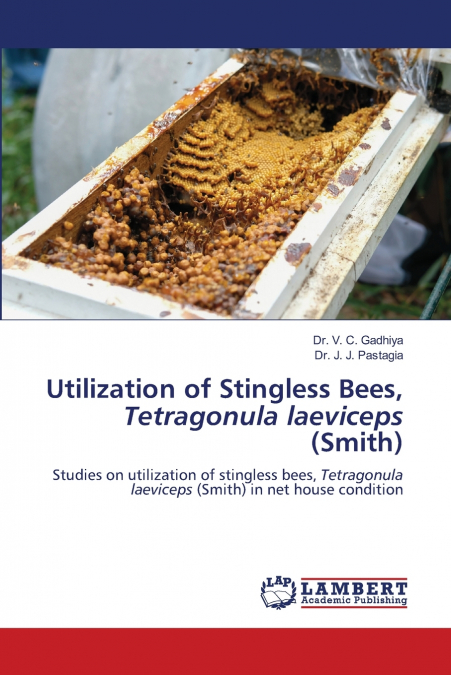
  • Utilization of Stingless Bees, Tetragonula laeviceps (Smith)
    Dr. J. J. Pastagia / Dr. V. C. Gadhiya
    The present investigations on utilization of stingless bees, T. laeviceps Smith in net house condition carried out with the broad aspects like flowers visited by stingless bees, T. laeviceps Smith, toxicity of insecticides to T. laeviceps Smith workers, floral biology of musk melon, foraging behavior of stingless bees, T. laeviceps Smith in net house condition, effect of pollin...
    Disponible

    84,80 €

  • La révolution verte
    Binitha Sophine Emmanuel
    La révolution verte, une ère transformatrice dans les annales de l’agriculture, est apparue comme une force qui a changé la donne au milieu du 20e siècle, remodelant fondamentalement la méthodologie de la production alimentaire et orientant la trajectoire de la sécurité alimentaire mondiale. Caractérisée par une série de percées technologiques, la révolution verte visait à augm...
    Disponible

    53,29 €

Otros libros del autor

  • Effetto di diverse fonti organiche e della pacciamatura sul castagno
    Kandarp Mevada / Mahendra Kavad / Payal Makavana
    Tra i semi oleosi, l’arachide (Arachis hypogaea L.) è noto per essere una leguminosa e importante coltura di semi oleosi dell’India, che rappresenta il 33% della superficie mondiale di arachidi e circa il 27,3% della produzione. Appartiene alla famiglia delle Fabaceae. È nota anche come arachide, noce di scimmia, noce di terra, noce di manila e goober. È la più grande fonte di ...
    Disponible

    86,85 €

  • Wirkung verschiedener organischer Quellen und Mulchen auf Erdnuss
    Kandarp Mevada / Mahendra Kavad / Payal Makavana
    Unter den Ölsaaten ist die Erdnuss (Arachis hypogaea L.) bekanntlich eine einzigartige und wichtige Hülsenfrucht und Ölsaat in Indien, die 33 % der weltweiten Erdnussfläche und etwa 27,3 % der Produktion ausmacht. Sie gehört zur Familie der Fabaceae. Sie ist auch als Erdnuss, Affennuss, Erdnuss, Manilanuss und Goober bekannt. Sie ist die weltweit größte Quelle für Speiseöl und ...
    Disponible

    86,91 €

  • Effet de différentes sources organiques et du paillage sur l’arachide
    Kandarp Mevada / Mahendra Kavad / Payal Makavana
    Parmi les graines oléagineuses, l’arachide (Arachis hypogaea L.) est connue pour être une légumineuse unique et importante en Inde, représentant 33% de la surface mondiale d’arachide et environ 27,3% de la production. Elle appartient à la famille des Fabacées. Elle est également connue sous le nom d’arachide, de noix de singe, de noix de terre, de noix de Manille et de goober. ...
    Disponible

    86,91 €